

 Goal 12. Responsible Consumption and Production
12.2.5 Policy for minimisation of plastic use

↵ ↵
2023-2024
AASTMT has implemented a comprehensive policy to align its practices with Egyptian environmental laws, specifically targeting the reduction of non-biodegradable plastic products on campus. Acknowledging the environmental challenges posed by plastic waste, the policy promotes the adoption of sustainable, eco-friendly alternatives to minimize reliance on plastics, thereby reducing the university's environmental footprint and contributing to national efforts to combat plastic pollution. Beyond legal compliance, this initiative reflects AASTMT’s broader commitment to environmental sustainability and fostering a culture of responsibility within its community. By educating students, faculty, and staff about the harmful impacts of plastic waste and encouraging sustainable habits, AASTMT aspires to inspire collective action toward environmental conservation. This proactive approach reinforces the university's leadership in sustainability, demonstrating how academic institutions can drive meaningful change and contribute to a greener, more sustainable future. The following section is indicating the Consumption and Recycling Policy, and as indicated in point number 6, many actions have been taken to reduce the amount of plastics used and to find another environmentally friendly materials instated
Consumption and Recycling Policy
1.Introduction
AASTMT recognizes the growing global challenges arising from the excessive pressure on natural resources, escalating greenhouse gas emissions, rising sea levels, pollution, and inefficient waste management. These environmental issues threaten both present and future generations, underscoring the urgent need for responsible consumption and effective recycling practices. In alignment with its Environmental Change and Social Responsibility Policy, AASTMT is committed to advancing the Sustainable Development Goals by promoting a culture of sustainability across all its campuses and operations. The Consumption and Recycling Policy reflects this commitment by emphasizing waste reduction, resource efficiency, and responsible material use.
Through this policy, AASTMT aims to minimize environmental impact by prioritizing waste prevention, reusing materials whenever possible, and ensuring proper recycling and disposal in compliance with environmental regulations. By fostering awareness and sustainable habits within its community, the University seeks to create a cleaner, safer, and more resilient environment for future generations.
2.Scope
This policy applies to all AASTMT employees, students, and contractors who are involved in handling, managing, or storing any form of waste, including hazardous and non-hazardous materials. It establishes the framework for ensuring that all waste management activities prioritize recycling, reuse, and responsible disposal in line with the university’s sustainability objectives.
Recycling must be integrated at every stage of the waste management process—beginning with proper segregation and collection, followed by safe processing and reuse wherever feasible. A designated responsible person or unit shall oversee the recycling and disposal of materials to ensure compliance with environmental standards and the adoption of the most sustainable methods available.
By embedding recycling practices into daily operations, this policy aims to minimize environmental impact, promote resource efficiency, and support AASTMT’s broader commitment to sustainable development and environmental stewardship.
3.Aims of the Policy
The AASTMT policy considers end-of-life disposal costs and environmental impacts when making acquisition decisions involving the construction of new or renovated facilities.
AASTMT receives the 'waste order' of Prevention, reuse, reusing, and other recuperation and removal. AASTMT executes cycles, methods, and activities that guarantee consistency with ecological enactment and best practice, to lessen the general waste produced and forestall waste creation at every possible opportunity. Moreover, AASTMT is committed to measuring and weighing the amount of waste generated to track the waste and to find the best methods to reduce or recycle it.
4.Procedures
The Waste Treatment Progressive System and Stages Incorporates:
Prevention
- Utilizing less material in the plan; keeping items for more; utilizing less unsafe material.
- Reduce landfill waste and boost the usage of reusable, biodegradable, and recyclable materials.
- Promote awareness and training programs to encourage responsible consumption and waste minimization across all departments.
RE-USE
- Getting ready for re-use; cleaning; fixing, restoring.
- Reduce the usage of single-use packaging. Reducing single-use packaging such as coffee cups and increasing the usage of reusable packaging
Recycle
- Transforming waste disposal into another substance or item, including fertilizing the soil.
- Anaerobic assimilation – transformation to biogas for power age; burning with energy recuperation.
- Establish accessible recycling stations across campus and ensure regular collection and monitoring of recyclable materials.
Disposal
- Reduce the disposal of items and send them by specialized to landfill to bury the hazardous materials.
- Tracking the disposal items through a third party which evaluates the amount and the cost of the disposal items.
- Ensure all disposal methods comply with environmental laws and safety standards to minimize ecological and health risks.
Ethical Sourcing of Food and Supplies
AASTMT is seeking to reduce food waste as much as we can through using food preservation methods and vermicomposting practices. The university is committed to delivering healthy food for all parties in the university including food on Campus, Residences, and employees whether vegetarian or others. AASTMT makes sure that the food is available at each level to guarantee healthy food for ASTMT’s stakeholders. However, food waste is still a problem for AASTMT. Therefore, AASTMT is applying the following procedures to use the waste of food in an appropriate way:
- Develop a monitoring system for food donations by using food waste.
- Most of the food waste produced is recorded and weighed to be sent to a device that produces bio-fertilizer for the green areas.
- Some of the waste of food is used to feed the animals like (dogs, and cats,
5.Policy Statement
The AASTMT seeks to implement ethical and sustainable practices on all of its campuses. Therefore, the AASTMT has taken crucial measures to implement these practices, such as ecological practices and corporate social responsibility. Through the exchange of information within the Academy's supply chain, these food ethics and practices enable AASTMT to ensure the transparency of information about all suppliers.
- Trusted suppliers
To accomplish supply chain transparency, one of the primary goals of AASTMT is to identify the most reliable and reputable partners who share the same ethical practices, objectives, and data. To accomplish ethical and sustainable practices, the first step is to identify the most suitable suppliers.
- Secure Relationships
The interaction with suppliers is the second step to keep secure relationships between partners and to reduce the risk. AASTMT is seeking to build a platform and application to increase communication and share important information. That would give the suppliers and partners access to the internal systems they need based on their roles within the ecosystem, sustainability practices, and the food ethics of AASTMT.
- Tracing the food supplies
Through utilizing new technologies such as block chain technology, AASTMT plays a crucial role in facilitating the monitoring and tracing of the origin of food. It allows the AASTMT to trace the origin of food and ensure its safe delivery to campuses.
- Evaluation of the process
AASTMT is monitoring the overall processes between its partners to guarantee healthy and sustainable food for students, staff, and Residents. Based on this monitoring, errors must be fixed, and corrective action must be taken.
AASTMT guarantees that we are conforming to guidelines, enactment, and best practices to limit the danger of prompt and future contamination or mischief to wellbeing when completing operational exercises.
6.Actions
- A proposition to build a Waste Management Centre throughout all AASTMT campuses to oversee every aspect of waste management within the Academy, and to recycle all type of materials generated.
- AASTMT is about to build a packaging lab, this lab is aiming to act as a hub providing packaging services consultancy for Egyptian and research on the field of packaging supply chain. The materials of this lab will be extracted from cartoon and plastic waste from the AASTMT campus to produce packaging prototype designs.
- AASTMT has halted the utilization of 'single use' plastics nearby utilizing a blend of elective materials and the suspension of deals of plastic filtered water nearby.
- AASTMT perceives the unfavorable effect of plastic waste, from creation through to removal. Plastic contamination can destructively affect the marine climate, and the College is looking to diminish plastic use and wastage nearby. The accompanying activities have been received to advance this point with staff and understudies:
- Single-use plastics in catering (food bundling, dispensable coffee cups, cutlery) have been supplanted with compostable catering supplies in all College food outlets, to lessen plastic waste nearby.
- AASTMT intends to keep on diminishing waste by investigating new items and administrations which will help with accomplishing decreased plastics utilization and waste.
- AASTMT will consider the hazardous materials that can be hurtful to the well-being or the climate. It incorporates irresistible organic/clinical waste, synthetics, solvents, pesticides, glaring light cylinders, refrigeration hardware containing ozone, non-eatable oils, batteries, asbestos, and paints. AASTMT will have an agreement with a third party to landfill these materials in a landfill area.
- The AASTMT will oversee, so far as is sensibly practicable, all dangerous waste exercises fall under its influence in a way, for example, to limit the mischief to human wellbeing or the climate.
- AASTMT will create and impart systems to empower workers to follow their “obligation of care” for the administration of risky wastes and screen these methods to guarantee consistency.
- AASTMT will launch awareness and training programs for students, staff, and contractors to enhance understanding of sustainable waste management, recycling processes, and the safe handling of hazardous materials.
- AASTMT will implement a digital waste tracking and reporting system to monitor waste generation, recycling rates, and disposal activities across all campuses, ensuring transparency, accountability, and continuous improvement in sustainability performance.
- AASTMT will integrate Artificial Intelligence (AI) technologies into its waste management systems to optimize waste sorting, monitor recycling efficiency, and predict waste generation patterns for smarter and more sustainable decision-making.
7.Objectives:
Waste ought to be forestalled or limited at every possible opportunity. AASTMT empowers staff, Students, and employers to limit plastic and cartoon waste, in addition to increasing the awareness about the method to minimize disposable items.
8.Review Program

You can read our Consumption and Recycling Policy on AASTMT website.
More activities are applied and practiced in the AASTMT.
AASTMT Students Win Second Place in Alexandria Engineering Competition for Smart Waste Sorting Project
The Arab Academy for Science, Technology and Maritime Transport (AASTMT) proudly announces that students from the College of Engineering and Technology, Mechanical Engineering Department, Alexandria Campus, have won second place across Alexandria Governorate in a competition featuring over 100 teams. The achievement was recognized during the ceremony for the Best Graduation Projects for the Academic Year 2023/2024, held at the Engineers Syndicate in Alexandria. Their award-winning project, titled “Eco-Sort: Smart Trash-Sorting Bin,” showcases innovation in intelligent waste management and sustainability. The project team includes Yousry Atef, Hassan Raafat, Omnia Yasser, Kyrillos Raymond, and Karim Tarek, under the supervision of Prof. Walid Ghoneim and Dr. Essam Seddik. This success reflects AASTMT’s commitment to fostering creativity, applied research, and environmental responsibility among its engineering students.
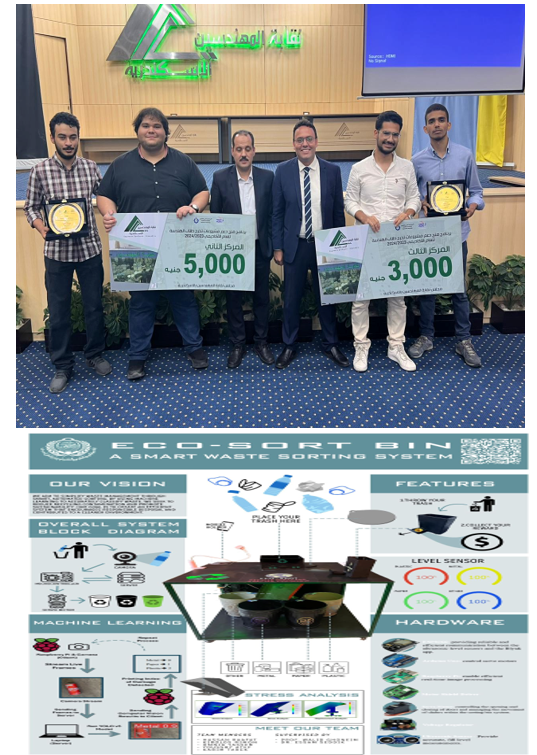
AASTMT Engineering Students Achieve Second Place in Alexandria
AASTMT Mechanical Engineering Students Selected Among Top 28 National Projects in “Egypt Makes” Initiative
The Arab Academy for Science, Technology and Maritime Transport (AASTMT) proudly announces that a graduation project from the Mechanical Engineering Department, College of Engineering and Technology – Alexandria Campus, has been selected among the top 28 university projects nationwide as part of the “Egypt Makes” Initiative under the University Students’ Project Support Alliance for Local Component Development, funded by the Academy of Scientific Research and Technology for the 2023/2024 academic year. The selected project, titled “Recycling Plastic Waste into 3D Printing Filaments,” was developed by students Yousry Atef, Hassan Raafat, Omnia Yasser, Kyrillos Raymond, and Karim Tarek, under the supervision of Prof. Walid Ghoneim and Dr. Essam Seddik. This remarkable achievement reflects AASTMT’s ongoing commitment to promoting innovation, sustainability, and applied research in engineering education.
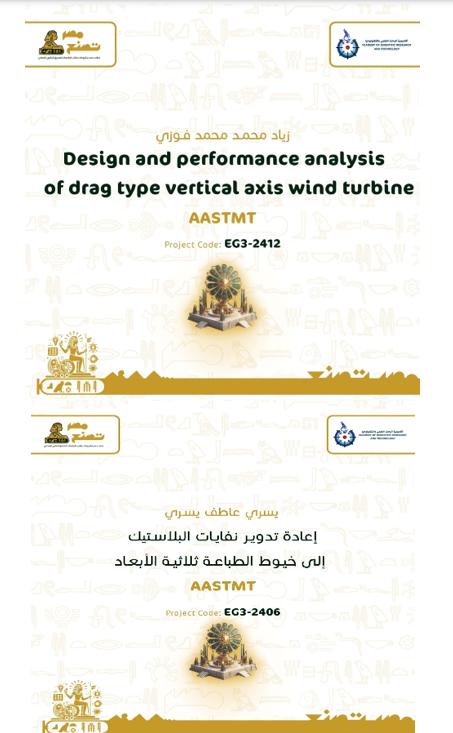
AASTMT Students Recognized in “Egypt Makes” Initiative
AASTMT Students Recognized in “Egypt Makes” Initiative 1
AASTMT Co-Hosts Launch of “UniGreen” National Competition to Empower Youth and Tackle Climate Change
The Arab Academy for Science, Technology and Maritime Transport (AASTMT), in collaboration with the Life Makers Foundation, Samsung Egypt, and Nile University, officially launched the “UniGreen” National Competition, funded by the European Union. The initiative, held under the patronage of Egypt’s Ministry of Social Solidarity and Ministry of Environment, aims to empower youth and promote innovation in addressing climate change challenges. The competition supports young entrepreneurs with financial and technical assistance to develop impactful climate solutions in areas such as waste management and recycling, sustainable agriculture, and desertification mitigation. AASTMT’s active partnership in this national initiative underscores its commitment to advancing sustainability, fostering youth innovation, and supporting Egypt’s Vision 2030 for a greener future.
AASTMT Partners in “UniGreen” Climate Innovation Initiative
AASTMT Signs Cooperation Agreement with Arab Organization for Industrialization and UCLan to Advance Technological Training and Industrial Development
The Arab Academy for Science, Technology and Maritime Transport (AASTMT) has signed a cooperation agreement with the Arab Organization for Industrialization (AOI) and the University of Central Lancashire (UCLan), United Kingdom, to provide advanced technological training for engineers and technicians from AOI factories. The agreement, signed during the Industrial Advisory Council held at AASTMT’s New Alamein Campus, aims to enhance industrial skills, support local manufacturing, and promote Egypt’s Vision 2030 for sustainable development and digital transformation. Under the agreement, UCLan will cover the full cost of training courses, while the European Union will fund travel expenses. This partnership reflects AASTMT’s ongoing commitment to strengthening international cooperation, advancing technological education, and fostering the localization of modern industrial technologies across Egypt and the Arab region.
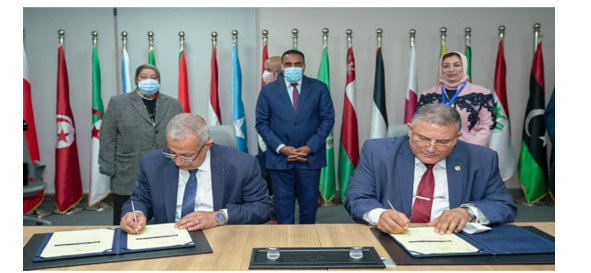
AASTMT Partners with AOI and UCLan for Industrial Training
AASTMT Hosts National Workshop on Waste Management Addressing Plastic Pollution and Extended Producer Responsibility
During a national workshop on waste management organized by the Arab Academy for Science, Technology and Maritime Transport (AASTMT) under the leadership of Dr. Ismail Abdel Ghaffar Ismail Farag, and held under the patronage of the Ministry of Environment, Dr. Yasmine Fouad, Minister of Environment, highlighted Egypt’s National Strategy to Reduce Single-Use Plastic Bags, approved by President Abdel Fattah El-Sisi and Prime Minister Dr. Mostafa Madbouly. The workshop, organized in cooperation with Nahdet Misr Environmental Services and the Alexandria Governorate, brought together ministers and governors to discuss international standards for waste management and the application of the Extended Producer Responsibility (EPR) system. Dr. Fouad emphasized beginning with the reduction of single-use plastic bags to minimize environmental impact while maintaining industrial balance, reaffirming the importance of collaborative initiatives like AASTMT’s in supporting Egypt’s transition toward a sustainable, circular economy.
AASTMT Leads Workshop on Plastic Waste and EPR Policy
AASTMT and Ministry of Environment Collaborate to Launch Climate Information Center and Plastic Reduction Initiatives
The Arab Academy for Science, Technology and Maritime Transport (AASTMT) and the Ministry of Environment held a high-level meeting between Dr. Yasmine Fouad, Minister of Environment, and Dr. Ismail Abdel Ghaffar, President of AASTMT, to enhance cooperation on environmental initiatives and sustainable development projects. The collaboration includes the creation of a Climate Information Center to provide data on climate change and national mitigation efforts, as well as the launch of an electronic application designed by AASTMT engineering students using artificial intelligence to reduce plastic consumption and promote recycling practices. The initiative, supported by the Ministry of Environment, aims to foster behavioral change, integrate sustainability into academic projects, and contribute to Egypt’s broader environmental goals under Vision 2030.
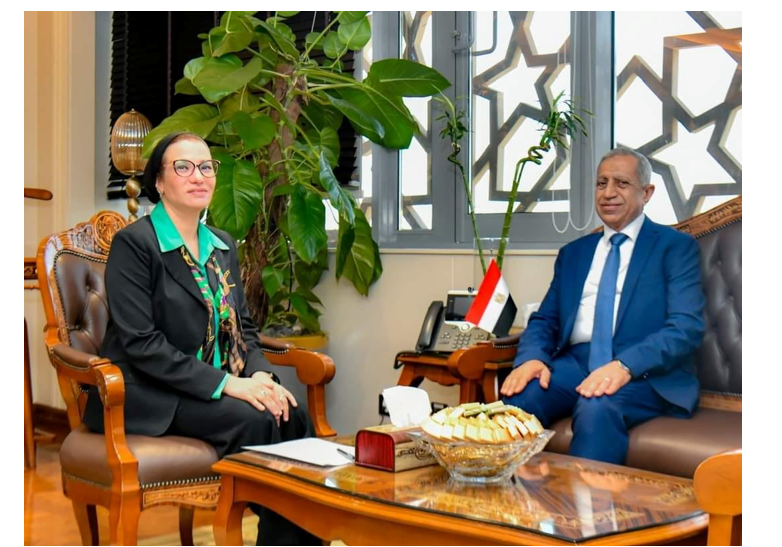
AASTMT Partners with Ministry of Environment on Plastic Reduction
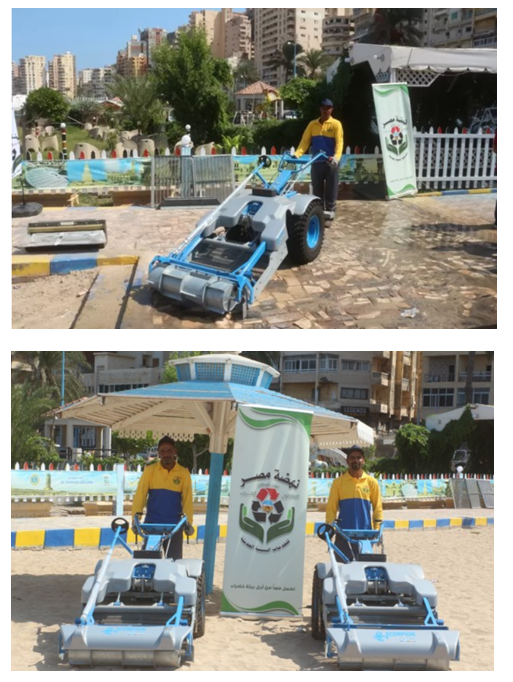
AASTMT partnered with Nahdet Misr (an Egyptian environmental services company) to collect plastic waste from Alexandria’s coastal areas
This shows AASTMT is extending its plastic-waste efforts beyond campus, linking with city-level environmental initiatives. This initiative is framed as a pioneering effort in marine conservation, targeting plastic pollution along the Alexandrian coastline. Nahdet Misr’s role is to provide the infrastructure, collection, and management of plastic waste, while AASTMT supports it under its environmental sustainability mission and SDG commitments.
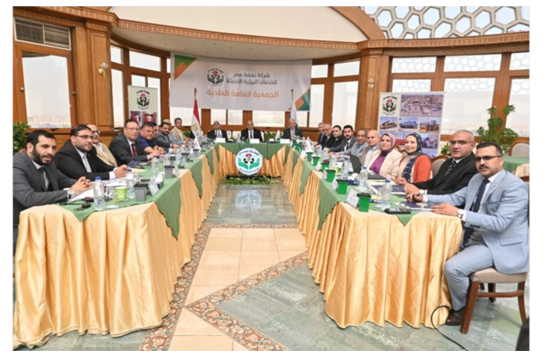
AASTMT partnered with Nahdet Misr
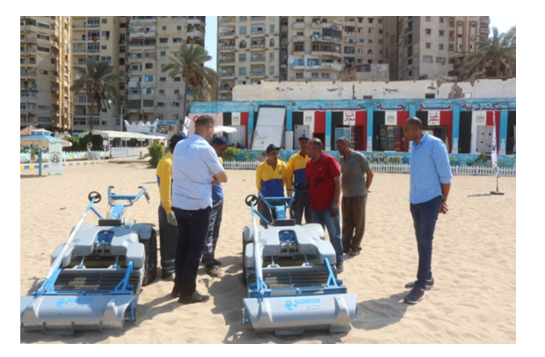
Collaboration with Nahdet Misr, AASTMT launched a pilot project to clean up Alexandria’s beaches by deploying sand-sieving machines
This initiative is part of a broader waste-management strategy targeting coastal pollution and single-use plastics. The project was conducted under the framework of sustainable coastal cleanup and aligns with AASTMT’s environmental mission. By screening beach sand and collecting plastic waste, the initiative helps reduce marine litter and supports Egypt’s circular-economy efforts.