



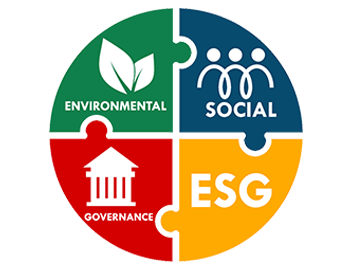
 ESG - Environmental, Social and Governance
Sustainability Research Centre
Environmental Sustainability Research and Innovation Facilities (ESRIF) at AASTMT
The Environmental Sustainability Research and Innovation Facilities (ESRIF) at the Arab Academy for Science, Technology and Maritime Transport (AASTMT) are state-of-the-art, fully equipped centers dedicated to cutting-edge research in environmental sustainability, energy systems, and climate change. These facilities empower both undergraduate and postgraduate students, as well as faculty researchers, to conduct high-impact research in environmental monitoring, modeling, sampling, laboratory analysis, and data interpretation.
ESRIF serves as a dynamic hub for interdisciplinary collaboration with national and international research institutions, government agencies, and industry stakeholders. These partnerships foster knowledge exchange, generate innovative and practical solutions to global environmental challenges, and promote sustainable practices across sectors, within and beyond the AASTMT community.
Environmental sustainability is a core institutional priority at AASTMT. The university's 2021-2026 Strategic Plan identifies sustainability as one of its four main strategic goals, underscoring AASTMT's deep commitment to fulfilling its societal responsibilities and aligning institutional efforts with the United Nations Sustainable Development Goals (SDGs).
As a leading higher education institution, AASTMT embraces its role in educating the next generation, advancing impactful research, and setting an example in environmental stewardship and sustainable development through its initiatives like ESRIF.
Connection to Curriculum, Teaching and Supervision
AASTMT's research centers do not operate in isolation from its academic programs. Across all colleges and institutes, the research facilities described in this document directly feed into undergraduate and postgraduate curricula by:
- Providing laboratory environments where students carry out coursework experiments, graduation projects, and thesis research.
- Hosting student-led research projects on climate action, marine conservation, aquaculture, pharmaceutical sustainability, and maritime environmental compliance.
- Offering faculty supervision of postgraduate dissertations within the centers' areas of specialization.
- Contributing to curriculum refresh initiatives that embed SDG-aligned content into core and elective modules.
- Running training workshops and non-credit programs that complement formal degree studies.
Institutional SDG Framework Supporting Research and Education
AASTMT's Environmental Sustainability Policy, aligned with SDG 13 (Climate Action), SDG 14 (Life Below Water), and SDG 15 (Life on Land), provides the overarching governance framework for all research and educational activities described below. The policy is overseen by the AASTMT Environmental Sustainability Committee (ESC) and is subject to review every three years to reflect evolving challenges.
The policy commits the institution to:
- Reducing its carbon footprint through energy efficiency and renewable energy transition.
- Conserving marine ecosystems through research and pollution prevention.
- Preserving terrestrial biodiversity through habitat restoration and sustainable land use.
- Integrating climate change, marine sustainability, and biodiversity topics across academic curricula.
- Publishing annual sustainability reports to ensure transparency and accountability.
Environmental Monitoring and Climate Change Laboratory (EMCCL)
https://aast.edu/en/research/emccl.php
The Environmental Monitoring and Climate Change Laboratory (EMCCL) was established to promote and improve research activities at AASTMT and to support consultancy services for industry. The lab conducts research and training in the following areas:
- Environmental impact assessments
- Air quality analysis
- Water quality and wastewater analysis
- Meteorological and climate data collection
- Climate and ocean modeling
- Measurements within health facilities, factories, industrial cities, and educational projects
Equipment
|
Instrument |
Description |
|
Portable Outdoor Air Quality Monitors |
Brand: aeroQUAL |
|
Digital Sound Level Meter |
Casella 24x / 62x / Microdust Pro |
|
Heat Stress Monitor |
For occupational and environmental assessments |
|
AERMOD View |
Air dispersion modeling software |
|
SimCLIM v4.x for Desktop |
Climate scenario modeling |
|
SimCLIM for ArcGIS Suite |
Geospatial climate analysis |
|
SimCLIM EGYPT Country-wide Additional Sets |
Egypt-specific climate datasets |
|
Senso Direct 150 |
Physical water quality properties |
|
Portable Photometer MD 600 and MD 610 |
Single and multi-parameter chemical water testing |
Contribution to Teaching
EMCCL supports undergraduate and postgraduate students from the College of Engineering and the College of Fisheries and Aquaculture Technology in carrying out field measurements and environmental monitoring assignments. The lab also provides data and analytical tools used in student thesis work on climate resilience and urban environmental quality.
Aquaculture Research Centre (ARC)
https://aast.edu/en/research/arc.php
The Aquaculture Research Centre supports research in sustainable aquaculture, biodiversity, and green energy integration. Its facilities include:
- A small experimental farm for non-traditional crops including Castor, Jatropha, Moringa, Neem, and Aloe vera.
- A greenhouse aquaponics system combining vegetable production with tilapia culture.
- An agricultural greenhouse producing algal species (Spirulina), yielding approximately 1 kg of dried Spirulina powder per month.
- Algal incubator, spectrophotometer for water quality studies, pH meter, oxygen meter, and conductivity meter.
- Biodiesel production unit capable of producing 1,000 litres per day from vegetable oils and algae.
Research and Community Activities
- Participation in the Egyptian Academy for Scientific Research-funded project on the alliance of Egyptian pharmaceutical products.
- Scientific research on aquaculture and marine living products.
- Biodiesel production training courses for students and external participants.
- Collaboration with a secondary school for building aquaponics systems.
- Partnership with a private agriculture company to establish the first Spirulina farm in Egypt (since 2018).
Contribution to Teaching
ARC directly supports the B.Sc. in Aquaculture Technology and the M.Sc. in Sustainable Management of Fisheries and Aquaculture (SMFA), both offered through the College of Fisheries and Aquaculture Technology (CFAT). Students carry out hands-on research on eco-friendly aquaculture production, circular bioeconomy, and sustainable use of aquatic resources, aligned with SDG 14 and SDG 2.
College of Fisheries and Aquaculture Technology (CFAT): Research and Education in Sustainability
https://aast.edu/en/colleges/cfat/
CFAT represents one of AASTMT's most focused academic and research units for environmental sustainability. The college integrates sustainability across both its undergraduate and postgraduate programs and is directly engaged in internationally funded research projects.
Sustainability-Focused Degree Programs
|
No. |
Program |
Sustainability Focus |
|
1 |
B.Sc. in Fisheries Technology |
Sustainable stock assessment, fisheries management, and environmental monitoring. |
|
2 |
B.Sc. in Aquaculture Technology |
Eco-friendly production systems, recirculating aquaculture, and circular bioeconomy. |
|
3 |
M.Sc. in Sustainable Management of Fisheries and Aquaculture (SMFA) |
Erasmus+-funded program addressing blue economy challenges, marine biodiversity, and international conservation policy. |
|
4 |
M.Sc. in Sustainable Blue Economy and Coastal Resource Management |
Intersection of economic growth and ocean health in the MENA region. |
Key Sustainability Courses Embedded in CFAT Programs
|
Subject Category |
Course/Module Examples |
|
Fisheries Management |
Sustainable Fisheries Management, Population Dynamics and Stock Assessment, Advanced Fishing Gears and Methods |
|
Marine Pollution |
Environmental Science and Technology, Environmental Pollution Monitoring, Meteorology (Marine Climate Risks) |
|
Ecosystem Conservation |
Aquatic Ecosystems Functions and Services, Marine Biodiversity Conservation, Fish Diseases and Biosecurity |
|
Environmental Impact Assessment |
Waste Management in Fisheries and Aquaculture, Circular Bioeconomy in Aquatic Products |
International Research Programs and Partnerships
- TouMaLi Project (Tourism Marine Litter): AASTMT develops sustainable waste management solutions for the tourism sector to protect marine ecosystems in the MENA region.
- Workshop on harvest strategy development and management strategy evaluation (MSE), Tolip Hotel, Alexandria, Egypt, January 2026.
- Working Group on Stock Assessment of Demersal Species (WGSAD) for invertebrates, FAO Headquarters, Rome, December 2025.
- Working Group on Stock Assessment of Small Pelagic Species (WGSASP), FAO Headquarters, Rome, December 2025.
- Data preparation meetings for deep-water red shrimps in the Eastern-Central Mediterranean and Eastern Mediterranean stocks, FAO Headquarters, Rome, November 2025.
Living Labs and Practical Initiatives
- Towards Clean Blue Seas: A toxicology and biochemistry initiative integrated into the curriculum to support SDG 14, involving the Ministry of Environment.
- By Fisher to Fisher training program: Practical sustainability and waste recycling training for fishing communities.
- Marine Pollution Workshops: Regular sessions involving the Ministry of Environment to teach students about reducing harmful effects on marine ecosystems.
- Coastal campus as a Living Lab: Students conduct real-world research on antifouling paint alternatives and waste recycling.
Impact on SDGs (CFAT)
|
SDG |
Contribution |
|
SDG 3 |
Marine toxin research (tetrodotoxin in Lagocephalus sceleratus) for food safety and human health. |
|
SDG 4 |
AMEH curriculum and dual-degree programs with USF and WMU. |
|
SDG 13 |
Climate literacy campaigns, Impact of Climate Change on Mediterranean Fisheries research, and the Uni-Green Project. |
|
SDG 14 |
Sustainable fisheries management, marine biodiversity protection, and Towards Clean Blue Seas initiative. |
|
SDG 17 |
TouMaLi Project (Germany, Tunisia, Morocco) and Erasmus+ sustainability mobility programs. |
Environmental Analysis Laboratory
https://aast.edu/en/complexes/isc/contenttemp.php?page_id=21200003
The Environmental Analysis Laboratory conducts physical and chemical analysis of environmental samples, supporting research, consultancy, and technical services. Since 1996, it has operated in cooperation with the Egyptian Environmental Affairs Agency (EEAA), applying the Fingerprinting Technique using four ASTM standard methods to compare spilled oil samples with suspected sources.
Chromatography Laboratory
- Gas Chromatograph with Mass Spectrometer (GC/MS) (PE-Clarus 500)
- Gas Chromatograph with Flame Ionization Detector (GC/FID) and Electron Capture Detector (GC/ECD)
- High Performance Liquid Chromatograph with UV/Visible and Fluorescence Detectors
Spectroscopy Laboratory
- Inductively Coupled Plasma Optical Emission Spectrometer (ICP-OES) (PE-Optima 2100)
- Infrared Spectrometer (Spectrum One) with Oil Express accessories
- Fluorescence Spectrometer and UV/VIS Spectrometer (AQUA-MATE) for water analysis
Physical Properties Instruments
- Closed Cup Koehler Flash Point Tester
- Pour and Cloud Point Chamber
- API Certified Hydrometer for petroleum densities
Contribution to Teaching
The Environmental Analysis Laboratory supports training in environmental forensics, oil spill response, and industrial pollution monitoring. It serves students from engineering, maritime studies, and environmental science programs undertaking practical coursework and graduation projects.
Environment Protection and Crisis Management Simulator
https://aast.edu/en/complexes/isc/contenttemp.php?page_id=21200002
This Simulator was designed to fulfill the requirements for Crisis and Disaster Management using the Incident Command System (ICS). It is a fully automated system used for training and managing real-time emergency response for a variety of natural and man-made crises according to pre-designed contingency plans. Different crisis scenarios can be simulated through the system, which holds a continuously updated database and various response models.
The simulator supports training for maritime environmental emergency response, oil spill management, and climate-related disaster preparedness, contributing to SDG 13 (Climate Action) and SDG 14 (Life Below Water) through practical competency development.
Energy Research Unit
https://aast.edu/en/research/contenttemp.php?page_id=47300111
Established on 18 February 2014 at the College of Engineering in Abu Qir, the Energy Research Unit addresses the growing demand for renewable and alternative energy solutions. It supports both campus energy sustainability and broader community energy challenges.
Objectives
- Link energy research with the current needs and future plans of AASTMT and the community.
- Integrate and support research through multi-disciplinary projects delivering innovative solutions.
- Position AASTMT as a centre of excellence in the field of energy.
Activities
- Establishment of an energy committee at the academy level.
- Energy conservation studies for multiple campus buildings, including LED technology deployment and solar PV feasibility assessments.
- Evaluation of solar heater use in hotel buildings at the Abu Qir site.
- Load monitoring studies for campus energy management.
- EU-funded research project in collaboration with Egyptian and European colleges, leading to a house of expertise in renewable energy and a master's program in energy.
Contribution to Teaching
The Energy Research Unit supports the master's program in energy and contributes to undergraduate engineering curricula through project-based learning in solar energy, energy auditing, and sustainable building systems. It aligns directly with SDG 7 (Affordable and Clean Energy) and SDG 13 (Climate Action).
Oil Spill Combating Training Centre
https://aast.edu/en/complexes/isc/contenttemp.php?page_id=21200014
The Oil Spill Combating Training Centre provides specialized training for maritime environmental emergency response. It maintains supporting equipment such as pumps and auxiliary facilities for practical drills and exercises. The centre trains students and maritime professionals in oil spill containment and clean-up, contributing directly to SDG 14 (Life Below Water) and complementing the environmental compliance curricula of the Institute of Maritime Upgrading Studies.
Geospatial Information Technology (GIT) Unit
https://aast.edu/en/complexes/isc/contenttemp.php?page_id=21200015
The GIT Unit supports the Environment Protection and Crisis Management Centre by facilitating the use of Geographic Information Systems (GIS) and Remote Sensing within AASTMT and the community. Geospatial information technology enriches environmental applications including urban planning, biodiversity assessment, disaster management, and land administration.
Services Provided
- Spatial data archiving, georeferencing, and conversion
- Remote sensing services including hyperspectral and multispectral imagery analysis
- Habitat and land use / land cover mapping
- Change detection and base map production
- Project assessment using spatial analysis
Contribution to Teaching
The GIT Unit supports research and teaching in environmental monitoring and climate change adaptation. Students from engineering, maritime studies, and sustainability programs use GIS tools for graduation projects on biodiversity mapping, coastal change detection, and urban environmental assessment. This contributes to SDG 13, SDG 14, and SDG 15.
College of Pharmacy: Sustainability in Research and Curriculum
The College of Pharmacy at AASTMT has established a comprehensive framework of undergraduate and postgraduate programs that integrate environmental sustainability across the curriculum and through active research partnerships.
Sustainability-Focused Programs
|
Program |
Sustainability Relevance |
|
Pharm D (Undergraduate) |
Covers marine drugs (SDG 14), medicinal plants (SDG 15), public health, toxicology, and environmental impact of pharmaceuticals (SDG 3, SDG 12). |
|
Pharm D Clinical Pharmacy (Undergraduate) |
Includes marine drugs, medicinal plants, Good Manufacturing Practice, and pharmacoeconomics, linking pharmaceutical production to responsible consumption (SDG 12). |
|
Advanced Diploma in Cosmetics Technology and Entrepreneurship (Postgraduate) |
Covers sustainable use of plant-based ingredients (SDG 15), pharmaceutical quality control (SDG 12), and entrepreneurship in sustainable business (SDG 8, SDG 9). |
|
M.Sc. in Pharmaceutical Sciences, Pharmaceutics (Postgraduate) |
Focuses on advanced drug delivery, pharmaceutical technology, and Good Manufacturing Practice, supporting SDG 3, SDG 9, and SDG 12. |
|
M.Sc. in Pharmaceutical Sciences, Pharmacology (Postgraduate) |
Includes pharmacogenomics, tumor immunology, and bioinformatics, contributing to SDG 3 and SDG 9. |
|
Specialized Diploma of Nutrition in Healthcare (Postgraduate) |
Addresses SDG 2 (Zero Hunger) and SDG 3 through nutrition in vulnerable populations, maternal health, and disease management. |
Notable Sustainability Courses
- Marine Drugs (EC514 / CCS041): Explores the therapeutic potential of oceans, supporting marine conservation literacy (SDG 14).
- Medicinal Plants and Pharmacognosy (PD114 / CPS141): Promotes sustainable use of terrestrial ecosystems for drug discovery (SDG 15).
- Phytotherapy and Complementary Medicine: Emphasizes sustainable sourcing of herbal medicines (SDG 15).
- Good Manufacturing Practice (PD513 / CPS032): Supports responsible pharmaceutical production (SDG 12).
- Public Health and Preventive Medicine: Links disease prevention to environmental health factors (SDG 3).
International Collaborations Supporting Sustainability
- Collaboration with Bradford University, Universitat de Saarlandes (Germany), University of the Basque Country (Spain), Sapienza Roma University, Lebanese American University, and Western University of Health Sciences.
- Renewed partnership with the American Society of Health-System Pharmacists (ASHP) for the fifth consecutive year, providing ACPE-accredited clinical pharmacy training.
- Launch of the Arab Women in Science platform in collaboration with UNESCO Regional Office in Egypt and Sudan, supporting SDG 5 and SDG 17.
- Session chaired at the first Egyptian-French Conference on Scientific and Research Cooperation during President Macron's visit to Egypt, focusing on research capacity building.
- Joint research with Pfizer, Pharco, and other international pharmaceutical companies.
- International mobility programs through Erasmus+ and IPSF.
International Accreditation
The Pharm D and Pharm D Clinical Pharmacy programs hold international accreditation from the Accreditation Council for Pharmacy Education (ACPE, United States), valid through June 2029.
College of Management and Technology (CMT): Sustainability in Education and Research
https://aast.edu/en/colleges/cmt/alex/dept/index.php?unit_id=566
CMT has embedded sustainability across 29 courses spanning its Marketing, Media Management, French, and Political Science departments. All courses have been updated through the college's Curriculum Refresh program, which aims to integrate the Sustainability in Practice Certificate into core curricula.
Sustainability-Focused Study Programs
|
Faculty |
Educational Programs |
|
Management and Technology |
Marketing Education |
|
|
Finance Education |
|
|
Accounting Education |
International Collaboration Program
Dual Degree Programme in Political Science and International Relations (with the University of Hull, United Kingdom): This program offers students two bachelor's degrees, one from AASTMT and one from the University of Hull, integrating sustainability themes including climate governance, environmental policy, human rights, and SDGs. The program contributes to SDG 4 (Quality Education) and SDG 17 (Partnerships for the Goals).
International Field Training and Sustainability Program in Spain: An 11-day intensive program in Spain where students engage with European institutional frameworks for sustainability, global standards, and socially responsible governance. The program fosters a multicultural learning environment and builds competencies for sustainable business operations.
SDG Contributions (CMT Political Science Department)
The Political Science Department contributes to SDGs through integration of sustainability themes across courses including Human Rights, Foreign Policy Analysis, International Organizations, Conflict Management, Economic Development, and Constitutional Law. Key initiatives include:
- Annual participation in Model United Nations (MUN), where students negotiate climate action and SDG implementation.
- Workshops and awareness campaigns with Caritas Egypt and UNHCR on climate change, gender equality, and sustainable entrepreneurship.
- Student-led initiatives including the Polisci Weekly Reporter, Go Green Charity Day, and Political Science International Day.
- International collaboration through the World Youth Forum in Sharm El Sheikh, addressing youth-led climate action.
- Cultural events including Arab League Day (water security, desertification) and Sudan-Egypt Day (environmental peacebuilding).
- Field visits to the Egyptian Parliament, Arab League, Egyptian Senate, and Bibliotheca Alexandrina.
These efforts directly support SDGs 4, 5, 8, 10, 13, 16, and 17, with indirect contributions to SDGs 1, 2, 3, 11, and 12.
Institute of Maritime Upgrading Studies: Sustainability in Maritime Training
The Institute of Maritime Upgrading Studies offers nine programs, all of which integrate environmental sustainability through compliance with IMO (International Maritime Organization) and MARPOL regulations, energy efficiency, pollution prevention, and the transition to cleaner maritime fuels.
|
Program |
Sustainability Focus |
|
Master Mariner Program |
Voyage planning for fuel optimization, IMO/MARPOL compliance, maritime accident prevention, and pollution control. |
|
Chief Mate Program |
Weather-optimized navigation, MARPOL alignment, climate-change awareness, and emergency environmental response. |
|
Second Officer Program |
Environmental awareness, cargo-pollution risk mitigation, and regulatory compliance without electronic dependence. |
|
Chief Engineer Program |
Operational energy efficiency, IMO environmental regulation compliance, transition to cleaner fuels, and marine ecosystem protection. |
|
Second Engineer Program |
Propulsion efficiency, hybrid and renewable energy integration, fossil fuel reduction, and ship lifespan optimization. |
|
Preliminary Third Engineer Program |
Resource optimization, greenhouse gas reduction, advanced environmental control, waste mitigation, and water conservation. |
|
Third Engineer Program |
Advanced pollution prevention systems, automation for fuel efficiency, oil pollution reduction. |
|
Preliminary Electro-Technical Officer Program |
System and fuel efficiency, sustainable equipment operation, energy loss reduction, and waste minimization. |
|
Electro-Technical Officer Program |
Advanced pollution prevention, monitoring systems, energy optimization, and oil pollution risk mitigation. |
These programs collectively support SDGs 3, 4, 5, 6, 7, 9, 11, 12, 13, 15, and 17 through their emphasis on maritime environmental compliance, clean energy practices, and climate-resilient operations.
International Research Projects Centre (IRPC)
https://aast.edu/en/centers/iprc/contenttemp.php?page_id=52500006
The IRPC coordinates between AASTMT and international funding bodies, facilitating research projects that address local and regional problems according to international standards. The centre contributes to establishing sustainability-focused research projects and fostering global partnerships aligned with SDG 17. It supports faculty and students in securing and managing internationally funded research, including EU-funded projects on renewable energy and sustainable marine management.
Maritime Research and Consultation Centre (MRCC)
https://aast.edu/en/centers/mrcc/
Since its establishment in 1984, the MRCC has completed more than 400 studies and projects in technical, engineering, IT, economic, and managerial fields related to the maritime sector. It supports the development of sustainable port frameworks, including the transition to Green Ports and Smart Ports. The MRCC contributes to SDG 11 (Sustainable Cities and Communities), SDG 13 (Climate Action), and SDG 17 (Partnerships for the Goals) through its applied research in sustainable maritime transport.
Industry Service Complex (ISC)
https://aast.edu/en/complexes/is-complex/
Established in 2004, the ISC facilitates the transfer of modern technology to industrial sectors and provides consultancy and technical services. Through its Research and Project Development Department, Health and Safety Department, and Training Department, the ISC implements applied projects using contemporary international technology. It supports sustainability in industrial operations and serves as a bridge between AASTMT's research capacity and community and industry needs.
Maritime Safety Institute (MSI)
https://aast.edu/en/institutes/msi/contenttemp.php?page_id=6900005
MSI operates in compliance with DNV and ISO 9001:2008 quality standards and implements training aligned with IMO regulations and OPITO standards. It provides training in personal safety, survival, fire prevention, and search and rescue operations, supporting maritime environmental safety and SDG 14 through competent handling of maritime emergencies that could result in marine pollution.
Sea Training Institute (STI)
https://aast.edu/en/institutes/sti/index.php
STI offers internationally recognized training programs for nautical engineering and marine electro-technical officers, with practical sea training equivalent to one year of sea service. The institute prepares cadets for global maritime industry leadership, embedding environmental compliance and sustainable operations through its on-board training vessel (Aida 4) and structured training trips. STI contributes to the Environmental Sustainability Policy through the Sea Training Institute's role as a policy owner.
Summary: Research Centres and Their Contributions to SDGs and Academic Programs
|
Research Centre / Unit |
Primary SDGs Supported |
Academic Programs Served |
|
EMCCL |
SDG 13, SDG 14 |
Engineering, Fisheries (UG/PG) |
|
Aquaculture Research Centre |
SDG 2, SDG 14 |
B.Sc. Aquaculture, M.Sc. SMFA (UG/PG) |
|
CFAT Programs and Living Labs |
SDG 13, SDG 14, SDG 4, SDG 17 |
B.Sc. Fisheries/Aquaculture, M.Sc. SMFA, M.Sc. Blue Economy (UG/PG) |
|
Environmental Analysis Lab |
SDG 14, SDG 12 |
Engineering, Maritime Studies (UG/PG) |
|
Crisis Management Simulator |
SDG 13, SDG 14 |
Maritime and Engineering Programs (UG/PG) |
|
Energy Research Unit |
SDG 7, SDG 13 |
Engineering, M.Sc. Energy (UG/PG) |
|
Oil Spill Combating Training Centre |
SDG 14 |
Maritime Upgrading Institute (PG Training) |
|
GIT Unit |
SDG 13, SDG 14, SDG 15 |
Engineering, Environmental Studies (UG/PG) |
|
College of Pharmacy |
SDG 3, SDG 14, SDG 15, SDG 12 |
Pharm D, M.Sc. Pharmaceutical Sciences, Diplomas (UG/PG) |
|
CMT (Political Science, Marketing, Media) |
SDG 4, SDG 13, SDG 16, SDG 17 |
B.Sc. and Dual Degree programs (UG/PG) |
|
Institute of Maritime Upgrading Studies |
SDG 7, SDG 12, SDG 13, SDG 14 |
9 Maritime Officer Programs (PG Training) |
|
IRPC and MRCC |
SDG 11, SDG 13, SDG 17 |
Postgraduate Research Programs |
|
ISC, MSI, STI |
SDG 14, SDG 9 |
Maritime and Technical Programs (UG/PG) |