



 UI-Green Metric
[4.2] Water Conservation Program Implementation
Description:
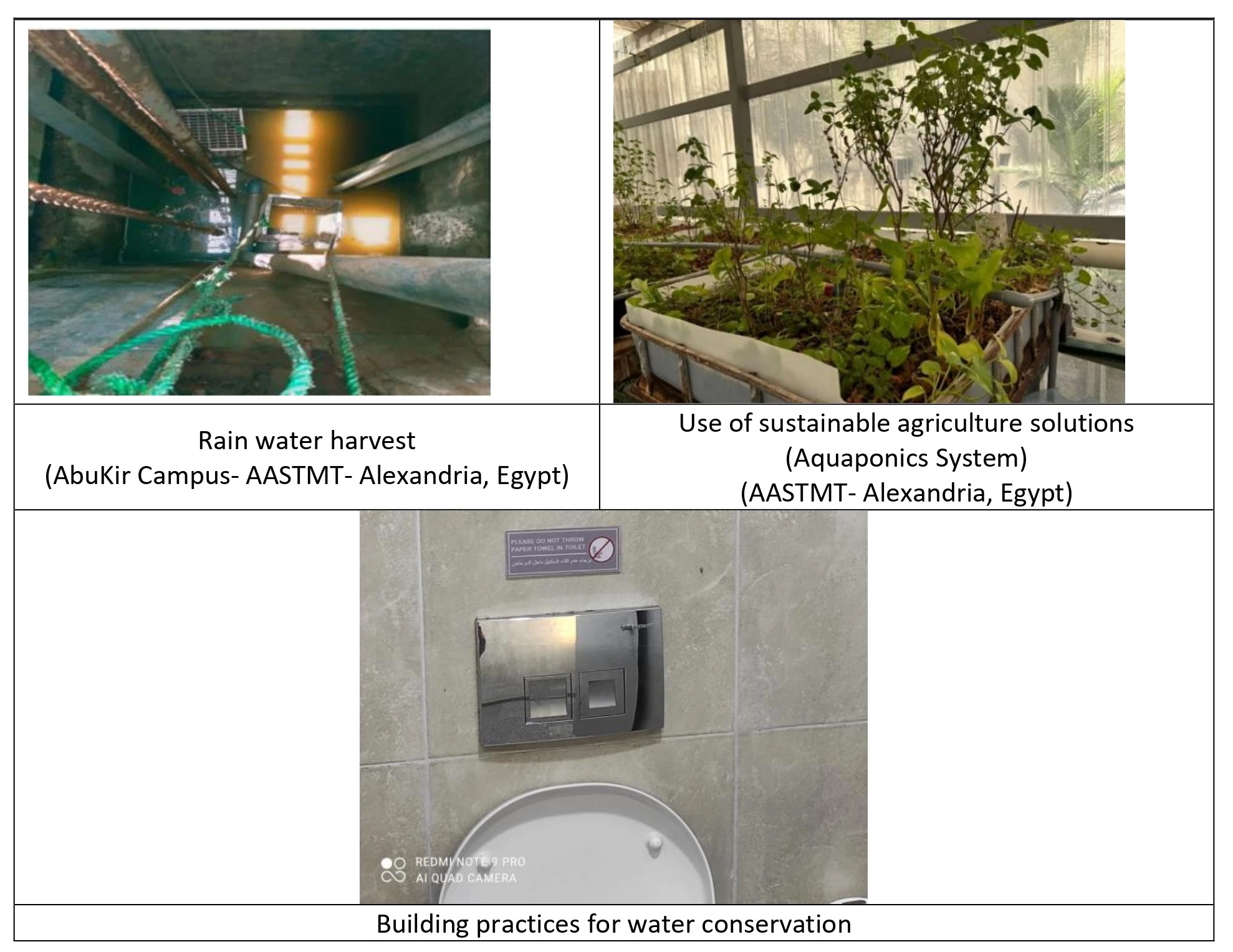
AASTMT promotes water conservation through several initiatives, including rainwater harvesting systems that direct collected water to green areas and agricultural basins, reducing pressure on sewer networks and providing sustainable irrigation. The university also employs sustainable agriculture practices, such as hydroponic and aquaponic systems, which reduce water use by up to 90% compared to traditional methods. Through green building principles, drought-resistant plants, and efficient water plots, AASTMT further minimizes irrigation needs. Off-campus, AASTMT contributes expertise in sustainable water management projects.
- Rainwater Harvest:
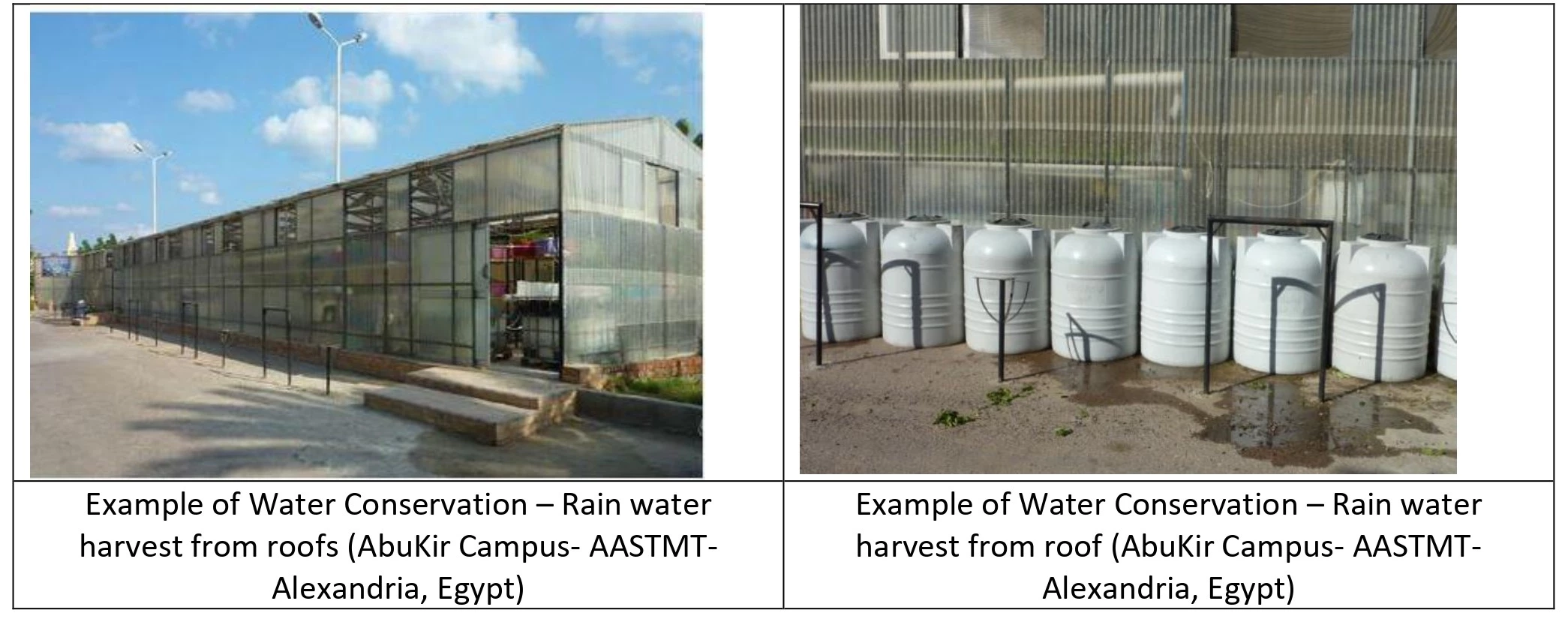
The rainwater harvested utilizes open drainage on public surfaces and walkways redirects rainwater to agricultural basins and green areas, alleviating pressure on sanitary sewer networks. Rainwater collection pit is located behind the buildings of the College of Architecture and Computers then rainwater is channeled into the garden pipe for the landscape around the campus of Abukir. The AAST campus in city of New Alamein, in general, are designed with a dedicated rainwater drainage network that collects rainwater through site-wide drainage systems. This network is connected to the main public system and is utilized for irrigation and other purposes by the New Alamein Authority. In addition, rainwater is harvested from the greenhouse in the Aquaculture Center in AAST roofs and stored in ten water tanks, with a capacity of 500 liters. This collected water is then utilized throughout the year in the hydroponic system and fertilizer production units, ensuring efficient water use and supporting sustainable agricultural practices.
2. Sustainable Agriclture :
a.Hydronic System Integration and Water Reuse:
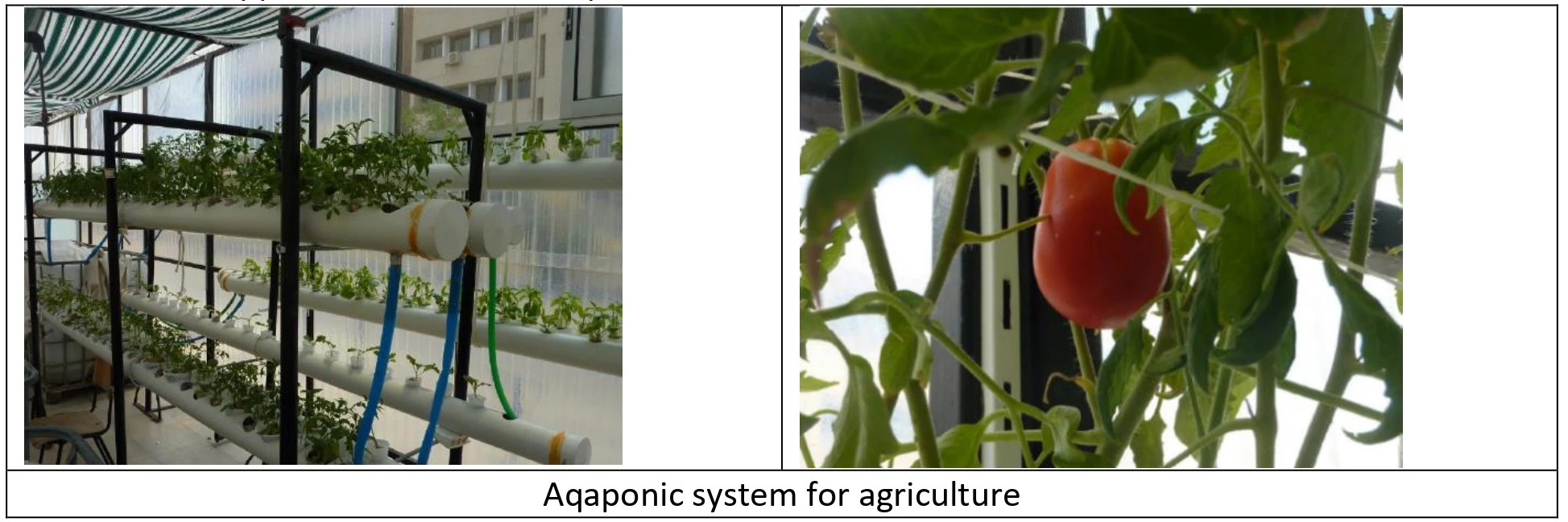
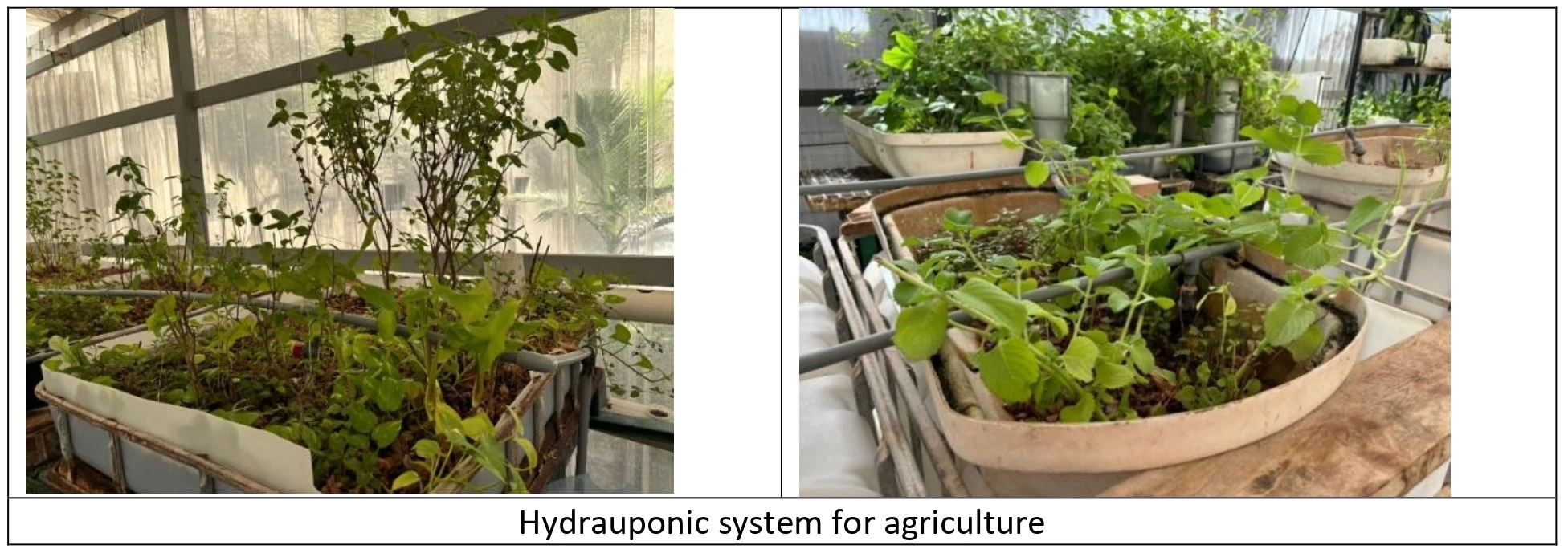
At the Aquaculture Research Center, hydroponic systems are used for over 12 years now to reduce water consumption by 90%, thus significantly enhancing water-use efficiency in food production. The developed hydroponic system is based on the technique of “Ebb and Flow” using gravel as the support medium. The main nutrient solution is “vermi-compost tea”. The system uses no chemical fertilizers or any pesticides to control insects and instead uses natural products made from Neem Oil or garlic solution for controlling insects. These innovations contribute to sustainable resource management, reducing water use while promoting organic food production.
b.Aquaponic Food production:
AAST employs an aquaponic system for food production that minimizes freshwater usage, relying on innovative soil types and organic fertilizers. This sustainable method reduces freshwater requirements by 90% compared to traditional agricultural techniques, while achieving a threefold increase in crop yield over conventional land farming. Various crops, including tomatoes, cucumbers, and cereals like rice and maize, have been successfully cultivated with this approach at the AAST Aquaculture Research Center.
https://aast.edu/en/sdg/goals.php?page_id=120600054
https://aast.edu/en/sdg/goals.php?page_id=120600054
https://aast.edu/en/sdg/goals.php?menutab=7&unit_item=1206&page_id=120600018
https://aast.edu/en/sdg/contenttemp.php?page_id=120600029
3.Components of Green Building Implementation:
AASTMT uses green building aspects in planting and gardening as follows:
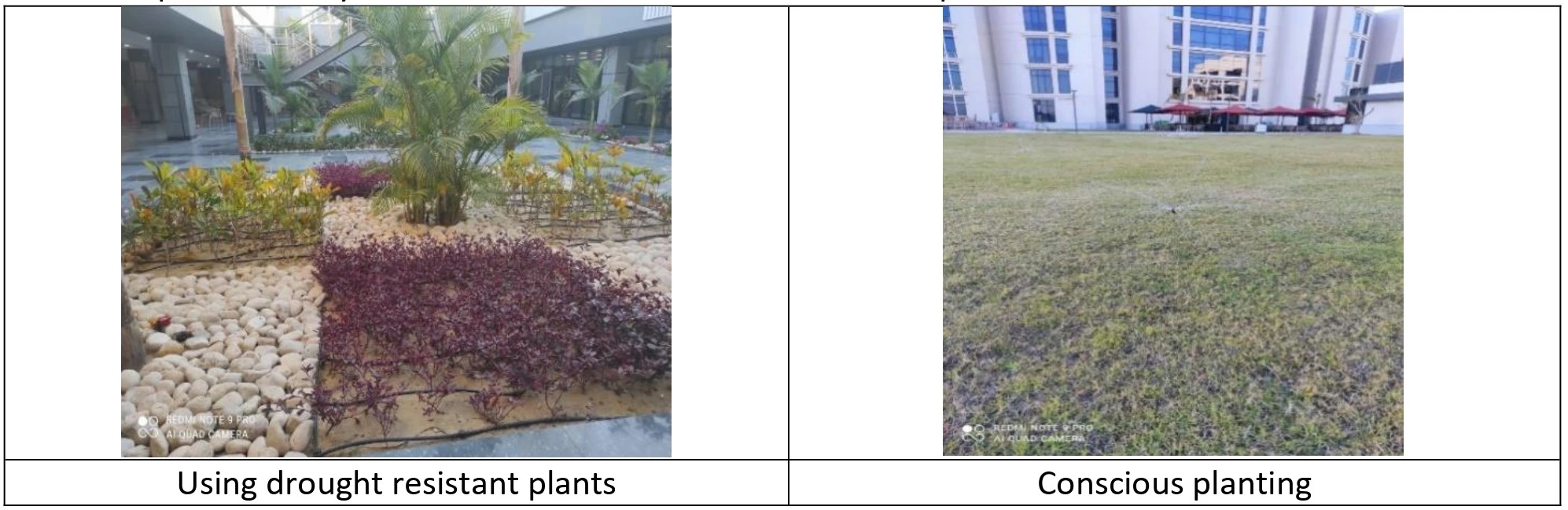
- Water-saving plots are used, which will reduce water consumption by about 30%.
- Rainwater is collected in the main lake and used for irrigation.
- Planting castor plants, cactus and Jatrophaplant from greywater produced from the building of Maritime Transport building in AbuKir campus
- The use of drought-resistant plants to minimize irrigation needs and absorb rainwater, helping to mitigate the impact of heavy rainfall in New Alamain and Abukir campus.
4. AAST contributes to off-campus water conservation
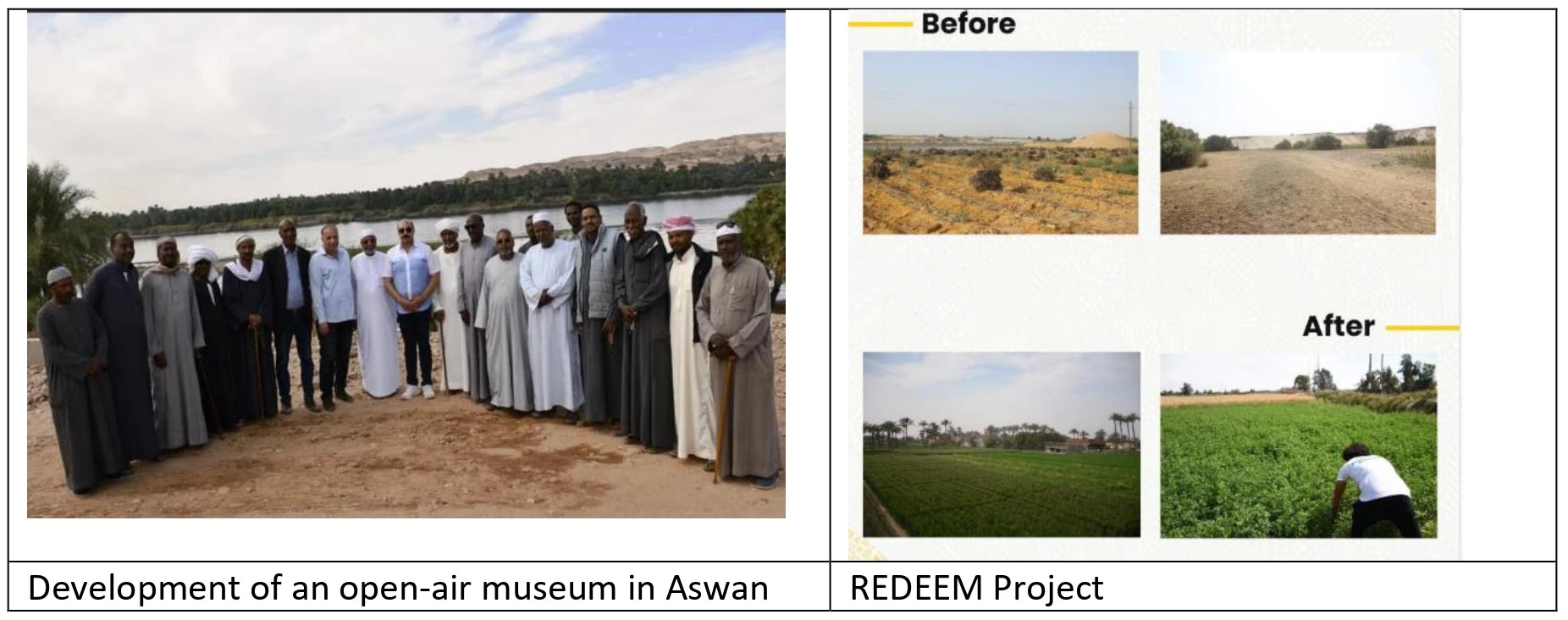
- AASTMT is involved in the development of an open-air museum in Aswan, contributing expertise in water supply and sewage networks planning. Dr. Abdel Aziz Farouk and the project team from AASTMT are working alongside local authorities to ensure sustainable infrastructure, including irrigation systems and water resource management, to support the eco-friendly project. This initiative promotes both environmental preservation and sustainable tourism while enhancing local water systems to benefit surrounding communities.
- Enactus is a student-led organization that focuses on using entrepreneurial action to create social impact, aiming to address issues such as poverty, education, and sustainability through innovative projects. The organization has been in action for more than 12 years empowering students to identify real-world problems, propose entrepreneurial solutions, and implement them in ways that benefit communities, while also contributing to broader sustainability goals, such as the United Nations
- Sustainable Development Goals. Enactus AAST is involved in several innovative projects that contribute to sustainability and entrepreneurship, such as Lazarus, Sprouting, and Mycelium:
- Lazarus: This project focuses on creating biodegradable packaging from organic waste, tackling the problem of plastic pollution while promoting the circular economy. By using agricultural waste, Lazarus offers an eco-friendly alternative to plastic packaging that decomposes naturally, aligning with sustainability goals.
- Sprouting: The project aims to enhance urban farming by developing vertical farming solutions, allowing communities to grow their own food in limited spaces while using less water and resources. Sprouting helps address food security and promotes sustainable agricultural practices, especially in densely populated areas.
- Mycelium: This innovative project harnesses the power of fungi (mycelium) to create sustainable materials, such as eco-friendly building materials and packaging alternatives. Mycelium’s potential to replace non-renewable materials makes it a promising solution for various industries, reducing environmental impact.
In 2022, Enactus project REDEEM project secured THE AAST TEAM the 3rd place on Egypt in the last National competition. Redeem is a tailored solution which is a mixture of organic bacteria and agriculture wastes that solves the salinity of the soil and helps the soil to get back to it's normal state. Redeem directly impacted 2560 people including farmers, agriculture engineers, empowered women and children who got the chance to be back into schools instead of working. Moreover, our project indirectly impacted 8060 people.
-
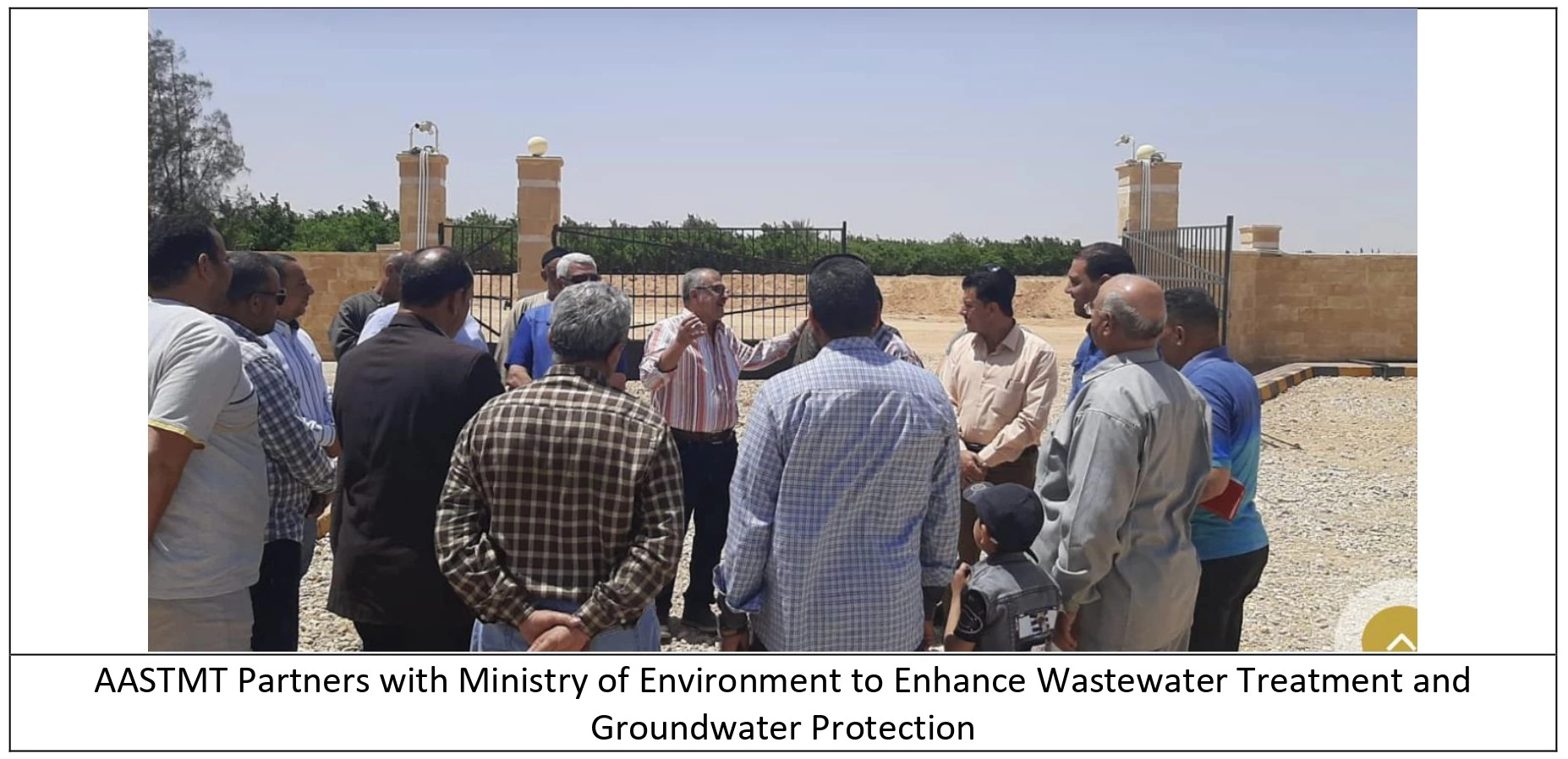
- AASTMT partners with ministry of environment to enhance wastewater treatment and groundwater protection in the waste management initiative led by the Ministry of Environment. AAST supervises the operation of a new landfill cell in Badr City, aimed at protecting groundwater and ensuring safe waste disposal practices. Additionally, AAST is providing training to workers on modern waste management techniques, focusing on wastewater treatment and water resource management to reduce water contamination and promote environmental sustainability.
https://www.facebook.com/share/p/vC25NoyuYJRCoFoN/