 Goal 11. Sustainable Cities and Communities
11.4.1 Sustainable practices targets

2024-2025
From Policy and Baselines to Low-Emission Mobility: AASTMT’s Five-Campus Strategy
Across Egypt, the Arab Academy for Science, Technology and Maritime Transport (AASTMT) approaches sustainable commuting as an institutional accessibility, traffic-management and decarbonisation challenge. Its official Transport and Travel Planning Policy and Integrated Transport Plan seek to reduce dependence on individually driven cars, maintain affordable shared transport, encourage walking and cycling, manage campus parking and support the transition toward electric vehicles. The policy also specifies biannual student-and-staff travel surveys to estimate a commuter-travel carbon footprint, together with annual fleet and EV-parking-permit reviews. These are documented monitoring commitments rather than independent proof that every review was completed during 2024–2025.
In Port Said, a 2025 green-hydrogen workshop is documented. In Aswan, a campus solar-power installation supports the broader clean-energy transition.
AASTMT translates this framework into a carefully verified sequence: a dated expansion of shared campus access, a carpooling behaviour-change campaign, skills development for electric mobility, and a quantified EV-infrastructure proposal. The published 2024 transport table separately reports 844 vehicles across managed cars, cars entering campus and motorcycles, providing a retrospective vehicle-activity reference; this is not the number of commuters, a mode-share survey or proof of carbon savings. The priority for the next reporting cycle is to connect such operational records to campus-specific ridership, travel-mode shares, survey results, target thresholds and audited commuting-emissions trends.
The multi-campus delivery model combines established services with locally evidenced actions. At Alexandria’s Abu Qir Main Campus, AASTMT describes a fleet of more than 25 buses, nine coasters and nine minibuses, a free shuttle between Abu Qir and Miami campuses (approximately 20 km apart), pedestrian-priority measures, parking controls and the dated Car Pooling Day campaign. For Cairo, Smart Village and Heliopolis participate in the Academy’s wider transportation and sustainability framework; the El Alamein announcement explicitly promotes bus links with Cairo, while a Smart Village electric-mobility expert-session report was published in May 2025 without confirming the precise date of the session. El Alamein has the strongest additional location-specific records in this period: new shared-bus routes and a signed proposal for two 22-kW EV charging points.
1. EU Workshop on Green Hydrogen Technologies & Zero-Emission Transport Targets (Port Said Campus)
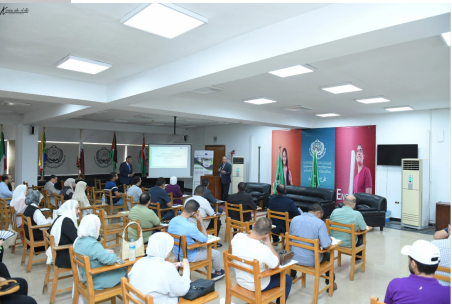
AASTMT’s Port Said Campus hosted an intensive European Union workshop dedicated to deploying green hydrogen technologies and establishing decarbonization benchmarks for the maritime and land transport sectors. The workshop formulated measurable operational targets for transitioning conventional logistics fleets and transit vehicles to hydrogen and electric propulsion. The initiative established measurable pathways to phase out fossil-fuel dependency, directly reducing metropolitan air pollution and greenhouse emissions in coastal industrial corridors.
Link: https://aast.edu/en/news/news-details.php?language=1&unit_id=451&news_id=486104940&event_type_id=1
2. One Shared Journey, Less Congestion: AASTMT Car Pooling Day
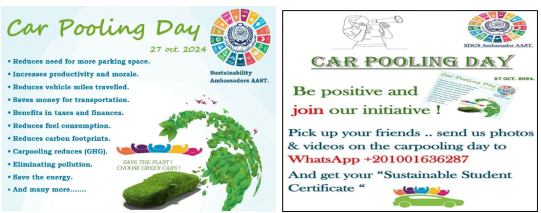
AASTMT’s Sustainable Development Administration organized Car Pooling Day on 27 October 2024 at Abu Qir, encouraging the Academy community to choose ride-sharing over individual car travel. Supported by AASTMT Sustainability Ambassadors, the campaign highlighted lower fuel consumption, reduced vehicle kilometres, less traffic congestion, reduced parking demand and potential greenhouse-gas savings. The official campaign invitation asked participants to share photographs and videos and offered a Sustainable Student Certificate, turning sustainable commuting into a visible student-engagement activity. This community-facing intervention reinforces carpooling as a practical part of urban planning and sustainable transportation while supporting SDG 11, SDG 7 and SDG 13. Promotional benefits are campaign objectives; the published evidence does not disclose verified participation counts, car occupancy or quantified CO₂ reductions.
Link: https://aast.edu/en/sdg/contenttemp.php?lnselect=1&page_id=121300009
3. Shared Transport: Daily Shuttle Services and Inclusive Access
To achieve long-term carbon neutrality, AASTMT operates an extensive network of monitored, scheduled shuttlebus fleets connecting suburban residential hubs with primary campuses across Alexandria, Cairo, and Port Said. AASTMT's Sustainable Campus Framework defines verifiable institutional targets to transition internal transit into hybrid and Electric Vehicles (EVs), optimize bus routing through intelligent transport systems, and establish dedicated bicycle infrastructure and pedestrian pathways to minimize personal vehicle use and urban traffic noise. The Academy documents free daily shuttle connections between its Abu Qir and Miami campuses, approximately 20 km apart, alongside an existing fleet of over 25 buses, nine coasters and nine minibuses. Discounted private-sector bus connections and GPS-enabled transport complement accessibility for students and staff.
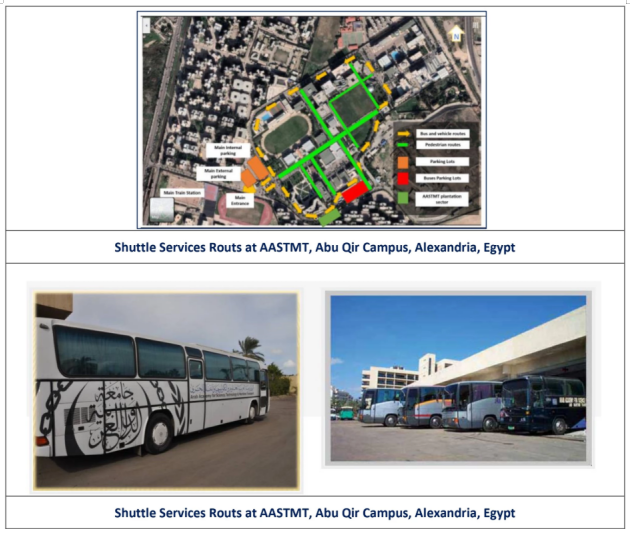
https://aast.edu/en/sdg/goals.php?page_id=101190033&unit_item=10119
4. AASTMT High-Level Disaster Resilience & Urban Sustainability Program Visit
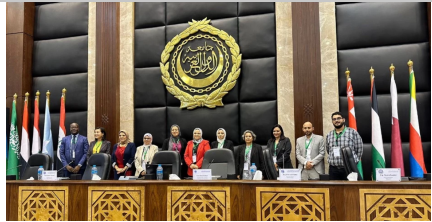
AASTMT hosted an official joint delegation of Arab and European Union delegates for the Disaster Risk Reduction and Urban Sustainability Monitoring Program. The multilateral sessions evaluated regional campus resilience indicators, establishing measurable multi-year institutional targets for climate mitigation, emergency transport routing, and sustainable infrastructure operations. The program benchmarks university mobility and facility management protocols against international frameworks to ensure comprehensive resilience against climate hazards in Mediterranean coastal quarters.
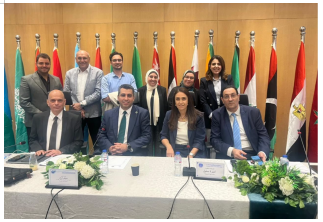
Link: https://aast.edu/en/news/news-details.php?language=1&unit_id=532&news_id=486104594&event_type_id=1
5. 2024 Parking Access Controls: Shifting Away from Private Cars
AASTMT’s Abu Qir mobility program includes student permit restrictions, time-limited parking, peripheral parking zones, preferred spaces for carpools, and a digital carpool-matching service. The published implementation timeline identifies permit-based access and restricted parking in 2024, alongside shuttle expansion in 2023–2024. These actions support safer, more walkable campus streets and lower demand for individual car trips.
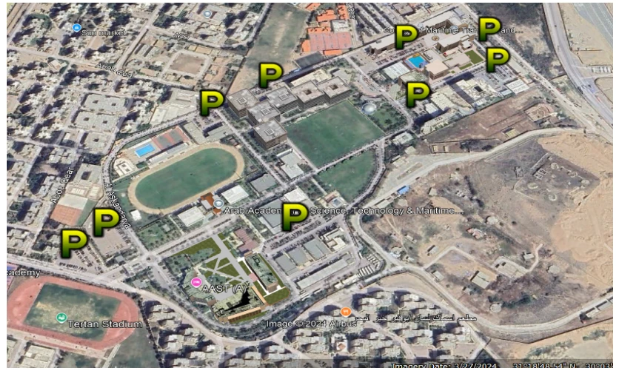
Parking Areas at Abu Qir Campus, Alexandria, Egypt
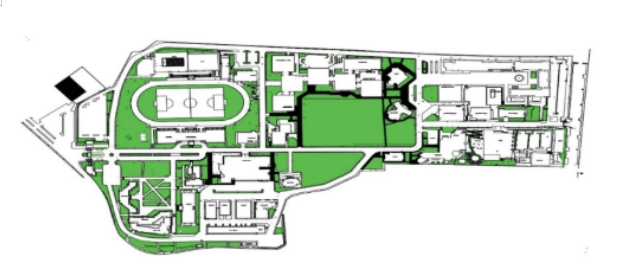
Ratio of Parking Areas to Total Campus Area (Abu Qir Campus, Alexandria, Egypt)
Link: https://aast.edu/en/sdg/contenttemp.php?page_id=101190036
↵
2023-2024
Measure and set targets for more sustainable commuting (walking, cycling or other non-motorized transport, vanpools, carpools, shuttlebus or public transportation, motorcycle, scooter or moped, or electric vehicles).
AASTMT plays a pivotal role in promoting sustainable urban practices through student innovation, workshops, and community engagement. The Academy emphasizes practical solutions for water management, waste reduction, energy efficiency, and smart city integration, helping to create resilient urban ecosystems while fostering environmental awareness among students and staff
Fostering Urban Sustainability Through Innovation and Education
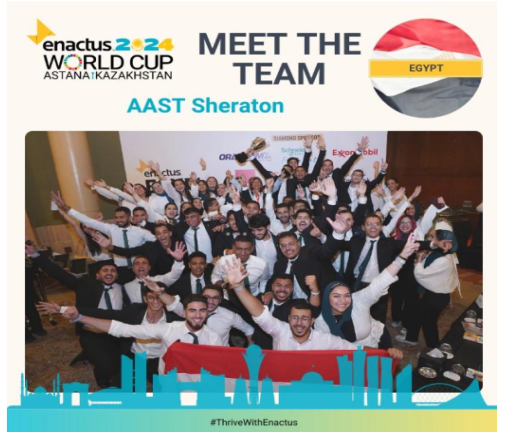
- Urban Water and Waste Projects: Enactus AAST Sheraton team implemented “Rose Carbon” and “Aquatica” projects to remove pollutants, recycle water, and reuse materials, contributing to clean water systems, solid waste reduction, and healthier urban environments.
Clean Water and Sanitation-Alexandria | AASTMT
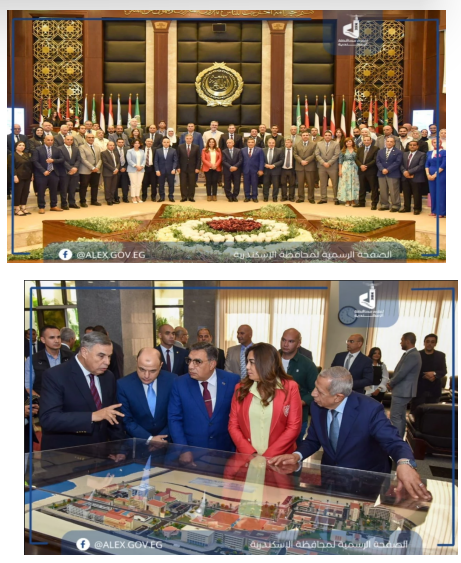
2.Urban Waste and Sanitation Projects: AASTMT hosted workshops with Egypt’s Minister of Local Development to upgrade municipal solid waste management, stormwater, and sewage networks. The initiative also introduced an internationally standard sanitary landfill, enhancing public health, improving road networks, and promoting smarter, more resilient urban environments.
Arab Academy for Science, Technology and Maritime Transport- | AASTMT
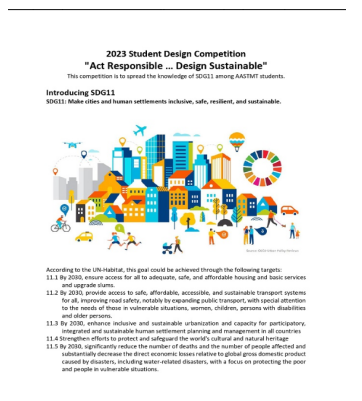
3.Student-Led Urban Innovation – The 2023 AASTMT Student Design Competition, “Act Responsible … Design Sustainable,” engaged students in developing resilient and sustainable urban solutions. Projects addressed urban planning, road networks, public transport, solid waste management, and traffic congestion reduction while considering natural disaster risks, flooding, and cultural heritage protection. Initiatives integrated concepts of smart cities, public spaces, and sustainable housing, fostering innovative urban development.
Sustainable Cities and Communities-Alexandria | AASTMT
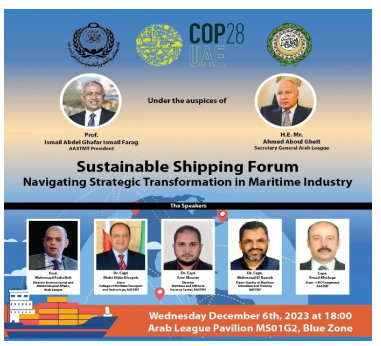
4.Participation in Global Climate Action - AASTMT participated in the United Nations Climate Change Conference (COP), contributing to international discussions on sustainability, climate resilience, and green urban development. Through active involvement in technical sessions and collaborative initiatives, AASTMT supported global efforts to advance environmentally responsible cities and long-term sustainable practices.
Arab Academy for Science, Technology and Maritime Transport- | AASTMT
Showcasing Smart Transport Innovations: AASTMT participated in TransMEA 2024, presenting cutting-edge technologies in smart transport, digital transformation, and maritime logistics. The exhibition highlighted innovative solutions for sustainable mobility, enhanced urban transport systems, and promoted knowledge exchange, reflecting the Academy’s commitment to advancing environmentally conscious and smart urban development.
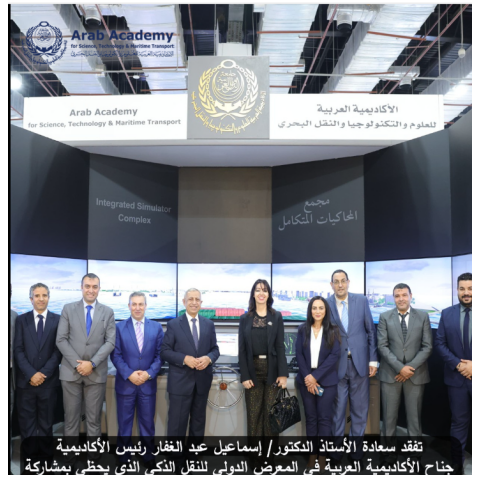
AASTMT Shines at TransMEA 2024 with... - Arab Academy Cairo Campuses | Facebook
Promoting Active and Sustainable Campus Mobility - AASTMT organized multiple student activities that encourage healthy, low-carbon mobility habits and support sustainable commuting:
- Pedaling Towards Fun: AASTMT Students Embrace Active Campus Life
Arab Academy of Sciences and Technology students enjoyable time riding bicycles and more fun activities.
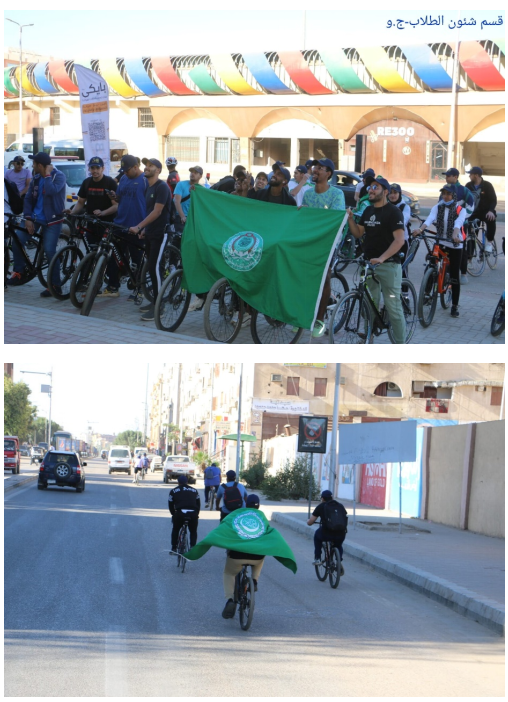
جانب من فعاليات بطولة الترايثلون التي... - AAST Aswan Student Affairs | Facebook
- Triumphing Through Teamwork: AASTMT's Student Affairs Department Hosts Thrilling Triathlon Challenge
A part of the triathlon championship activities organized by the Student Affairs Department, Sports Activities for AASTMT students.
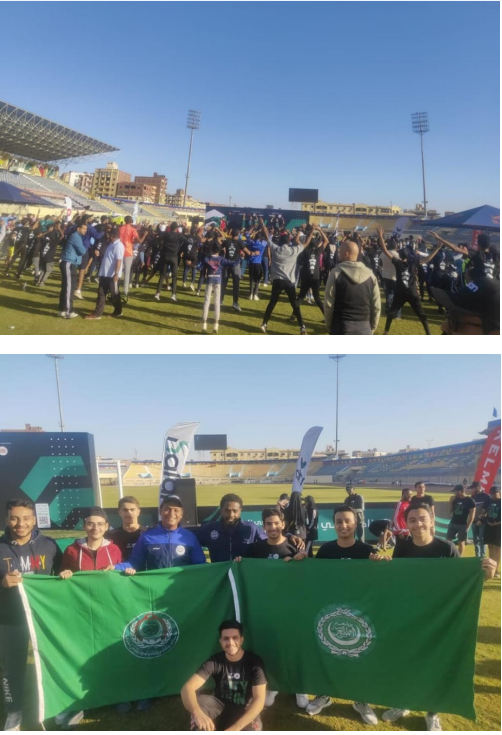
تحت اشراف قسم شئون الطلاب (النشاط... - AAST Aswan Student Affairs | Facebook
- Aquatic Adventures: AASTMT Students Make a Splash at the Festival of Rowing and Water Sports
Other students from the Arab Academy of Science and Technology enjoy their time at the Festival of Rowing and Water Sport.
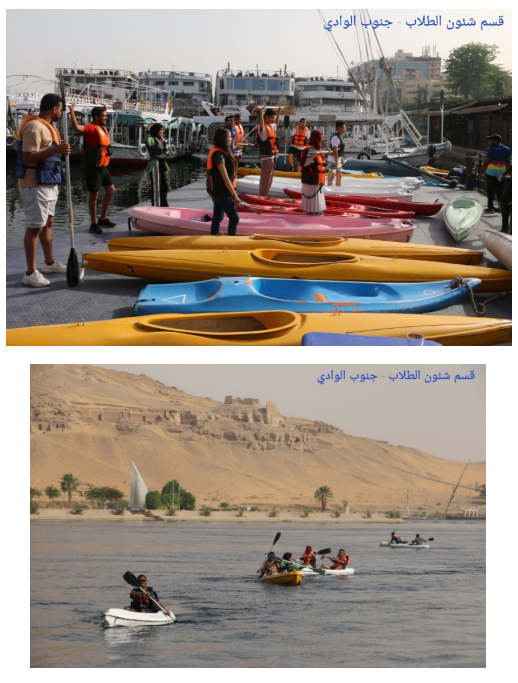
جانب من فعاليات مهرجان الكياك بنادي... - AAST Aswan Student Affairs | Facebook
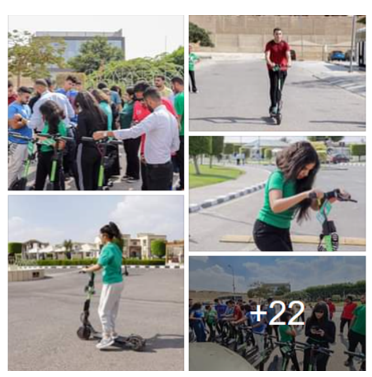
- Scootin’ Through Campus: AASTMT's Electric Scooter Adventure
Arab Academy of Sciences and Technology students enjoyable time riding electric scooters and more fun activities.
Advancing Urban Health and Resilient Campus Infrastructure
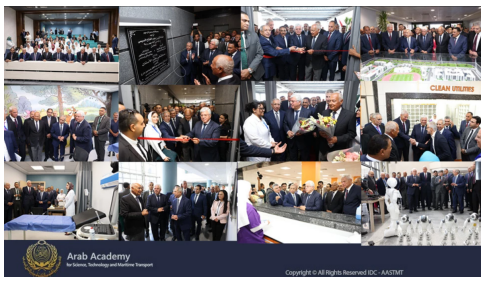
Campus Health Infrastructure – AASTMT inaugurated new medical facilities at its Al Alamein campus, including specialized clinics, hospital rooms, an isolation unit, a mobile radiology department, and a modern dental hospital with AI-based imaging. These developments enhance public health, improve the urban environment, support resilient and safe urban spaces, and contribute to smart campus infrastructure aligned with sustainable urban development.
↵
Arab Academy for Science, Technology and Maritime Transport- | AASTMT
Strengthening Urban Sustainability Through Education, Policy Engagement, and Community Action
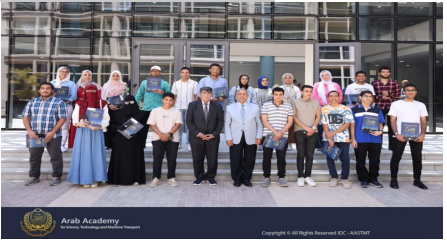
- Scholarships for Future Urban Leaders – AASTMT awarded scholarships to top Thanaweya Amma students across its campuses, including Al Alamein, promoting access to quality education and supporting the development of a skilled generation. This initiative empowers youth to contribute to urban development, improve public spaces, and foster smarter, resilient, and sustainable urban environments.
Arab Academy for Science, Technology and Maritime Transport- | AASTMT
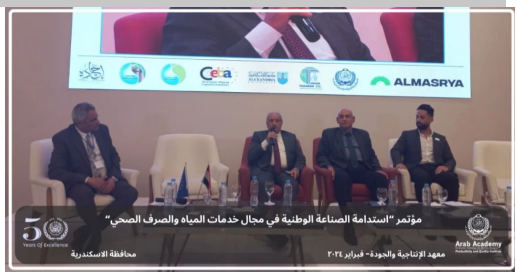
2.Water and Sanitation Infrastructure Development – AASTMT’s Productivity & Quality Institute participated in the national conference on sustainable water and sanitation services, addressing pollution reduction, service quality improvement, and infrastructure upgrades with modern technologies. The initiative supports sustainable urban practices, enhances municipal services, and contributes to resilient, healthier urban environments.
Productivity & Quality Institute-Alexandria | AASTMT
3.Green Smart Building Initiatives – AASTMT participated in the international Green Smart Sustainable Building Conference, emphasizing energy-efficient construction, modern urban infrastructure, and sustainable city development. The event promotes smart buildings, urban planning, and resilient, environmentally conscious urban environments.
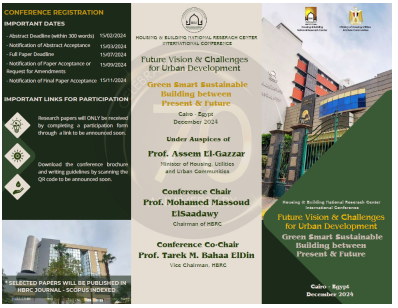
Arab Academy for Science, Technology and Maritime Transport- | AASTMT
4.Sustainable School Practices – AASTMT launched an SDG initiative in seven Alexandria schools to promote sustainable urban development, efficient water and energy use, and protection of cities, public spaces, and communities from natural disasters such as flooding and urban heat islands. The program empowered teachers and students to apply waste management, pollution reduction, and urban resilience strategies, fostering collaboration, sustainable planning, and smarter, safer urban environments.
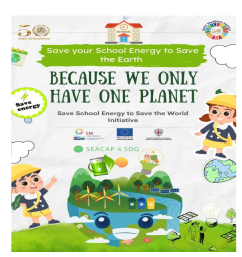
“Towards a Green Sustainable Future” Initiative - Clean Water and Sanitation
Sustainable Practices for Urban Resilience - AASTMT, in collaboration with RENEW-MENA and the World Bank, hosted an event promoting sustainable urban practices, energy transition, and climate action. The sessions engaged STEM students in renewable energy, electric mobility, and urban resilience, emphasizing smart cities, public spaces, pollution reduction, and climate-conscious communities. The initiative fostered innovation, skills for climate resilience, and awareness of sustainable urban development.