



 Goal 11. Sustainable Cities and Communities
11.4.3 "Allow remote working

2024-2025
Executive General Summary: Digital Collaboration and Lower-Commuting Urban Futures
Arab Academy for Science, Technology and Maritime Transport (AASTMT) operates an academic and administrative digital ecosystem that supports online engagement, electronic workflows and geographically distributed knowledge exchange. Its official reporting identifies AASTMT Moodle, Paperless administrative workflows and hybrid/virtual conferences as enabling infrastructure. These mechanisms can support smarter cities and urban sustainability by making some academic, administrative and collaborative activities less dependent on daily travel, with potential benefits for commuting patterns, traffic congestion and pressure on public transport.
AASTMT’s multi-campus footprint creates a relevant setting for these practices. Alexandria (Main Campus and associated institutes) contributed completed online professional and international seminars; Port Said hosted a hybrid STEM workshop; El Alamein supported a hybrid international consortium and made logistics sessions accessible online; and Aswan-based Civil Protection professionals received specialised virtual training without having to attend at the Alexandria training institute. Cairo campuses, including Heliopolis and Smart Village, are part of the broader institutional network and may access academy-level digital systems.
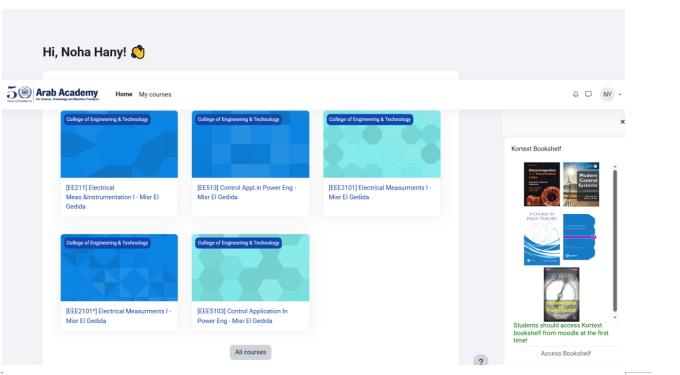
2. AASTMT’s Institutional Digital Foundation: Moodle and Paperless Services
The Academy’s Moodle learning environment and Paperless administrative portals provide official examples of distributed content and electronic staff workflows.
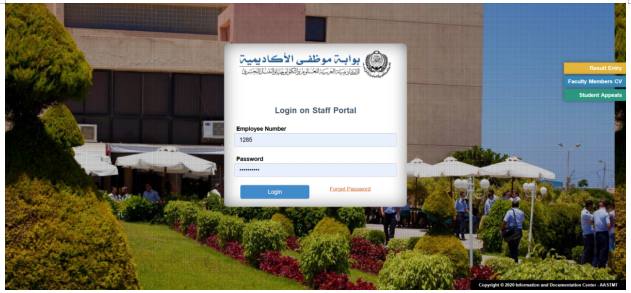
Link: https://paperless.aast.edu/worklist/Main.aspx
2. Digital Access Beyond Campus: 4th International Logistics Camp on AI in Logistics
Held on 4–5 September 2024, the fourth International Logistics Camp convened more than 160 participants and 21 speakers to explore AI-enabled logistics and digital supply chains. AASTMT reports that all sessions were recorded and published through its online learning platforms and social media, extending free access beyond physical attendance.
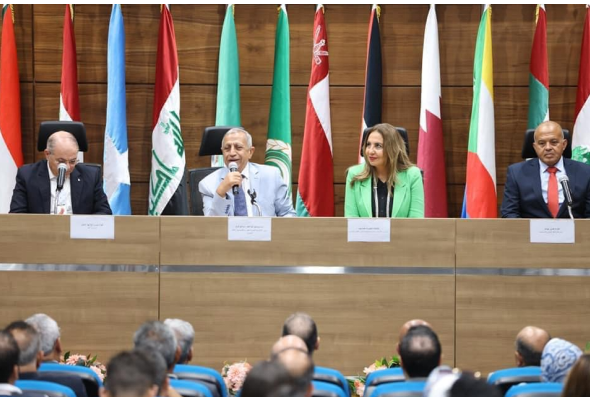
Link: https://aast.edu/en/colleges/citl/elalamein/contenttemp.php?page_id=61500072
3. Delivering Specialist Safety Training Remotely to Aswan
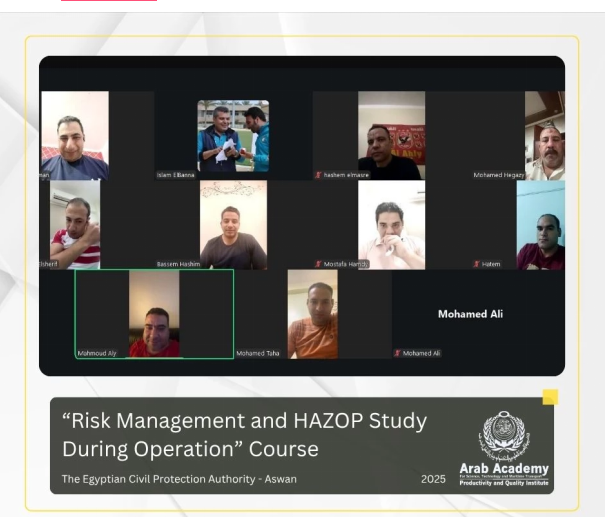
From 18 to 29 July 2025, AASTMT’s Productivity and Quality Institute conducted virtual training on risk management and HAZOP studies for Civil Protection officers and leaders based in Aswan. Delivered by Dr Islam Elbanna, the sessions used online interaction to reach public-service professionals across a significant geographic distance. The documented model widened access to operational risk and disaster prevention expertise while avoiding the necessity of every learner travelling to Alexandria; any reduction in commuting, road-network demand or emissions remains unquantified.
4. Virtual Professional Outreach: Low-Current Engineering Career Webinar
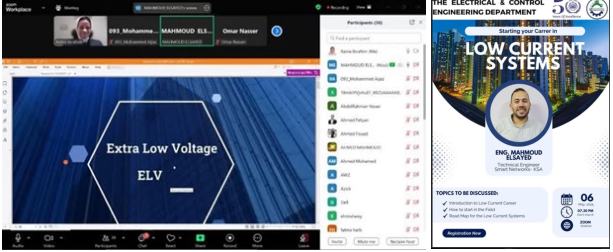
Successfully delivered on 6 May 2025 by the Electrical and Control Engineering Department, this webinar connected AASTMT students and faculty with students from other universities and practising engineers. Its programme addressed low-current systems, sector entry points and engineering career pathways. The online participation record shows practical use of virtual learning across institutions, potentially avoiding individual city trips and traffic congestion for some attendees.
Link: https://aast.edu/en/news/news-details.php?event_type_id=1&language=1&news_id=486105115&unit_id=45
5. Digital Maritime Collaboration: Chinese–Egyptian Port Skills Seminar
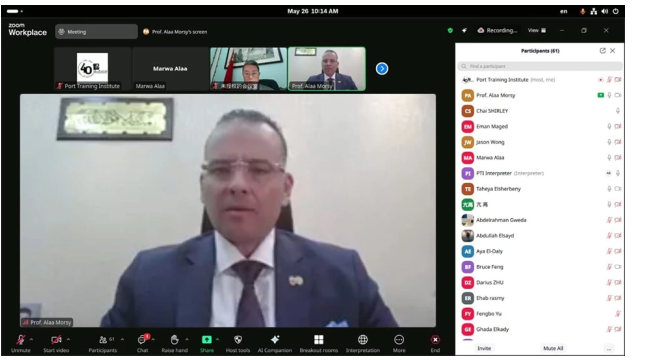
On 26 May 2025, AASTMT’s Port Training Institute and Qingdao Port’s vocational education partners jointly delivered a live online seminar on talent cultivation in Chinese and Egyptian ports. The event convened educators, maritime specialists and institutional representatives across borders to address vocational competencies, smart ports and digital supply chains. Its virtual format demonstrated professional cooperation without co-location, aligning with intelligent transportation and urban sustainability objectives through lower travel dependence.
2023-2024
AASTMT fosters sustainable urban practices by enabling remote working, digital learning, and online collaboration. These initiatives reduce campus congestion, lower commuting emissions, optimize resource use, and improve efficiency while maintaining high-quality education and administrative operations. The Academy’s approach highlights the importance of smart digital infrastructure for resilient and sustainable urban campuses.
Enhancing Urban Sustainability Through Digital Solutions and Flexible Work
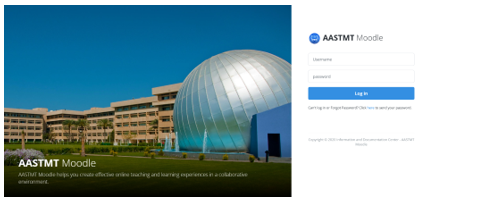
1- Online Learning Platform – AASTMT Moodle – The Academy provides a comprehensive online learning management system that enables collaborative virtual learning, flexible access to courses, and interactive engagement for students and staff. This initiative supports remote learning, smart campus infrastructure, and resilient educational operations, reducing the need for physical presence, minimizing commuting, and contributing to sustainable resource use and eco-friendly campus environments.
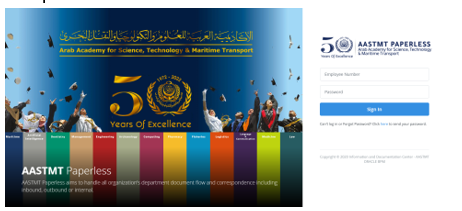
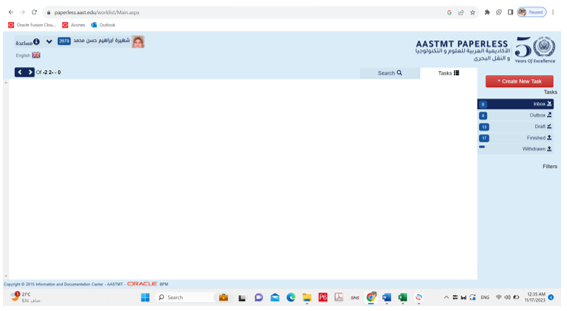
2- Paperless Administrative Workflows – AASTMT implemented digital workflows to reduce paper use, minimize campus movement, and enhance operational efficiency. This initiative supports remote approvals, eco-friendly campus management, and resilient, sustainable administrative operations.
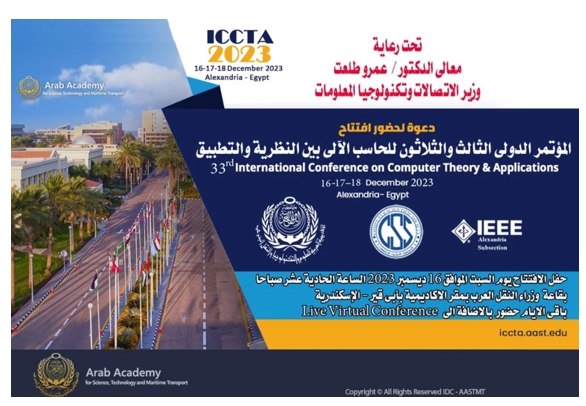
3- Hybrid & Virtual Conferences - Hosting online and hybrid academic events reduces travel, mitigates traffic noise, and lowers greenhouse gas emissions. It also contributes to urban sustainability by reducing the strain on public transport and urban infrastructure.
↵
Arab Academy for Science, Technology and Maritime Transport- | AASTMT
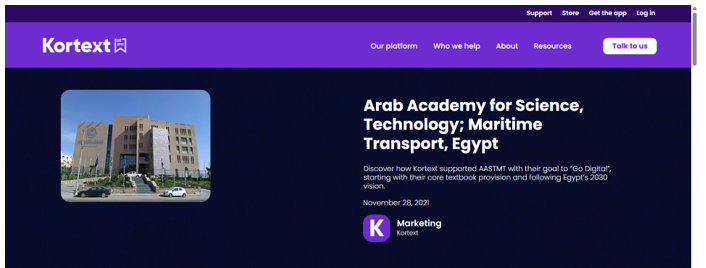
4- Digital Textbook Platform (Kortext & Moodle) - AASTMT partnered with Kortext to deliver ~60,000 e‑textbooks integrated into its LMS for 13 colleges and 8 campuses, enabling offline/online access and reducing the need for physical attendance and printed materials.
Case Study - The Arab Academy for Science, Technology
Online Master’s Program - AASTMT partnered with Steinbeis University – Schools of Next Practices to launch an innovative online master’s program in Data Analytics and Artificial Intelligence. The program combines advanced theory with practical application, preparing students to become digital leaders while enabling full remote learning and virtual collaboration.

2022 - 2023
AASTMT Moodle: Pioneering Online Learning Excellence and Collaboration
AASTMT has created effective online learning and learning experiences in a collaborative environment for all students using AASTMT Moodle that helps students in the educational process.


https://lmsweb.aast.edu/aast_auth/login.php
Streamlining Efficiency: AASTMT's Paperless Revolution
AASTMT establishes a paperless to facilitate dealings between the Academy's staff to save time and effort.

2021 - 2022
Promote or allow telecommuting or remote working for employees as a matter of policy or standard practice or offer a condensed working week to reduce employee commuting.
The Academy has created effective online learning and learning experiences in a collaborative environment for all students using AASTMT Moodle which helps students in the educational process.

Allow Remote Working on AASTMT webpage
The Academy establishes a paperless AASTMT to facilitate dealings between the Academy's staff to save time and effort.
Allow Remote Working on AASTMT webpage

