



 Goal 12. Responsible Consumption and Production
12.2.3 Policy waste disposal - hazardous materials
2024-2025
AASTMT is dedicated to the proper management of hazardous waste disposal as part of its commitment to sustainability, safety, and environmental responsibility. Through its Consumption and Recycling Policy, the institution provides clear guidelines for handling, storing, and disposing of hazardous materials in alignment with national and international safety standards. Hazardous substances must be stored in designated, secure cabinets, such as those for flammable materials, with strict enforcement both before and after use to mitigate risks, protect human health, and prevent environmental contamination. These measures not only ensure compliance with safety regulations but also reflect AASTMT’s dedication to reducing waste, reusing resources, and minimizing environmental harm. By integrating these practices into its operations, AASTMT reaffirms its role as a forward-thinking institution, striving to balance operational needs with environmental stewardship and community well-being. The Medical and Biohazardous Waste Disposal Program, presented first below, is the procedure in force for hazardous waste in AASTMT laboratories and clinics; the Consumption and Recycling Policy that follows is the umbrella policy, and Section 6 sets out its hazardous-waste commitments.
Medical and Biohazardous Waste Disposal Program
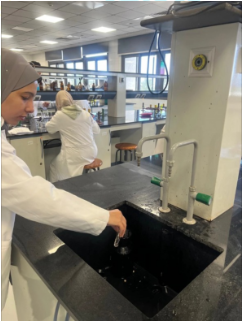
AASTMT's Medical and Biohazardous Waste Disposal Program applies in all laboratories and clinics. Hazardous waste is segregated into chemical, biological and medical streams and stored in designated containers, and biological waste is sterilised by autoclaving before disposal. AASTMT works with Nahdet Misr, an accredited national waste disposal company, for the collection and safe disposal of hazardous materials, and each handover is supervised by AASTMT staff to verify safe containment and proper documentation.
↵
Medical and Biohazardous Waste Disposal Program on Sustainable AASTMT webpage
CONSUMPTION AND RECYCLING POLICY
- Introduction
AASTMT recognizes the growing global challenges arising from the excessive pressure on natural resources, escalating greenhouse gas emissions, rising sea levels, pollution, and inefficient waste management. These environmental issues threaten both present and future generations, underscoring the urgent need for responsible consumption and effective recycling practices. In alignment with its Environmental Change and Social Responsibility Policy, AASTMT is committed to advancing the Sustainable Development Goals by promoting a culture of sustainability across all its campuses and operations. The Consumption and Recycling Policy reflects this commitment by emphasizing waste reduction, resource efficiency, and responsible material use.
Through this policy, AASTMT aims to minimize environmental impact by prioritizing waste prevention, reusing materials whenever possible, and ensuring proper recycling and disposal in compliance with environmental regulations. By fostering awareness and sustainable habits within its community, the University seeks to create a cleaner, safer, and more resilient environment for future generations.
- Scope
This policy applies to all AASTMT employees, students, and contractors who are involved in handling, managing, or storing any form of waste, including hazardous and non-hazardous materials. It establishes the framework for ensuring that all waste management activities prioritize recycling, reuse, and responsible disposal in line with the university’s sustainability objectives.
Recycling must be integrated at every stage of the waste management process—beginning with proper segregation and collection, followed by safe processing and reuse wherever feasible. A designated responsible person or unit shall oversee the recycling and disposal of materials to ensure compliance with environmental standards and the adoption of the most sustainable methods available.
By embedding recycling practices into daily operations, this policy aims to minimize environmental impact, promote resource efficiency, and support AASTMT’s broader commitment to sustainable development and environmental stewardship.
- Aims of the Policy
The AASTMT policy considers end-of-life disposal costs and environmental impacts when making acquisition decisions involving the construction of new or renovated facilities.
AASTMT adopts the waste hierarchy: prevention, preparation for re-use, recycling, other recovery and, as a last resort, disposal. AASTMT applies processes, methods and activities that comply with environmental legislation and best practice, in order to reduce the overall waste produced and to prevent waste wherever possible. AASTMT also measures and weighs the waste it generates, to track it and to identify the best ways to reduce or recycle it.
- Procedures
The Waste Treatment Progressive System and Stages Incorporates:
Prevention
- Using less material in design; keeping items in use for longer; using less hazardous material.
- Reduce landfill waste and boost the usage of reusable, biodegradable, and recyclable materials.
- Promote awareness and training programs to encourage responsible consumption and waste minimization across all departments.
RE-USE
- Preparing for re-use: cleaning, repairing and refurbishing.
- Reduce single-use packaging, such as coffee cups, and increase the use of reusable packaging.
Recycle
- Turning waste into another substance or product, including compost for the soil.
- Anaerobic digestion (conversion to biogas for power generation) and incineration with energy recovery.
- Establish accessible recycling stations across campus and ensure regular collection and monitoring of recyclable materials.
Disposal
- Reduce disposal to a minimum, and send hazardous materials only through licensed contractors to authorised hazardous-waste facilities.
- Track disposed items through a third party that records their quantity and disposal cost.
- Ensure all disposal methods comply with environmental laws and safety standards to minimize ecological and health risks.
Ethical Sourcing of Food and Supplies
AASTMT provides healthy food, including vegetarian options, to students, staff and residents across its campuses and student housing. Food and catering services are sourced against the following criteria:
- Catering operators and food suppliers must hold a valid food-safety certification (ISO 22000 or HACCP), presented before contract award and at each renewal.
- Local and seasonal produce from Egyptian growers is preferred, to reduce transport emissions and support the local economy.
- Catering contracts include fair-labour clauses: compliance with the Egyptian Labour Law, no child or forced labour, and safe working conditions for catering staff.
- Policy Statement
The AASTMT seeks to implement ethical and sustainable practices on all of its campuses. Therefore, the AASTMT has taken crucial measures to implement these practices, such as ecological practices and corporate social responsibility. Through the exchange of information within the Academy's supply chain, these food ethics and practices enable AASTMT to ensure the transparency of information about all suppliers.
- Trusted suppliers
To accomplish supply chain transparency, one of the primary goals of AASTMT is to identify the most reliable and reputable partners who share the same ethical practices, objectives, and data. To accomplish ethical and sustainable practices, the first step is to identify the most suitable suppliers.
- Secure Relationships
The interaction with suppliers is the second step to keep secure relationships between partners and to reduce the risk. AASTMT is seeking to build a platform and application to increase communication and share important information. That would give the suppliers and partners access to the internal systems they need based on their roles within the ecosystem, sustainability practices, and the food ethics of AASTMT.
- Tracing the food supplies
AASTMT traces the origin of its food supplies through supplier certificates (certificates of origin and food-safety certificates), which are checked at delivery and kept with the delivery inspection records before food is accepted on campus.
- Evaluation of the process
AASTMT is monitoring the overall processes between its partners to guarantee healthy and sustainable food for students, staff, and Residents. Based on this monitoring, errors must be fixed, and corrective action must be taken.
AASTMT complies with guidelines, legislation and best practice to limit the risk of immediate and future pollution or harm to health when carrying out its operations.
- Actions
- AASTMT operates a coordinated waste-management system across all its campuses that oversees the segregation, collection, recycling and disposal of every waste stream the Academy generates.
- AASTMT has stopped the use of single-use plastics on campus, replacing them with a mix of alternative materials, and has stopped the sale of bottled water on campus.
- AASTMT recognises the harm caused by plastic waste from production to disposal, including pollution of the marine environment, and works to reduce plastic use and waste on all its campuses. The following measures are in place for staff and students:
- Single-use plastic catering items (food packaging, disposable coffee cups and cutlery) have been replaced with compostable alternatives in all AASTMT food outlets.
- AASTMT continues to reduce waste by reviewing new products and services that lower plastic use and plastic waste.
- AASTMT segregates hazardous waste at source by stream: chemical, biological, medical, electronic waste, batteries and fluorescent tubes. Each stream is collected by a licensed contractor (Nahdet Misr), a handover record is signed for every collection, and the waste is treated and disposed of in line with the Egyptian Waste Management Law No. 202 of 2020.
- AASTMT manages all hazardous-waste activities under its control, as far as reasonably practicable, so as to minimise harm to human health and the environment.
- AASTMT has procedures that enable staff to meet their duty of care for hazardous waste, and monitors these procedures to ensure compliance.
- AASTMT runs awareness and training programmes for students, staff and contractors on sustainable waste management, recycling and the safe handling of hazardous materials.
- AASTMT records the weight of waste generated, recycled and sent to landfill across its campuses and reports these figures annually.
- Objectives
Waste should be prevented or minimised wherever possible. AASTMT encourages staff, students and employers to limit plastic and carton waste, and raises awareness of ways to reduce disposable items.
- Review Program
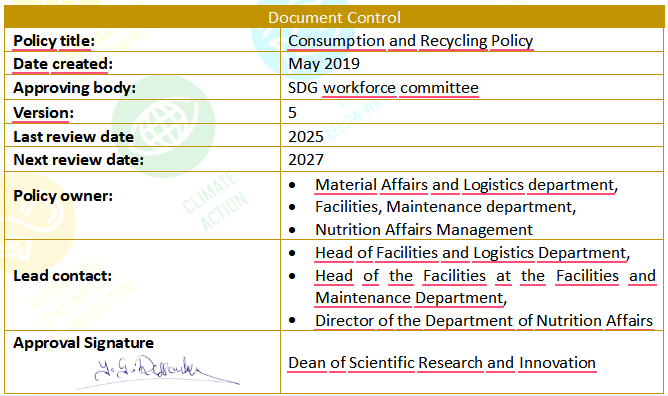
You can read our Consumption and Recycling Policy on AASTMT website.
More activities are applied and practiced in the AASTMT.
Medical Waste Disposal Procedures Within the Arab Academy
On 17 November 2024, AASTMT published the hazardous-waste disposal procedure applied in the teaching laboratories of its College of Pharmacy, including the organic chemistry, biochemistry and microbiology laboratories. Liquid chemical waste (organic solvents, acids and bases) is collected in designated, labelled bottles in each laboratory and then transferred to larger containers, broken glass is stored in separate containers, biological waste is sterilised by autoclaving, and reactions that release toxic vapours are carried out in fume hoods. All hazardous waste is handed over to Nahdet Misr, a certified waste-management company, for environmentally responsible disposal, and each handover is supervised by AASTMT staff to verify safe containment and proper documentation.
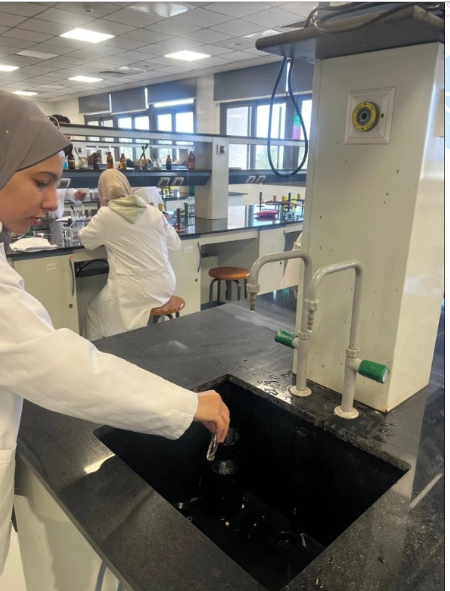
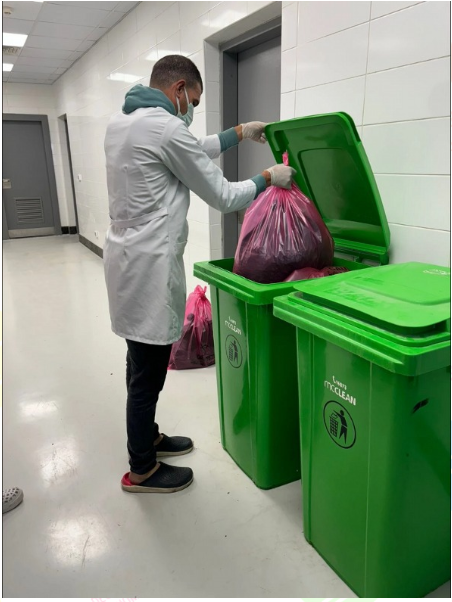
Medical waste disposal procedures within the Arab Academy on AASTMT webpage
Medical Waste Disposal Procedures (PDF document) on AASTMT webpage
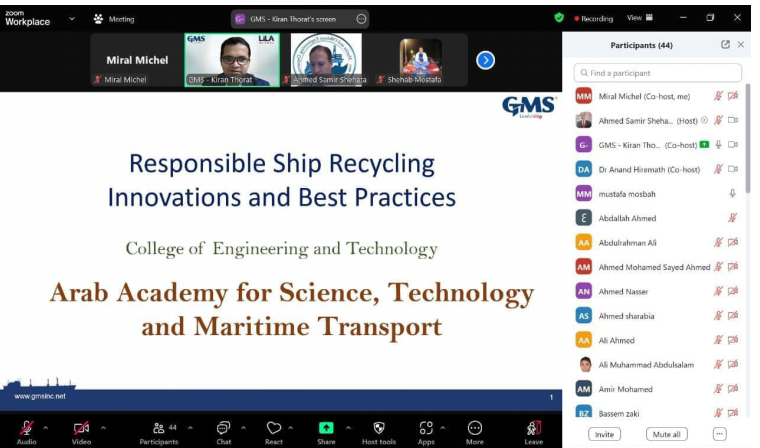
Supporting: AASTMT Hosts Workshop on Responsible Ship Recycling with Global Marketing Systems (GMS)
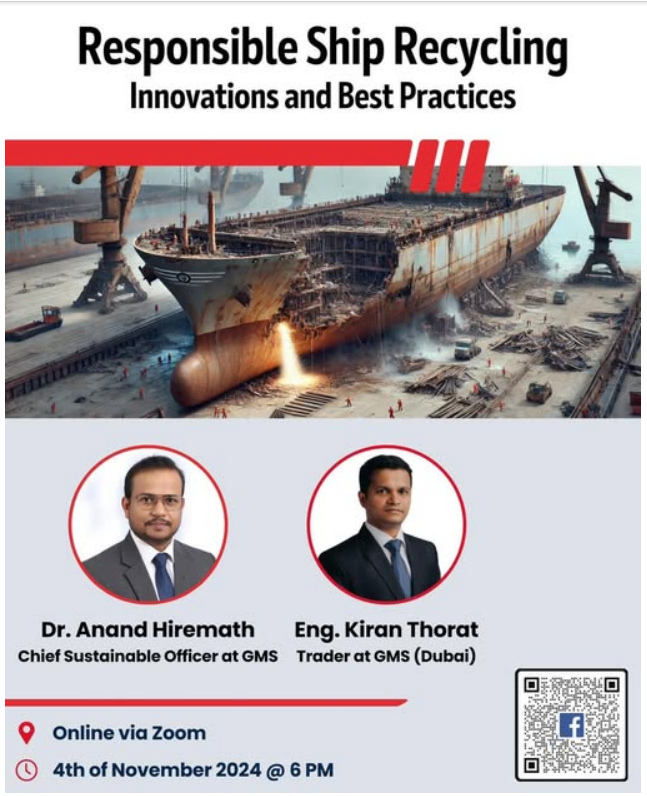
On 4 November 2024, the Department of Marine and Offshore Engineering at the College of Engineering and Technology held an online workshop entitled “Responsible Ship Recycling – Innovations and Best Practices” in collaboration with Global Marketing Systems Inc. (GMS), one of the world’s largest ship-recycling companies. The session was delivered by Dr. Anand Hiremath, Chief Sustainability Officer at GMS, and Eng. Kiran Thorat, Trader at GMS Dubai. Ship recycling involves the controlled removal of hazardous materials from end-of-life vessels, and the workshop addressed the technical and regulatory practices required to carry this out safely and responsibly.
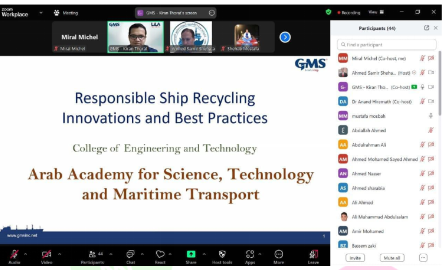
Responsible Ship Recycling: Innovations and Best Practices on AASTMT webpage
Supporting: Enhancing Healthcare WASH Standards Through GAHAR–AASTMT Collaboration
On 24 November 2024, the General Authority for Healthcare Accreditation and Regulation (GAHAR) and AASTMT signed a cooperation protocol to build the capability of medical professionals and support healthcare facility accreditation. The joint programme trains participants to apply WASH standards in medical settings, covering safe water supply, wastewater management, hygiene practice and pollution control — all of which govern how clinical and hazardous waste streams are handled. Graduates receive an AASTMT diploma together with the EGYCAP credential from GAHAR.
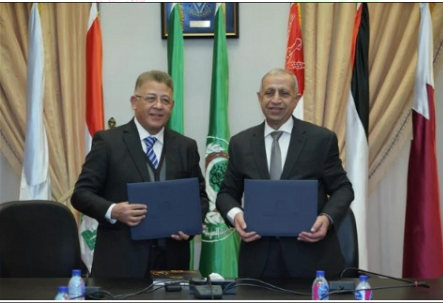
Enhancing Healthcare WASH Standards Through GAHAR–AASTMT Collaboration on AASTMT webpage
Supporting: AASTMT Workshop on the Future of Shipbuilding and Green Ship Recycling
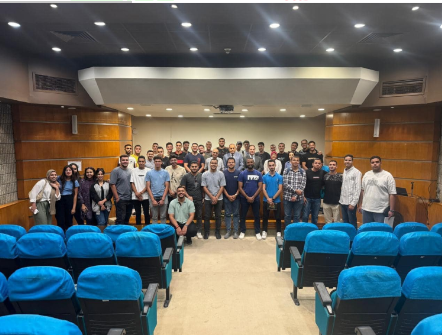
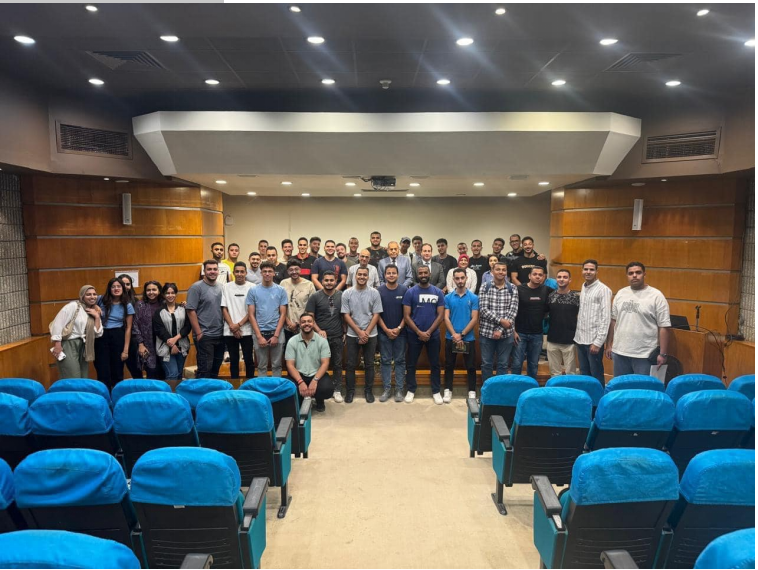
On 7 October 2024, AASTMT hosted a workshop on “The Future of Shipbuilding and Green Ship Recycling” at Al-Farsi Hall, bringing together academic staff, industry professionals and students to discuss environmentally responsible approaches to ship demolition and material recovery. The workshop examined the regulatory framework for green ship recycling under the Hong Kong Convention and the EU Ship Recycling Regulation, along with best practices for managing hazardous materials such as asbestos, heavy metals and ozone-depleting substances found in end-of-life vessels.

2023-2024
ASTMT is dedicated to the proper management of hazardous waste disposal as part of its commitment to sustainability, safety, and environmental responsibility. Through its Consumption and Recycling Policy, the institution provides clear guidelines for handling, storing, and disposing of hazardous materials in alignment with national and international safety standards. Hazardous substances must be stored in designated, secure cabinets, such as those for flammable materials, with strict enforcement both before and after use to mitigate risks, protect human health, and prevent environmental contamination. These measures not only ensure compliance with safety regulations but also reflect ASTMT’s dedication to reducing waste, reusing resources, and minimizing environmental harm. By integrating these practices into its operations, ASTMT reaffirms its role as a forward-thinking institution, striving to balance operational needs with environmental stewardship and community well-being. The following section indicating the Consumption and Recycling Policy that AASTMT is following. Point number 4 under title “The Waste Treatment Progressive System and Stages Incorporates”.
Consumption and Recycling Policy
1.Introduction
AASTMT recognizes the growing global challenges arising from the excessive pressure on natural resources, escalating greenhouse gas emissions, rising sea levels, pollution, and inefficient waste management. These environmental issues threaten both present and future generations, underscoring the urgent need for responsible consumption and effective recycling practices. In alignment with its Environmental Change and Social Responsibility Policy, AASTMT is committed to advancing the Sustainable Development Goals by promoting a culture of sustainability across all its campuses and operations. The Consumption and Recycling Policy reflects this commitment by emphasizing waste reduction, resource efficiency, and responsible material use.
Through this policy, AASTMT aims to minimize environmental impact by prioritizing waste prevention, reusing materials whenever possible, and ensuring proper recycling and disposal in compliance with environmental regulations. By fostering awareness and sustainable habits within its community, the University seeks to create a cleaner, safer, and more resilient environment for future generations.
2.Scope
This policy applies to all AASTMT employees, students, and contractors who are involved in handling, managing, or storing any form of waste, including hazardous and non-hazardous materials. It establishes the framework for ensuring that all waste management activities prioritize recycling, reuse, and responsible disposal in line with the university’s sustainability objectives.
Recycling must be integrated at every stage of the waste management process—beginning with proper segregation and collection, followed by safe processing and reuse wherever feasible. A designated responsible person or unit shall oversee the recycling and disposal of materials to ensure compliance with environmental standards and the adoption of the most sustainable methods available.
By embedding recycling practices into daily operations, this policy aims to minimize environmental impact, promote resource efficiency, and support AASTMT’s broader commitment to sustainable development and environmental stewardship.
3.Aims of the Policy
The AASTMT policy considers end-of-life disposal costs and environmental impacts when making acquisition decisions involving the construction of new or renovated facilities.
AASTMT receives the 'waste order' of Prevention, reuse, reusing, and other recuperation and removal. AASTMT executes cycles, methods, and activities that guarantee consistency with ecological enactment and best practice, to lessen the general waste produced and forestall waste creation at every possible opportunity. Moreover, AASTMT is committed to measuring and weighing the amount of waste generated to track the waste and to find the best methods to reduce or recycle it.
4.Procedures
The Waste Treatment Progressive System and Stages Incorporates:
Prevention
- Utilizing less material in the plan; keeping items for more; utilizing less unsafe material.
- Reduce landfill waste and boost the usage of reusable, biodegradable, and recyclable materials.
- Promote awareness and training programs to encourage responsible consumption and waste minimization across all departments.
RE-USE
- Getting ready for re-use; cleaning; fixing, restoring.
- Reduce the usage of single-use packaging. Reducing single-use packaging such as coffee cups and increasing the usage of reusable packaging
Recycle
- Transforming waste disposal into another substance or item, including fertilizing the soil.
- Anaerobic assimilation – transformation to biogas for power age; burning with energy recuperation.
- Establish accessible recycling stations across campus and ensure regular collection and monitoring of recyclable materials.
Disposal
- Reduce the disposal of items and send them by specialized to landfill to bury the hazardous materials.
- Tracking the disposal items through a third party which evaluates the amount and the cost of the disposal items.
- Ensure all disposal methods comply with environmental laws and safety standards to minimize ecological and health risks.
Ethical Sourcing of Food and Supplies
AASTMT is seeking to reduce food waste as much as we can through using food preservation methods and vermicomposting practices. The university is committed to delivering healthy food for all parties in the university including food on Campus, Residences, and employees whether vegetarian or others. AASTMT makes sure that the food is available at each level to guarantee healthy food for ASTMT’s stakeholders. However, food waste is still a problem for AASTMT. Therefore, AASTMT is applying the following procedures to use the waste of food in an appropriate way:
- Develop a monitoring system for food donations by using food waste.
- Most of the food waste produced is recorded and weighed to be sent to a device that produces bio-fertilizer for the green areas.
- Some of the waste of food is used to feed the animals like (dogs, and cats,
5.Policy Statement
The AASTMT seeks to implement ethical and sustainable practices on all of its campuses. Therefore, the AASTMT has taken crucial measures to implement these practices, such as ecological practices and corporate social responsibility. Through the exchange of information within the Academy's supply chain, these food ethics and practices enable AASTMT to ensure the transparency of information about all suppliers.
- Trusted suppliers
To accomplish supply chain transparency, one of the primary goals of AASTMT is to identify the most reliable and reputable partners who share the same ethical practices, objectives, and data. To accomplish ethical and sustainable practices, the first step is to identify the most suitable suppliers.
- Secure Relationships
The interaction with suppliers is the second step to keep secure relationships between partners and to reduce the risk. AASTMT is seeking to build a platform and application to increase communication and share important information. That would give the suppliers and partners access to the internal systems they need based on their roles within the ecosystem, sustainability practices, and the food ethics of AASTMT.
- Tracing the food supplies
Through utilizing new technologies such as block chain technology, AASTMT plays a crucial role in facilitating the monitoring and tracing of the origin of food. It allows the AASTMT to trace the origin of food and ensure its safe delivery to campuses.
- Evaluation of the process
AASTMT is monitoring the overall processes between its partners to guarantee healthy and sustainable food for students, staff, and Residents. Based on this monitoring, errors must be fixed, and corrective action must be taken.
AASTMT guarantees that we are conforming to guidelines, enactment, and best practices to limit the danger of prompt and future contamination or mischief to wellbeing when completing operational exercises.
6.Actions
- A proposition to build a Waste Management Centre throughout all AASTMT campuses to oversee every aspect of waste management within the Academy, and to recycle all type of materials generated.
- AASTMT is about to build a packaging lab, this lab is aiming to act as a hub providing packaging services consultancy for Egyptian and research on the field of packaging supply chain. The materials of this lab will be extracted from cartoon and plastic waste from the AASTMT campus to produce packaging prototype designs.
- AASTMT has halted the utilization of 'single use' plastics nearby utilizing a blend of elective materials and the suspension of deals of plastic filtered water nearby.
- AASTMT perceives the unfavorable effect of plastic waste, from creation through to removal. Plastic contamination can destructively affect the marine climate, and the College is looking to diminish plastic use and wastage nearby. The accompanying activities have been received to advance this point with staff and understudies:
- Single-use plastics in catering (food bundling, dispensable coffee cups, cutlery) have been supplanted with compostable catering supplies in all College food outlets, to lessen plastic waste nearby.
- AASTMT intends to keep on diminishing waste by investigating new items and administrations which will help with accomplishing decreased plastics utilization and waste.
- AASTMT will consider the hazardous materials that can be hurtful to the well-being or the climate. It incorporates irresistible organic/clinical waste, synthetics, solvents, pesticides, glaring light cylinders, refrigeration hardware containing ozone, non-eatable oils, batteries, asbestos, and paints. AASTMT will have an agreement with a third party to landfill these materials in a landfill area.
- The AASTMT will oversee, so far as is sensibly practicable, all dangerous waste exercises fall under its influence in a way, for example, to limit the mischief to human wellbeing or the climate.
- AASTMT will create and impart systems to empower workers to follow their “obligation of care” for the administration of risky wastes and screen these methods to guarantee consistency.
- AASTMT will launch awareness and training programs for students, staff, and contractors to enhance understanding of sustainable waste management, recycling processes, and the safe handling of hazardous materials.
- AASTMT will implement a digital waste tracking and reporting system to monitor waste generation, recycling rates, and disposal activities across all campuses, ensuring transparency, accountability, and continuous improvement in sustainability performance.
- AASTMT will integrate Artificial Intelligence (AI) technologies into its waste management systems to optimize waste sorting, monitor recycling efficiency, and predict waste generation patterns for smarter and more sustainable decision-making.
7.Objectives:
Waste ought to be forestalled or limited at every possible opportunity. AASTMT empowers staff, Students, and employers to limit plastic and cartoon waste, in addition to increasing the awareness about the method to minimize disposable items.
8.Review Program

You can read our Consumption and Recycling Policy on AASTMT website.
More activities are applied and practiced in the AASTMT.
Prime Minister Follows Up on the Progress of Developing the Integrated Solid Waste Management System in the Governorates Under the supervision of representatives from the Ministry of Environment and the Arab Academy for Science, Technology and Maritime Transport (AASTMT).
During the meeting, Prime Minister Dr. Mostafa Madbouly reviewed the progress made in developing the Integrated Solid Waste Management System across Egypt’s governorates between August 2022 and November 2023, under the supervision of the Ministry of Environment and the Arab Academy for Science, Technology and Maritime Transport (AASTMT). The discussions highlighted key achievements, including the signing of four contractual addenda with the Arab Organization for Industrialization to remove 2.1 million tons of accumulated waste and establish 18 new sanitary landfills, of which 1.4 million tons have already been cleared and the remaining 700,000 tons are scheduled for removal this year. The Ministry of Environment, in collaboration with AASTMT and other consulting bodies, continues to review and approve project designs and supervise the implementation of infrastructure works to ensure the effective and sustainable management of waste across the country.
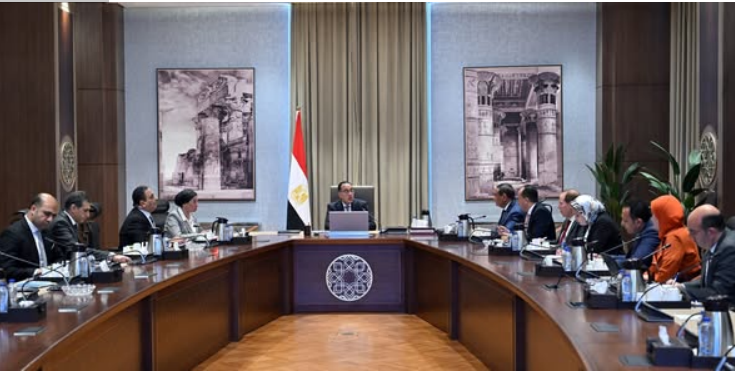
AASTMT and Ministry of Environment Oversee Progress of Egypt’s Integrated Waste Management System
AASTMT Hosts Workshop on Responsible Ship Recycling in Collaboration with Global Marketing Systems (GMS)
The Department of Marine Engineering and Offshore Structures at the College of Engineering and Technology, Arab Academy for Science, Technology and Maritime Transport (AASTMT), organized an online workshop titled “Responsible Ship Recycling – Innovations and Best Practices” in collaboration with Global Marketing Systems Inc. (GMS), one of the world’s largest companies specializing in ship and offshore platform recycling. The session, held on Monday, November 4, 2024, via Zoom, featured presentations by Dr. Anand Hiremath, Chief Sustainability Officer at GMS, and Eng. Kiran Thorat, Trader at GMS Dubai. This initiative reflects AASTMT’s ongoing commitment to promoting sustainable maritime engineering practices and advancing environmental responsibility in the regional and global maritime industry.
AASTMT Workshop on Ship Recycling with GMS
AASTMT to Host Online Workshop on Responsible Ship Recycling in Collaboration with Global Marketing Systems (GMS)
The Department of Marine Engineering and Offshore Structures at the College of Engineering and Technology, Arab Academy for Science, Technology and Maritime Transport (AASTMT), in collaboration with Global Marketing Systems Inc. (GMS) one of the world’s leading companies in ship and offshore platform recycling will hold an online workshop titled “Responsible Ship Recycling – Innovations and Best Practices” on Monday, November 4, 2024, at 6:00 p.m. via Zoom. The session will be delivered by Dr. Anand Hiremath, Chief Sustainability Officer at GMS, and Eng. Kiran Thorat, Trader at GMS Dubai. This event reflects AASTMT’s commitment to enhancing the technical knowledge and professional skills of its Marine Engineering students by exposing them to the latest industrial practices, sustainable innovations, and global career opportunities in the maritime engineering sector.
AASTMT Workshop on Responsible Ship Recycling
AASTMT Hosts Workshop on the Future of Shipbuilding and Green Ship Recycling
The Department of Marine Engineering and Offshore Structures at the College of Engineering and Technology, Arab Academy for Science, Technology and Maritime Transport (AASTMT), organized a workshop titled “The Future of Shipbuilding and Green Ship Recycling” delivered by Rear Admiral Ibrahim Gaber El-Dessouky, Head of the Shipbuilding Industry Division at the Federation of Egyptian Industries. The session, held on Monday, October 7, 2024, in Al-Farsi Hall, focused on sustainable shipbuilding practices, eco-friendly recycling methods, and the role of innovation in shaping the maritime industry’s future. The event reflects AASTMT’s commitment to equipping Marine Engineering students with practical insights into green technologies and responsible industrial practices aligned with global sustainability goals.
AASTMT Workshop on Green Ship Recycling
AASTMT to Hold Workshop on the Future of Shipbuilding and Green Ship Recycling
The Department of Marine Engineering and Offshore Structures at the College of Engineering and Technology, Arab Academy for Science, Technology and Maritime Transport (AASTMT), announced an upcoming workshop titled “The Future of Shipbuilding and Green Ship Recycling” to be delivered by Rear Admiral Ibrahim Gaber El-Dessouky, Head of the Shipbuilding Industry Division at the Federation of Egyptian Industries. The event will take place on Monday, October 7, 2024, in Al-Farsi Hall at AASTMT’s College of Engineering and Technology. Participating students from the Marine Engineering and Offshore Structures Department will receive certificates of completion. The workshop reflects AASTMT’s ongoing commitment to enhancing students’ technical and professional skills through collaboration with industry leaders and promoting sustainable, environmentally responsible practices in maritime engineering.
