 Goal 14. Life Below Water
14.2.3 Overfishing (community outreach)

2024-2025
1.Community awareness about overfishing: Fishing is a major driver of declines in marine wildlife populations
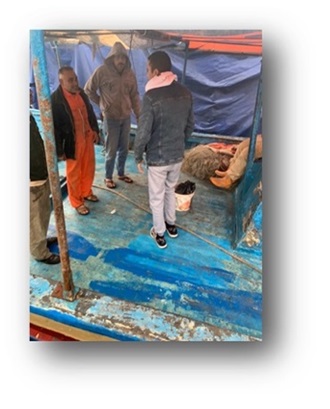
Activity Date: 26 December 2024
Location: Abu Qir fishing port
Organizer: College of Fisheries and Aquaculture Technology (CFAT), Arab Academy for Science, Technology and Maritime Transport (AASTMT).
AASTMT Role: Organizer and provider of community awareness and educational activities.
Target Audience: Local fishermen and fishing-boat operators.
Number of Beneficiaries: 12 fishermen
Participation Cost: Free of charge.
On 26 December 2024, the College of Fisheries and Aquaculture Technology (CFAT) at AASTMT conducted a community awareness activity targeting local fishermen to promote sustainable fisheries management and raise awareness of fishing practices that threaten marine biodiversity and fish stocks.
The educational activity addressed the importance of respecting minimum legal landing sizes, avoiding the capture of juvenile fish, reducing unintended bycatch, and preventing the use of illegal or destructive fishing gear. It also highlighted the importance of responsible fishing practices and fishermen's role in combating illegal, unreported, and unregulated (IUU) fishing.
Through direct engagement with fishermen, CFAT aimed to communicate scientific and technical knowledge about sustainable fisheries management and encourage practices that support fish stock recovery, marine biodiversity conservation, and the long-term sustainability of fishing livelihoods.
The activity was provided free of charge as part of AASTMT's commitment to environmental education and community participation in marine resource conservation.
The activity helped raise awareness among local fishing communities about sustainable fisheries management and reduce fishing practices that threaten marine biodiversity and fish stocks.
2023-2024
1.Community awareness about overfishing
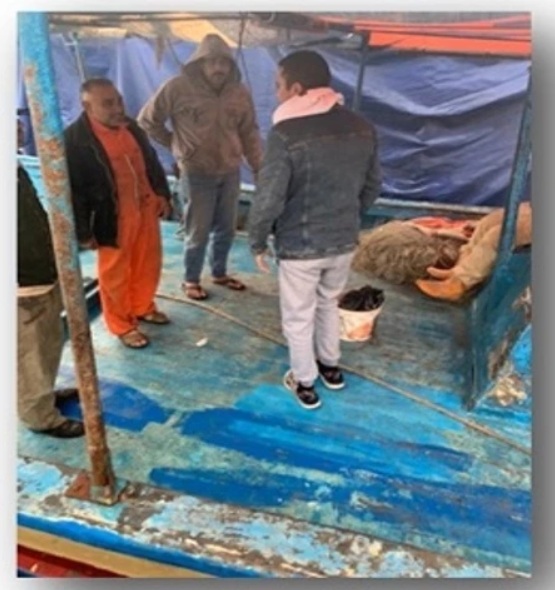
One of the main causes of declines in marine wildlife populations is fishing. While fishing itself is not inherently harmful to the ocean, overfishing occurs when fishing vessels harvest fish faster than the stocks can replenish. Over the past 50 years, the number of overfished stocks has increased globally, and the Food and Agriculture Organization of the United Nations estimates that about one-third of the world's assessed fisheries are currently overfished. Bycatch, which refers to the unintended capture of marine life when fishing for a different species, is directly linked to overfishing. This issue results in the deaths of hundreds of thousands of sea turtles, cetaceans, and billions of fish. The effects of overfishing also extend beyond the ocean. Fish are the primary source of nutrition for billions of people worldwide, and for millions more, fishing is a main livelihood. Many fishers are working to improve global ocean resource management and conservation. To advance fisheries management internationally, WWF collaborates with various stakeholders, promoting sustainable practices that protect ecosystems, sustain livelihoods, and ensure food security. In line with these efforts, in January 2023, AASTMT, a leading university in the region represented by the College of Fisheries and Aquaculture Technology, took the initiative to educate local fishermen about the threats and negative impacts of overfishing.
Overfishing community awareness link
2022-2023
Overfishing community awareness
One of the main causes of the reductions in maritime wildlife populations is fishing. Fishing is not intrinsically harmful to the ocean, except fishing vessels overfish, which occurs when they take fish faster than the stocks can recover.
Globally, the number of overfished stocks has risen in the last 50 years, and the Food and Agriculture Organization of the United Nations estimates that a third of the world's assessed fisheries are currently overfished biologically. Bycatch, or the undesirable marine life caught when fishing for a different species, is directly related to overfishing. This is another major marine concern that kills hundreds of thousands of sea turtles, cetaceans, and billions of fish. The harm caused by overfishing extends outside of the maritime domain. Fish is the primary source of nourishment for billions of people worldwide, and for millions more, fishing is their main source of income. A significant number of individuals who earn a living from fishing are striving to enhance global ocean resource management and conservation efforts. In order to improve fisheries management internationally, WWF collaborates with a wide range of stakeholders, emphasizing sustainable methods that preserve ecosystems while preserving livelihoods and guaranteeing food security.
For the previously mentioned, AASTMT as a leading university within the region; represented by the College of Fisheries and Aquaculture Technology, took the initiative to familiarize the local fishermen with the threats and adverse effects of overfishing.