



 Goal 14. Life Below Water
14.5.2 Monitoring the health of aquatic ecosystems.

2024-2025
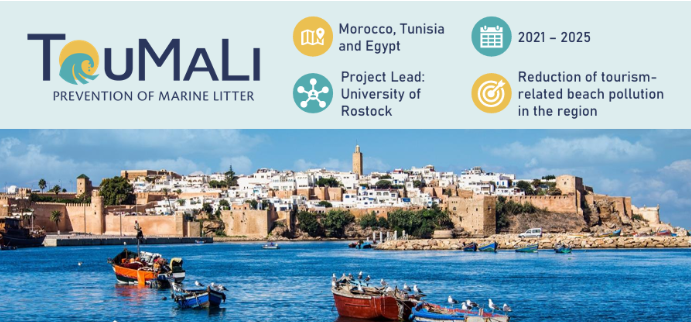
1.The TouMaLi Research Project is a comprehensive, multi-year initiative scheduled to run from 2021 to 2025.
Reducing marine litter in North Africa—specifically in countries like Algeria, Egypt, Morocco, and Tunisia—is essential for protecting the region’s rich marine ecosystems. The strategy involves implementing sustainable waste management practices, promoting recycling, and encouraging reuse to minimize environmental impact. Key actions include coastal monitoring to track pollution levels, conducting comprehensive pollution assessments, and reviewing existing waste management systems to identify areas for improvement. It also involves implementing legal and technical solutions through close collaboration with local stakeholders, as well as capacity-building programs and public awareness campaigns on marine conservation. In August 2021, the TouMaLi project was launched by the University of Rostock, the Leibniz Institute for Baltic Sea Research Warnemünde (IOW), the Arab Academy for Science, Technology, and Maritime Transport (AASTMT), and other partners. This project aims to combat marine litter caused by tourism in Egypt, Morocco, Tunisia, and Algeria. Local partners include AASTMT and various Egyptian ministries, with funding of approximately 4.2 million euros from Germany's BMU, supported by ZUG gGmbH. Ultimately, this initiative is dedicated to advancing Sustainable Development Goal 14—life below water—by addressing the pressing issue of marine litter, especially plastics, to preserve ocean health for future generations.
Link 1: TouMaLi research project (2021-2025)
Link 2: TouMaLi research project (2021-2025)
Link 3: TouMaLi research project (2021-2025)
Link 4: TouMaLi research project (2021-2025)
https://toumali.org/en/partners
https://toumali.org/sites/toumali.org/files/documents/toumali_factsheet_eng.pdf
2.AASTMT College of Fisheries and Aquaculture Technology Signs Cooperation Agreement with MADE II to Enhance Practical Aquaculture Training (2023 – 2028)
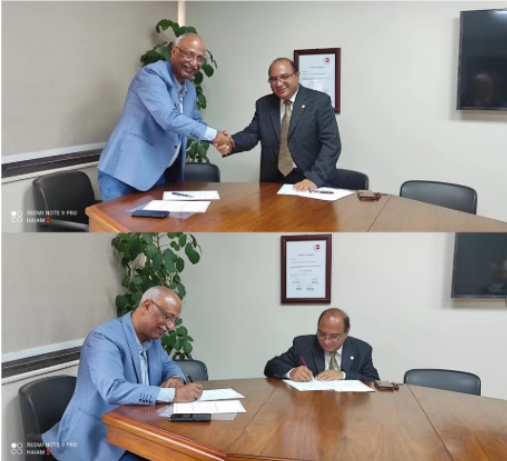
The College of Fisheries and Aquaculture Technology (CFAT) at the Arab Academy for Science, Technology and Maritime Transport (AASTMT) signed a cooperation agreement on Sunday, June 4, 2023, with the Marine Aquaculture Development Project in Egypt (MADE II), affiliated with the Ministry of Agriculture and Land Reclamation.
The agreement aims to strengthen cooperation and exchange expertise between the two institutions, while providing CFAT students enrolled in the Aquaculture Technology program with access to the project's technical facilities for hands-on training in marine fish hatchery operations and aquaculture practices.
The agreement was signed by the Dean of CFAT and Dr. Mohamed El-Araby, Director of MADE II. This collaboration represents an important step toward bridging the gap between academic education and practical industry experience, enabling students to develop the technical skills required for careers in marine aquaculture.
Through this partnership, AASTMT and MADE II seek to support the development of qualified professionals in the aquaculture sector and promote sustainable marine fish production. The initiative also advances practical education, strengthens institutional collaboration, and supports the sustainable use of aquatic resources, in line with Sustainable Development Goal 14: Life Below Water.
Life Below Water-Alexandria | AASTMT
3.Students of the College of Fisheries and Aquaculture Technology completed the training program "Common Fish Diseases, Good Fish Farm Management and Water Quality Analysis"
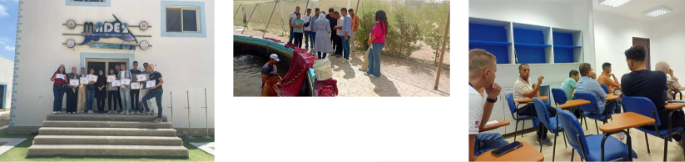
Students of the Faculty of Fisheries and Aquaculture Technology completed the training program "Common Fish Diseases, Good Fish Farm Management and Water Quality Analysis", which was held over two days, August 5–6, 2024, at the Marine Aquaculture Development Project in Egypt MADE II (Kilo 21 Hatchery). This training falls under the cooperation agreement between the college and the Marine Aquaculture Development Project in Egypt.
College of Fisheries and Aquaculture Technology-Alexandria | AASTMT
4.AASTMT Research Catalogs for 2024 and 2025
AASTMT’s faculty, students, and researchers continue to excel in research across all scientific disciplines that promote sustainability and the UN SDGs, as well as pure science that deepens understanding of the marine environment and its requirements.
↵
2023-2024
1. The TouMaLi Research Project is a comprehensive, multi-year initiative scheduled to run from 2021 to 2025.
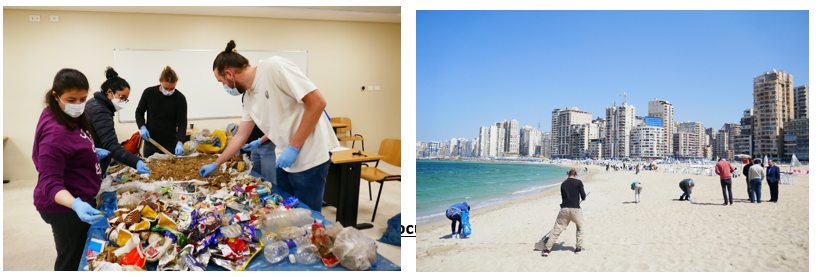
Reducing marine litter in Northern Africa—specifically in countries like Algeria, Egypt, Morocco, and Tunisia—is essential for protecting the region’s rich marine ecosystems. The strategy involves implementing sustainable waste management practices, promoting recycling, and encouraging reuse to minimize environmental impact. Key actions include coastal monitoring to track pollution levels, conducting comprehensive pollution assessments, and reviewing existing waste management systems to identify areas for improvement. It also involves implementing legal and technical solutions through close collaboration with local stakeholders, as well as capacity building programs and raising public awareness about marine conservation. In August 2021, a collaborative effort was initiated through the TouMaLi project, launched by the University of Rostock, Leibniz Institute for Baltic Sea Research Warnemünde (IOW), Arab Academy for Science, Technology, and Maritime Transport (AASTMT), along with other partners. This project aims to combat marine litter caused by tourism in Egypt, Morocco, Tunisia, and Algeria. Local partners include AASTMT and various Egyptian ministries, with funding of approximately 4.2 million euros from Germany's BMU, supported by ZUG gGmbH. Ultimately, this initiative is dedicated to advancing Sustainable Development Goal 14—life below water—by addressing the pressing issue of marine litter, especially plastics, to preserve ocean health for future generations.
Link 1: TouMaLi research project (2021-2025)
Link 2: TouMaLi research project (2021-2025)
Link 3: TouMaLi research project (2021-2025)
Link 4: TouMaLi research project (2021-2025)
2. AASTMT Research Catalogs for 2023 and 2024
AASTMT’s faculty, students, and researchers continue to excel in research across all scientific disciplines that promote sustainability and the UN SDGs, alongside pure science that deepens understanding of the marine environment and its requirements.
2022-2023
TouMaLi research project (2021-2025)
Reducing Tourism Marine Litter in Northern Africa through the Contribution of a Sustainable Waste Management System (Algeria, Egypt, Morocco, and Tunisia) and to recycle and reuse the unavoidable waste to reduce overall marine and beach littering sustainably. Primary activities are the development and implementation of a coastal monitoring program; the definition of a pollution baseline as well as marine litter pollution assessments; the evaluation of solid waste management and current mitigation measures; the analysis, implementation, and monitoring of legal, organizational, financial, and technical solutions and measures with local, regional and national actors; and the provision of capacity building and awareness raising in the regions.


In August 2021, the University of Rostock and the Leibniz Institute for Baltic Sea Research Warnemünde (IOW), together with the Arab Academy for Science, Technology and Maritime Transport (AASTMT) and other partners including think tanks as well as universities and ministries from the project region, started a research project on Marine Litter caused by the tourism industry in Egypt, Morocco, Tunisia and Algeria called TouMaLi. Arab Academy for Science, Technology, and Maritime Transport (AASTMT) participated in this research as the local project partner in Egypt. Complimentary Egyptian Ministries for Environment, Local Development, and Tourism are involved. The project aims to develop and establish sustainable waste management solutions in the tourism sector to protect the marine ecosystems of the Middle East and North African (MENA) region. The German Federal Ministry for the Environment, Nature Conservation and Nuclear Safety (BMU) is funding the project with about 4.2 million euros from the "Funding Program against Marine Litter". “Zukunft – Umwelt – Gesellschaft (ZUG) GmbH“supports the Federal Ministry in implementing its funding policy aims.
The project, led by the University of Rostock and supported by a consortium of eight other institutions from academia, think tanks and businesses, as well as local political partners, aims to significantly reduce marine litter until 2025 through the following measures: baseline assessment of marine litter pollution, development of an overall strategy for waste management, awareness raising, and capacity building as well as knowledge transfer to key stakeholders in the target region, such as hotels and communities.
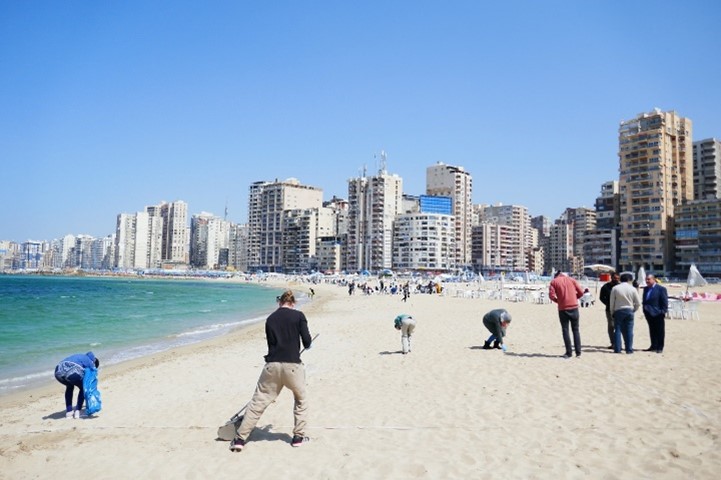
In March and April 2022, the Arab Academy and the IOW teams, supported by several local students and volunteers, surveyed several beaches around Alexandria and Marsa Matrouh.
The beaches sampled were a mix of private and public beaches. Furthermore, marinas were also examined to gain more knowledge about the overall pollution status and to assess litter emissions. Regarding beach pollution, more than 25.000 litter pieces were collected and analyzed. A preliminary assessment of the sources of pollution indicates that many of the plastic bags, candy wrappers, straws, and food packaging originate from tourism and beach users.
Marine Litter and Sustainable Waste Management in North African Coastal Tourism Regions on AASTMT webpage

Link 1: TouMaLi research project (2021-2025)
Link 2: TouMaLi research project (2021-2025)
Link 3: TouMaLi research project (2021-2025)
Link 4: TouMaLi research project (2021-2025)
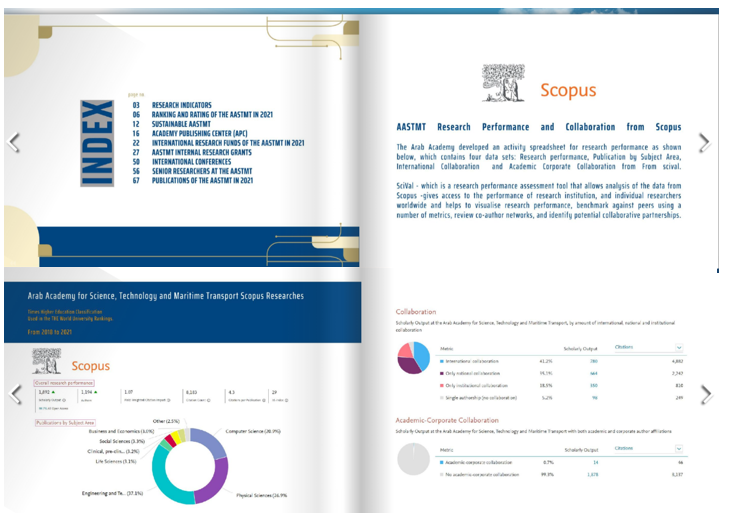
AASTMT Research Catalogue 2022-2023
This research catalogue shows our research performance and collaboration with Scopus.
