



 Goal 17. Partnerships to achieve the Goal
17.3.5 SDG5 Report

Key Milestones in 2024-2025
Regarding SDG 5: *Gender Equality*, AASTMT has made significant progress in promoting gender equality throughout the 2024–2025 academic year. This progress is the result of targeted actions and strategic initiatives aimed at fostering an inclusive culture and ensuring equal opportunities for all members of our academic community, regardless of gender.
The 2024–2025 institutional data submitted to the THE Impact Rankings confirm this progress: women made up 56.9% of new entrants (5,241 of 9,213 students starting a degree), including 4,762 first-generation women; 3,535 women graduated (32.6% of 10,846 graduates), with women earning 58.4% of Medicine degrees (422 of 722) and 1,075 STEM degrees; and women hold 44.1% of senior academic positions (965 of 2,188).
One of the key areas of focus has been the implementation of *Women’s Access Schemes*, which include tailored mentoring programs, scholarships, and other support mechanisms designed to empower women students. These initiatives have created pathways for women to thrive academically and professionally, addressing potential barriers to their success.
Additionally, AASTMT has introduced policies and programs that actively promote gender inclusivity within its governance, faculty, and student body. This includes leadership development opportunities for women, workshops on gender equity, and the integration of gender equality principles into the curriculum and institutional practices.
Our commitment extends beyond the academic sphere, as demonstrated by proposals such as the establishment of an on-campus nursery. This facility aims to support students, faculty, and staff with young children, thereby reducing gender disparities in work and study environments by alleviating the childcare burden often disproportionately shouldered by women.
Through these focused actions, AASTMT not only supports the goals of SDG 5 but also positions itself as a leader in the promotion of gender equality in higher education. Our continued dedication to these significant objectives ensures that we are building an academic community where everyone has the opportunity to succeed and contribute meaningfully.
Community Engagement
In the 2024–2025 academic year, AASTMT dedicated significant efforts to community-centered initiatives aimed at addressing Sustainable Development Goal (SDG) 5: *Gender Equality*. These initiatives emphasized the empowerment of women and the promotion of gender equality across various sectors, focusing particularly on enhancing literacy, fostering lifelong learning, and bridging educational gaps in under-resourced areas. Key Initiatives and Achievements:
1.Literacy and Educational Programs:
AASTMT launched targeted literacy programs designed to improve educational outcomes for women and girls in underserved communities. These programs provided essential literacy skills, fostering greater independence and opening up new opportunities for personal and professional growth.
2.Lifelong Learning Opportunities:
Recognizing the importance of continuous education, AASTMT implemented workshops and training sessions aimed at women of all ages. These sessions covered topics such as digital literacy, vocational skills, and entrepreneurial training, equipping participants with the tools needed to adapt to evolving economic landscapes.
3.Community Engagement and Partnerships:
AASTMT actively collaborated with local organizations, NGOs, and governmental bodies to expand the reach and impact of its gender equality initiatives. By involving students and external partners, the Academy facilitated a community-driven approach to sustainable development, ensuring that programs were tailored to meet the specific needs of local populations.
4.Workshops and Awareness Campaigns:
To foster a deeper understanding of gender equality, AASTMT organized a series of workshops and awareness campaigns on campus and in local communities. These events focused on challenging gender stereotypes, promoting inclusive practices, and encouraging dialogue about the importance of equal opportunities in education and the workforce.
5.Support for Under-Resourced Areas:
Special attention was given to regions with limited access to quality education. AASTMT deployed resources and expertise to these areas, establishing educational hubs and providing access to learning materials and technology. This helped to bridge the educational divide and empower women in marginalized communities.
Through these comprehensive initiatives, AASTMT not only advanced the goals of SDG 5 but also reinforced its role as a catalyst for positive change in society. By prioritizing gender equality and integrating community-centered approaches, the Academy continues to make significant strides in promoting a more inclusive and equitable educational landscape.
Here are some women's mentoring schemes:
Professional Development Workshops:
Through workshops on leadership, negotiation, and career planning specifically for women (AASTMT)
- EmpowerHER:
- Mentorship Hub:
https://aast.edu/en/sdg/empowerher/contenttemp.php?page_id=100930008;
- Workshops & Webinars page:
https://aast.edu/en/sdg/empowerher/contenttemp.php?page_id=100930010;
- Arab Women in Science platform launch with UNESCO (2 Jun 2025) news:
- Arab Women in Science (AWSci) mentoring & fellowships platform:
- Arab Women in Maritime Association (AWIMA – General Secretariat hosted at AASTMT)
- Negotiation Skills
- Arab Institute for Leadership Development (AILD)
AILD;
Alumni Mentorship Networks:
Creating networks where women alumni mentor current students, sharing their learning experience, and providing insights into career paths and opportunities (AASTMT)
- AASTMT Alumni – FAQ / networking benefits:
Student Affairs-El Alamein | AASTMT
- EmpowerHER Mentorship Hub:
https://aast.edu/en/sdg/empowerher/contenttemp.php?page_id=100930008)
Mentorship for Underrepresented Groups (24/25):
Focusing on mentoring females from marginalized faculties or communities
- (policy & practice pages + 2024/25 activities):
- (10.6.3 underrepresented groups recruit);
underrepresented groups recruit
- (10.6.6 support for underrepresented groups);
support for underrepresented groups
- (5.3.4 women’s application in underrepresented subjects);
women’s application in underrepresented subjects
- (EmpowerHER Mentorship Hub);
- (Arab Women in Science platform launch with UNESCO, 2 Jun 2025).
Events
AASTMT women-focused events in 2024/25:
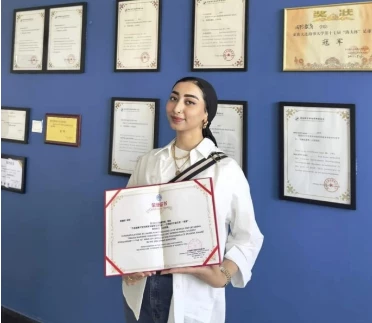
10 Nov 2024 — Alumni Association celebrates Alumna Salma Fawzy (College of Artificial Intelligence, Class of 2023)
The AASTMT Alumni Association congratulated Salma Fawzy, a member of the first graduating class of the College of AI, on being awarded the title of Best Graduate Student at Dalian Maritime University (China) — a visible role model for women in technology.
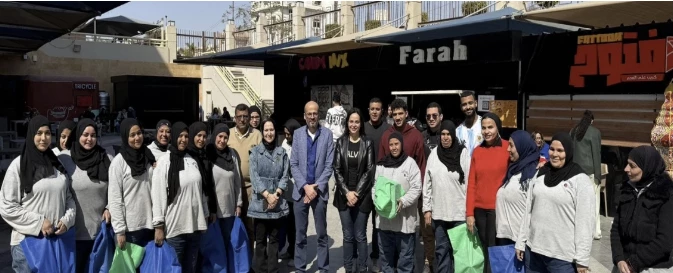
25 Mar 2025 — Mother’s Day Celebration honouring Female Staff (Heliopolis Campus, Cairo)
The Social Activity Department of Student Affairs organized a Mother’s Day event across all colleges to honour mothers and recognize their contributions; female staff received gifts in appreciation of their efforts, and deans and faculty members were presented with flowers for their educational role.
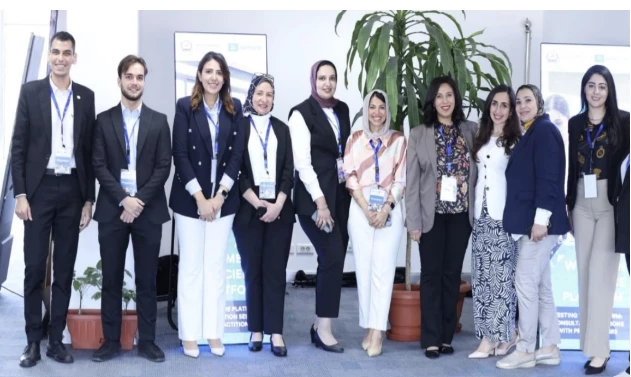
2 Jun 2025 — UNESCO × AASTMT launch of the “Arab Women in Science” (AWSci) Platform (Smart Village, Cairo)
UNESCO launched from Cairo, in cooperation with AASTMT, the region’s first digital platform of its kind to raise the visibility and participation of Arab women in science. Features include mutual scientific mentoring, research fellowships, capacity-building resources and a knowledge-exchange hub, plus an “Ambassadors” programme linking Arab women scientists; the pilot phase covers Egypt and Sudan.
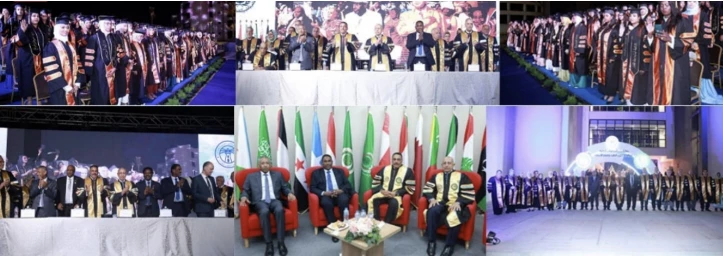
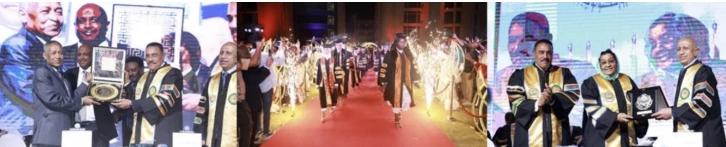
16 Jun 2025 — Graduation of Ahfad University for Women (AUW) Medical Students at AASTMT New Alamein
Building on the 2024 AASTMT–AUW cooperation protocol, the Academy celebrated the graduation of a new batch of AUW (Sudan) medical students who completed their studies at AASTMT. Attended by the Governor of Matrouh, Sudan’s Ambassador to Cairo and both presidents, the partnership was described as a “lifeline” for the students during the conflict in Sudan.
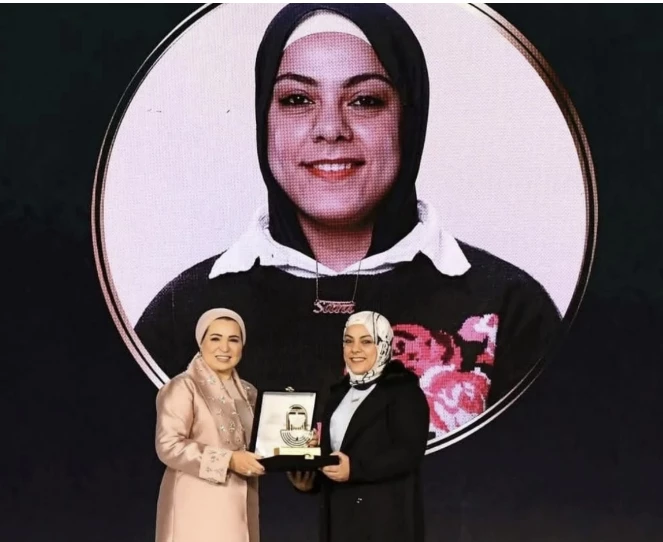
2 Jul 2025 — Alumna and Olympic champion Sara Samir honoured on International Women’s Day
AASTMT celebrated its alumna Sara Samir, who received a special tribute from Egypt’s First Lady alongside a group of distinguished Egyptian women, describing her as a trailblazer and role model for Egyptian women.
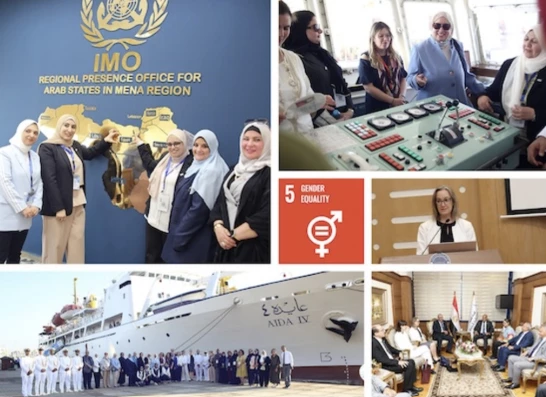
27–31 Jul 2025 — Arab Women in Maritime Association (AWIMA) Regional Workshop & AGM (Alexandria).
AWIMA — whose General Secretariat is hosted at AASTMT’s Abu Qir campus — held a week-long workshop co-organised by the Egyptian Authority for Maritime Safety and the IMO, with WMU support. 30+ women maritime officials from across the Arab region finalized a five-year regional strategy and action plan for women’s participation in maritime; the AGM elected a new President and Governing Council.
31 Aug 2025 — Alexandria National Day honours Salma Fawzy, the City’s First Female AI Graduate.
Honoured in the presence of the Governor of Alexandria and the AASTMT President, Salma Fawzy is the first graduate of AASTMT’s College of AI (El-Alamein), top of her class, holder of a Master’s in AI from Dalian Maritime University and a fully funded PhD scholarship at the University of Barcelona; she founded the AAST Robotics Club and the Sky Club for youth leadership.
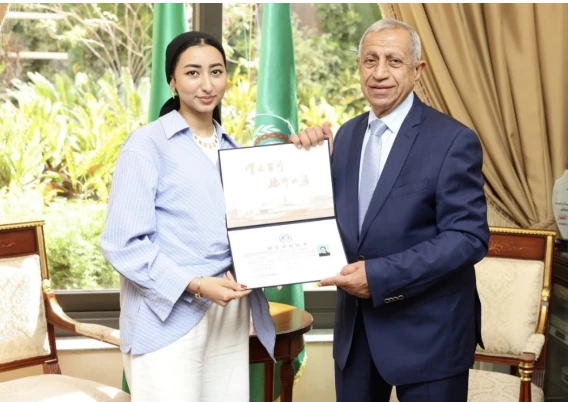
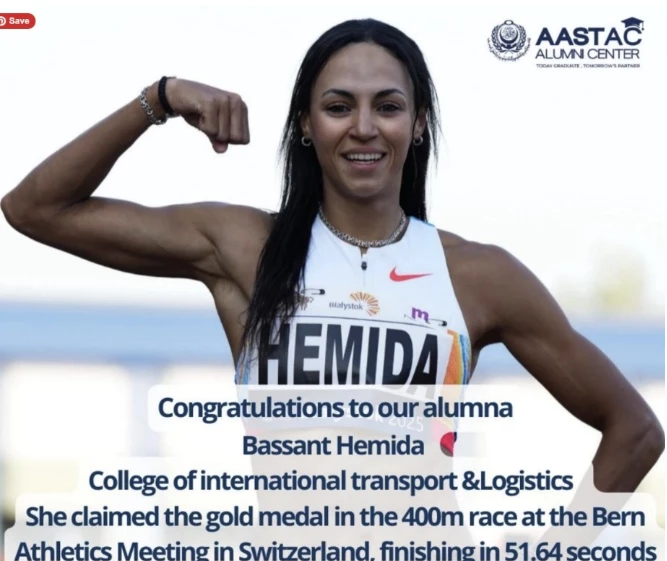
31 Aug 2025 — Alumna Bassant Hemida wins Gold at the Bern Athletics Meeting (Switzerland)
The AASTMT Alumni Center congratulated Bassant Hemida, a graduate of the College of International Transport & Logistics, on winning the 400 m gold medal in 51.64 seconds.
Upcoming Goals
In alignment with our commitment to Sustainable Development Goal (SDG) 5: *Gender Equality*, we propose the establishment of an on-campus nursery at the Smart Village Campus. This initiative aims to address one of the key barriers to gender equality in both academic and professional settings: the challenge of balancing childcare responsibilities with educational and career advancement.
By providing an accessible and high-quality nursery, we offer crucial support to students, faculty, and staff members who have young children. This facility will not only ease the burden of childcare but also enable parents, particularly women, to pursue their academic and professional goals without the added stress of finding reliable childcare off-campus. This, in turn, promotes greater participation and retention of women in higher education and the workforce.
The on-campus nursery will be designed to offer a safe, nurturing, and stimulating environment for children, ensuring their well-being and development while their parents are engaged in academic or professional activities. Additionally, it will contribute to a more inclusive and supportive campus culture by recognizing and addressing the diverse needs of our community members.
This initiative reflects our broader commitment to fostering a work and study environment where gender equity is prioritized, enabling all individuals, regardless of their family responsibilities, to fully participate and excel in their roles. By integrating this supportive resource into the campus infrastructure, we are taking a significant step toward creating a more balanced and equitable environment for everyone at the Smart Village Campus.
AASTMT’s 2023–2024 approach to SDG 5, stressing an inclusive academic and workplace culture backed by targeted measures: women’s access schemes (mentoring, scholarships and tailored support), leadership development and equity workshops, and the integration of gender-equality principles into governance and curricula. It also highlights practical enablers, most notably a proposed on-campus nursery—to reduce childcare barriers, alongside community programs (literacy, lifelong learning, awareness campaigns and partnerships) that extend impact beyond campus. Collectively, these actions aim to increase women’s participation, progression and leadership through a continuous, data-driven effort.