



 Goal 17. Partnerships to achieve the Goal
17.3.11 SDG11 Report

Key Milestones in 2024-2025
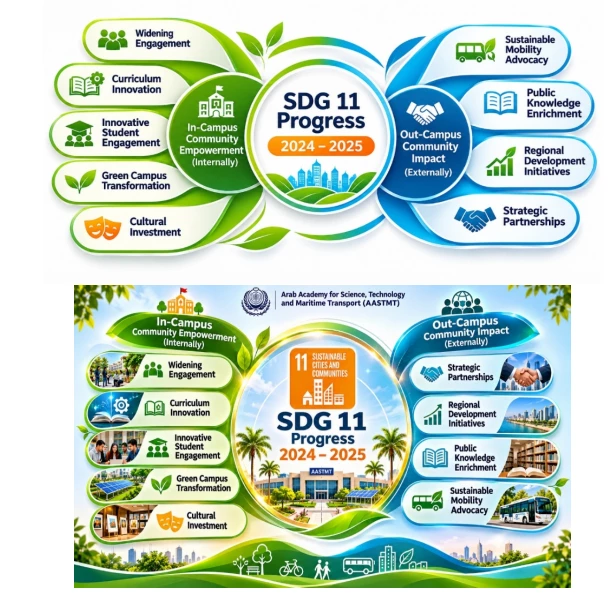
Building upon its performance in the 2023–2024 THE Impact Rankings, AASTMT has institutionalized SDG 11 across education, research, campus operations, and external partnerships through two integrated strategic pillars:
Pillar I: In-Campus Sustainability & Governance (Internal Impact)
- Institutional Engagement: Mobilizing students, faculty, and administrative staff through cross-disciplinary SDG 11 task forces and sustainability awareness campaigns.
- Curriculum Innovation: Embedding sustainable urban planning, resilient infrastructure, and green logistics across undergraduate and postgraduate academic programs.
- Applied Student Innovation: Participating in national and international symposiums, workshops, and competitions focused on practical urban sustainability solutions.
- Low-Carbon Campus Operations: Accelerating green campus transformation through energy-efficient infrastructure, organic waste recycling, water-efficient green spaces, and low-emission commuting.
- Cultural & Heritage Investment: Amplifying institutional expenditure on arts and cultural heritage preservation by 23.4% during the 2024–2025 reporting cycle.
Pillar II: Urban & Community Transformation (External Impact)
- Public-Sector & Policy Partnerships: Strengthening formal collaborations with governmental bodies and NGOs—exemplified by strategic agreements with the Ministry of Transport, the Ministry of Housing, and the Alexandria Governorate—to upgrade urban infrastructure and public services.
- Regional Sustainable Urbanization: Spearheading sustainable campus and community development in emerging urban centers, notably New Alamein and Aswan, through environmentally responsible urban reconstruction.
- Open Knowledge Ecosystems: Operating AASTMT libraries and scientific centers as free, publicly accessible knowledge hubs for surrounding communities.
- Sustainable Mobility Advocacy: Promoting electric vehicles, shared commuting, and mass transit connectivity to reduce urban congestion and greenhouse gas emissions.
Community Engagement
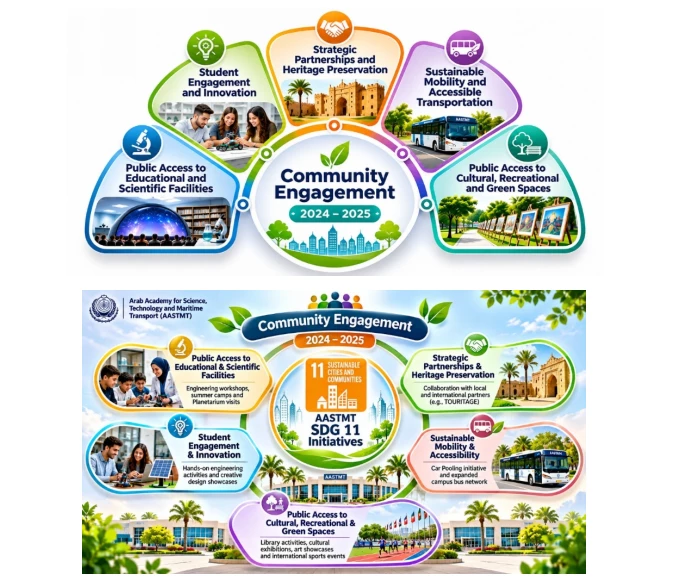
During the 2024–2025 reporting period, AASTMT strengthened inclusive urban development by providing free and structured public access to its educational, scientific, cultural, and recreational infrastructure:
- Public Access to Educational & Scientific Facilities: Opening engineering laboratories, the Planetarium Center, and campus libraries to school students and external visitors through free educational visits, workshops, and public exhibitions.
- Youth Engagement & Applied Innovation: Supporting student and youth participation in hands-on STEM workshops, summer camps, and sustainable design showcases.
- Strategic Partnerships & Heritage Preservation: Partnering with local institutions, community organizations, and international consortia (such as TOURITAGE) to support cultural heritage documentation and sustainable valorisation.
- Sustainable Mobility & Accessible Transportation: Promoting low-carbon commuting through carpooling initiatives and expanded inter-city bus networks.
Public Access to Cultural, Recreational & Green Spaces: Providing external visitors and community groups with open access to cultural exhibitions, landscaped green spaces, and sports facilities.
Events
Public Access to Buildings:
Opening Engineering Facilities to Schoolchildren — Hands-on Electronics for Kidzineers Workshop (19 December 2024)
AASTMT’s IEEE HKN Mu Beta Chapter opened the specialized laboratories of the College of Engineering and Technology (Abu Qir Campus) free of charge to 40 external schoolchildren aged 8–10 from Pioneers International School. The workshop provided early, inclusive public access to university STEM facilities through interactive electronics activities.
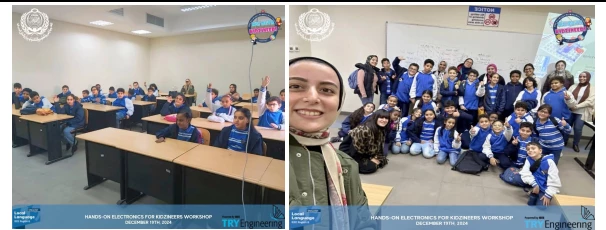
Opening Engineering Facilities to Schoolchildren — Hands-on Electronics for Kidzineers Workshop
Opening Educational Facilities to School Students — Engineering Summer Camps (12–13 August 2025)
AASTMT’s College of Engineering and Technology organized a two-day open-access summer camp at Abu Qir Campus, granting external high-school students’ hands-on access to the Electrical Circuits, Renewable Energy, and Industrial Control Laboratories as well as the rooftop photovoltaic station, introducing youth to practical engineering and clean energy technologies.
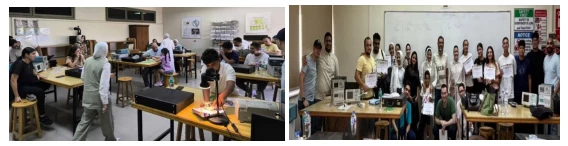
Opening Educational Facilities to School Students — Engineering Summer Camps
Public Access to Libraries:
Promoting Public Access to Library Resources — Pioneers School Visit to Alamein Public Library (8 December 2024)
AASTMT’s Alamein Public Library welcomed external school students for a structured educational visit to explore open-access book collections, historical publications, and online library catalogues, fostering lifelong learning and equitable public access to information.
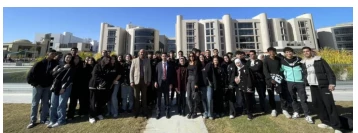
Promoting Public Access to Library Resources — Pioneers School Visit to Alamein Public Library
Promoting Community Engagement with Literature — Book Fair at Alamein Public Library (1 December 2024)
Open free of charge to the wider public across all age groups, the Alamein Public Library Book Fair provided external visitors with access to diverse literary and educational publications, reading competitions, and interactive sessions
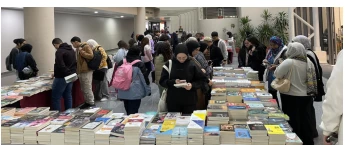
Promoting Community Engagement with Literature — Book Fair at Alamein Public Library
Public Access to Museums:
Opening Scientific Exhibitions to External Visitors — Planetarium Center Visits (2024–2025)
AASTMT provides scheduled public and educational access to its Planetarium Center and scientific displays at Abu Qir Campus for school groups, community visitors, and international delegations (including visiting groups from Egypt, China, Cyprus, Mauritania, Equatorial Guinea, and Marywood University), promoting public engagement with science and interactive museum exhibits.
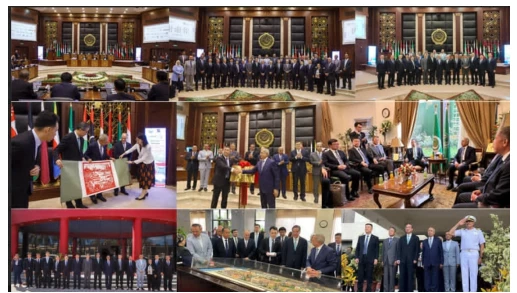
Opening Scientific Exhibitions to External Visitors — Planetarium Center Visits
Opening Scientific Exhibitions to External Visitors — Planetarium Center Visits
Opening Scientific Exhibitions to External Visitors — Planetarium Center Visits
Opening Scientific Exhibitions to External Visitors — Planetarium Center Visits
Opening Scientific Exhibitions to External Visitors — Planetarium Center Visits
Opening Scientific Exhibitions to External Visitors — Planetarium Center Visits
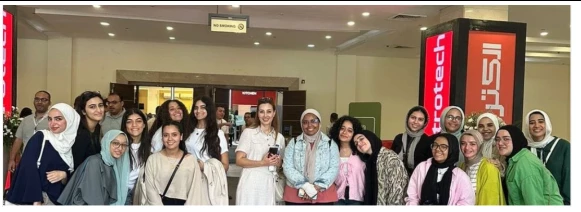
Public Engagement with Sustainable Art & Design — College of Art & Design Showcase at Le Marché Exhibition (4 October 2024)
AASTMT interior and furniture design students presented sustainable material boards, ergonomic concepts, and eco-friendly interior design projects in an open public exhibition space accessible to consumers, families, and manufacturers.
Public Access to Green Spaces:
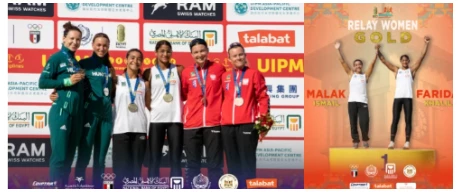
Promoting Community Access to Recreational Green Spaces — Modern Pentathlon World Cup Final 2025 (4–14 July 2025
AASTMT opened its landscaped outdoor grounds and green sports complexes at the Alexandria Campus to host the UIPM Modern Pentathlon World Cup, Relay, and African Championship 2025, welcoming 340 athletes from 36 countries alongside public spectators and community youth.
https://aast.edu/en/services/sports-services/contenttemp.php?page_id=48000167
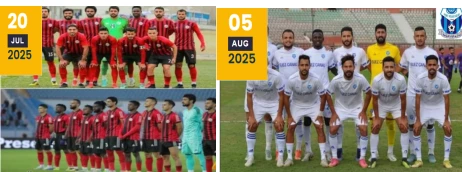
Providing Shared Community Access to Campus Green Grounds — External Sports Club Training Camps (July–August 2025)
Under its community facility-sharing framework, AASTMT granted six external sports clubs structured access to its outdoor pitches and green recreational facilities at Abu Qir Campus, supporting public health and community engagement.
Public Access to Green Spaces | AASTMT
Public Access to Green Spaces | AASTMT
Public Access to Green Spaces | AASTMT
Public Access to Green Spaces | AASTMT
Public Access to Green Spaces | AASTMT
Public Access to Green Spaces | AASTMT
Arts and Heritage Contribution:
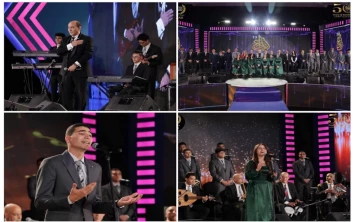
Preserving Traditional Musical Heritage — AASTMT Alexandria Choir at Creativity 13 Festival (8–15 February 2025)
AASTMT actively promotes public engagement with Egyptian and Arab cultural heritage by hosting open cultural festivals, theatrical productions, and musical performances accessible to students, families, and external community visitors. During the Creativity 13 Festival (8–15 February 2025), the AASTMT Alexandria Choir presented traditional musical heritage before public audiences and national juries. Similarly, the Ramadan Suhoor Cultural Evening at Heliopolis Campus (20 March 2025) featured a student-led theatrical adaptation of the classic Egyptian operetta El Leila El Kebira, preserving intangible theatrical heritage and fostering community-wide cultural appreciation.
Cross-Cultural Heritage Exchange and Public Exhibitions
Through Arab Cultural Heritage Day at the Smart Village Campus (29 October 2024), the Academy opened its outdoor exhibition spaces to showcase traditional crafts, folk arts, culinary heritage, and cultural displays representing diverse Arab nations, encouraging intercultural dialogue among students, faculty, and invited guests.
International Research and Documentation of Cultural Heritage (TOURITAGE)
Beyond live events, AASTMT contributes to the long-term preservation and sustainable management of historical sites through the international TOURITAGE (Tourism-Led Heritage Development) project (2023–2026). Through academic research, heritage-site case studies, methodological manuals, and international exhibitions, the Academy supports the scientific documentation and adaptive valorisation of cultural heritage assets.
Arts and Heritage Contribution | AASTMT
Promoting Egyptian Theatrical Heritage through Student Performances: Ramadan Suhoor 2025 – Heliopolis Campus (20 March 2025)
Open to students, families, and external guests, the Heliopolis Campus hosted a live musical theatrical performance inspired by the classic Egyptian operetta El Leila El Kebira alongside a student talent showcase, celebrating and preserving national theatrical and musical heritage.
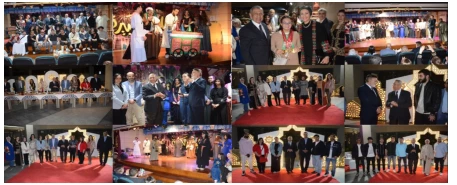
Promoting Egyptian Theatrical Heritage through Student Performances: Ramadan Suhoor 2025
Celebrating Arab Cultural Heritage: Arab Cultural Heritage Day – Smart Village Campus (29 October 2024)
AASTMT transformed its Smart Village outdoor plaza into an open cultural exhibition bringing together academic staff, officials, students, and invited guests from diverse nationalities to showcase traditional attire, regional cuisines, and folkloric performances, fostering intercultural heritage exchange.
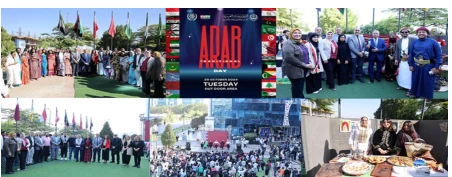
Celebrating Arab Cultural Heritage: Arab Cultural Heritage Day – Smart Village Campus
Contributing to Cultural Heritage Preservation and Development: TOURITAGE – Tourism-Led Heritage Development Project (February 2023–January 2026)
Through the international TOURITAGE (Tourism-Led Heritage Development) project, AASTMT advances the scientific documentation, management, and adaptive valorisation of cultural heritage sites via applied research, heritage case studies, guiding manuals, and international exhibitions.
Sustainable Practices:
Waste Circularity & Water-Smart Landscaping Organic Waste Recycling & Circular Resource Recovery
AASTMT promotes sustainable waste management through on-campus composting of food and agricultural residues at Abu Qir Campus. During the 2024–2025 academic year, the facility produced approximately 15 tonnes of organic compost for campus landscaping, advancing circular resource recovery, landfill diversion, and soil and water protection.
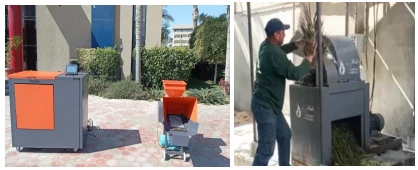
Waste Circularity & Water-Smart Landscaping Organic Waste Recycling & Circular Resource Recovery
AASTMT Promotes Sustainable Campus Landscaping and Water Conservation
During the 2024/2025 academic year, AASTMT enhanced its campus green spaces through planting and landscaping activities, including the use of 50 drought-tolerant yellow bells plants at Alamein Campus. Combined with the use of 15 tonnes of recycled compost for soil improvement, these practices support water conservation, sustainable landscaping, and efficient resource use.
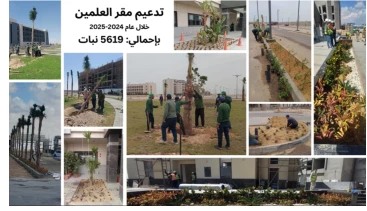
AASTMT Promotes Sustainable Campus Landscaping and Water Conservation
Promote Sustainable Commuting:
Expanding Sustainable Mass Transit — New Student Bus Routes to New Alamein (24 September 2024)
AASTMT introduced dedicated inter-city shuttle bus routes connecting its New Alamein Campus with Alexandria and Cairo, encouraging a modal shift from single-occupancy cars to organized shared transportation and reducing per-capita transport emissions.
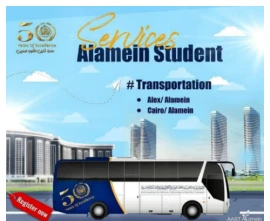
Expanding Sustainable Mass Transit — New Student Bus Routes to New Alamein
Encouraging Shared Mobility: AASTMT Car Pooling Day (27 October 2024)
Through its Car Pooling Day campaign at Abu Qir Campus, AASTMT incentivized students and staff to share daily commutes, measurably lowering vehicle miles travelled, campus parking demand, local traffic congestion, and commuting carbon footprints.
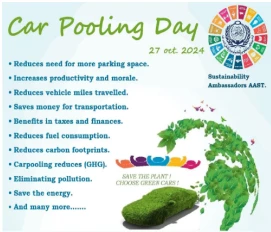
Encouraging Shared Mobility: AASTMT Car Pooling Day (27 October 2024)
Allow Remote Working and Flexible Digital Operations:
Institutional Policy for Remote Work and Hybrid Collaboration
AASTMT implements flexible administrative and academic workflows that enable faculty members, administrative staff, and researchers to perform duties remotely when appropriate. Through secure cloud-based institutional systems, electronic document management (Paperless AASTMT), and the integrated Staff Portal, routine administrative approvals, academic advising, and committee meetings are conducted digitally. This institutional framework reduces daily commuting requirements, lowers campus traffic congestion, and minimizes transport-related carbon emissions across all branches.
Virtual Learning and Hybrid Academic Delivery
Alongside administrative flexibility, AASTMT utilizes its Moodle Learning Management System and virtual conferencing platforms to deliver online lectures, specialized training courses, and hybrid seminars. By enabling remote participation in academic and professional development events—such as the Risk Management and HAZOP Study and Extra Low Voltage (ELV) training programs—the Academy reduces unnecessary inter-city travel while maintaining uninterrupted educational access.
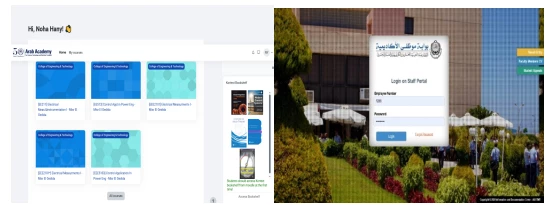
Allow Remote Working and Flexible Digital Operations
Promoting Virtual and Hybrid Academic Engagement
Through online seminars, virtual training and hybrid academic events, AASTMT enables participants from different locations to engage in educational and professional activities without always requiring physical attendance. These arrangements support digital collaboration and can reduce travel-related pressure on urban transport systems.
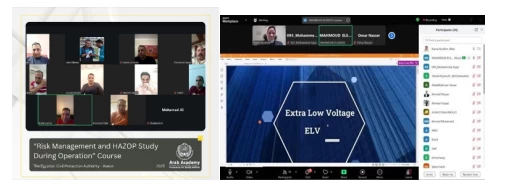
Promoting Virtual and Hybrid Academic Engagement
Promoting Virtual and Hybrid Academic Engagement
Affordable Housing for Employees:
Providing Subsidized On-Campus Accommodation for Employees
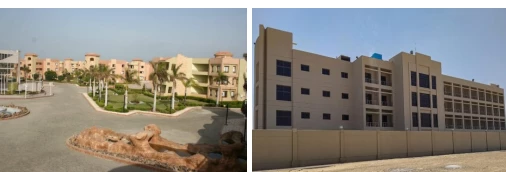
AASTMT provides on-campus residential accommodation for faculty and staff across its branches through at-cost housing arrangements and institutional financial support, ensuring residential stability, reducing daily commuting distances, and fostering an inclusive workplace.
Affordable Housing for Students:
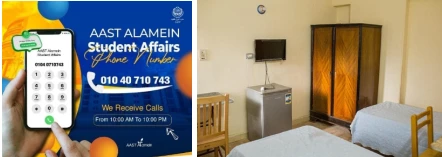
AASTMT provides student accommodation across its campuses in Alexandria (Abu Qir), Port Said, El Alamein and Aswan, offering an alternative to private rental housing and supporting students’ access to higher education. Its 2024/2025 student-support arrangements further promote affordability by allowing students facing financial hardship to access university accommodation at nominal fees, with full fee exemptions considered in exceptional cases following committee review. These services contribute to student welfare, social inclusion and academic continuity.
Affordable Housing for Students
Affordable Housing for Students
Pedestrian Priority on Campus:
Promoting Safe & Inclusive Pedestrian Mobility across AASTMT Campuses
Through its Transport and Travel Planning Policy, AASTMT enforces a pedestrian-first campus design featuring connected walkways, clear separation between pedestrian paths and vehicular traffic, perimeter parking lots, accessible crossings, and improved wayfinding. As illustrated in the Abu Qir Campus spatial mobility plan, all academic and recreational facilities are interconnected within a safe, walkable radius of less than 10 minutes from the main transit entrance, ensuring universal accessibility and reducing internal vehicle trips.
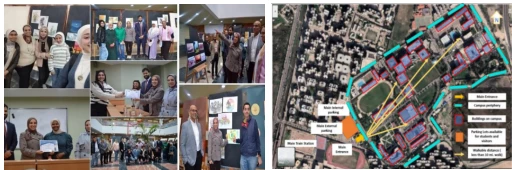
Promoting Safe & Inclusive Pedestrian Mobility across AASTMT Campuses
Promoting Safe & Inclusive Pedestrian Mobility across AASTMT Campuses
Promoting Safe & Inclusive Pedestrian Mobility across AASTMT Campuses
Promoting Safe & Inclusive Pedestrian Mobility across AASTMT Campuses
Promoting Safe & Inclusive Pedestrian Mobility across AASTMT Campuses
Local Authority Collaboration Regarding Planning and Development
AASTMT strengthens institutional collaboration with local and national authorities through formal cooperation protocols, joint infrastructure projects, and urban-development task forces. Strategic partnerships with the Ministry of Housing, Utilities and Urban Communities, the Ministry of Transport, and local governorates address sustainable urban planning, municipal waste management, and coastal environmental protection, translating academic expertise into safer, better-planned, and more resilient communities.
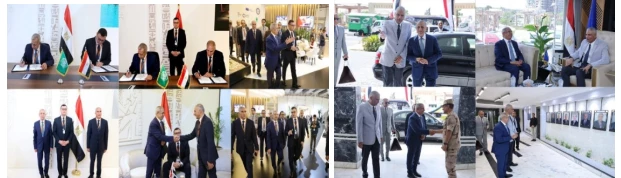
Local Authority Collaboration Regarding Planning and Development
Planning Development – Sustainable New Build Standards
AASTMT embeds green building standards across its new campus developments, exemplified by the College of Engineering building at New Alamein Campus. The facility incorporates energy-efficient thermal glazing, motion-sensor LED lighting, high-efficiency HVAC systems, rooftop solar photovoltaic arrays, and rainwater harvesting infrastructure. Reinforced by student training in smart home automation and water-efficient landscape design, AASTMT’s infrastructure models climate-responsive architecture.
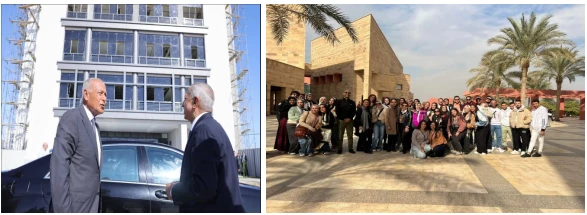
Planning Development – Sustainable New Build Standards
Planning Development – Sustainable New Build Standards
Planning Development – Sustainable New Build Standards
Planning Development – Sustainable New Build Standards
Planning Development – Sustainable New Build Standards
Building on Brownfield Sites & Urban Regeneration
In alignment with sustainable land-use principles, AASTMT prioritizes brownfield regeneration, adaptive reuse of existing facilities, and development within designated urban regeneration zones over greenfield expansion. Through active participation in the 12th World Urban Forum (WUF12) and joint neighborhood-scale urban design initiatives with the New Alamein City Authority, AASTMT promotes responsible land-use planning and compact urban regeneration.
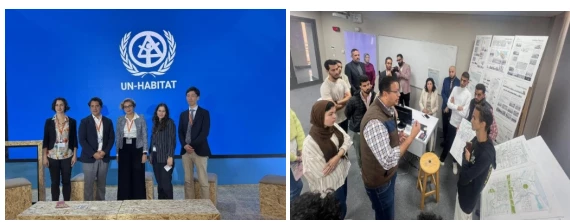
Building on Brownfield Sites & Urban Regeneration
Building on Brownfield Sites & Urban Regeneration
Strategic Roadmap & Upcoming Goals (2025–2027)
AASTMT aims to build on its ongoing contributions to SDG 11 by promoting inclusive communities, preserving cultural heritage, expanding public access to educational and cultural facilities, and encouraging research and innovation. The Academy also seeks to strengthen sustainable mobility, environmental awareness, institutional cooperation, and environmentally responsible urban development to support more sustainable and resilient communities.
Future Goals and Scheduled Plans
- Expanding Free Public Access to Educational & Cultural Facilities: Scale scheduled open days and free public access to AASTMT libraries, laboratories, planetarium exhibitions, and cultural venues.
- Advancing Cultural Heritage Preservation & Awareness: Deepen international heritage documentation research, digital archiving, and adaptive reuse initiatives.
- Encouraging Inclusive Community Participation & Recreation: Expand free youth sports clinics and accessible green-space programming for local communities.
- Supporting Research & Innovation for Sustainable Urban Development: Increase interdisciplinary research output and pilot deployments in smart cities, resilient infrastructure, and sustainable built environments.
- Enhancing Arts, Culture & Public Engagement: Grow public art exhibitions, theatrical productions, and traditional cultural festivals connecting academia with society.
- Promoting Environmental Awareness & Circular Campus Operations: Scale organic waste composting, zero-waste programs, and water conservation across all regional branches.
- Decarbonizing Campus & Urban Mobility: Expand electric campus shuttles, EV charging infrastructure, and inter-city carpooling networks.
- Strengthening Governmental & Municipal Cooperation: Co-develop sustainable urban planning, coastal resilience, and integrated transport policies with public authorities.
- Enforcing Sustainable Architecture & Green Building Standards: Apply green building certification standards across all campus renovations and new construction projects.
In 2023-2024, the Arab Academy for Science, Technology & Maritime Transport (AASTMT) plays a pivotal role in advancing SDG 11- Sustainable Cities and Communities by fostering innovation and education that promote inclusive, safe, resilient, and sustainable cities. Through cutting-edge research, community engagement, and capacity-building initiatives, AASTMT actively supports urban planning, affordable housing, sustainable transport, and disaster risk reduction, empowering communities to build a greener and more equitable urban future.