



 Goal 17. Partnerships to achieve the Goal
17.3.13 SDG13 Report

Key Milestones in 2024-2025
During 2024–2025, the Arab Academy for Science, Technology and Maritime Transport (AASTMT) strengthened its institutional commitment to climate action through measurable reductions in greenhouse gas emissions, expanded carbon footprint monitoring, increased integration of renewable energy, climate education, and regional cooperation on disaster risk reduction. Building on its commitment to the UNFCCC Race to Zero campaign, AASTMT advanced its transition towards net-zero emissions by 2050 through institutional policies, measurable targets, scientific research, and community-oriented initiatives.
Climate Action Plan 2025–2030: Pathway to Net Zero
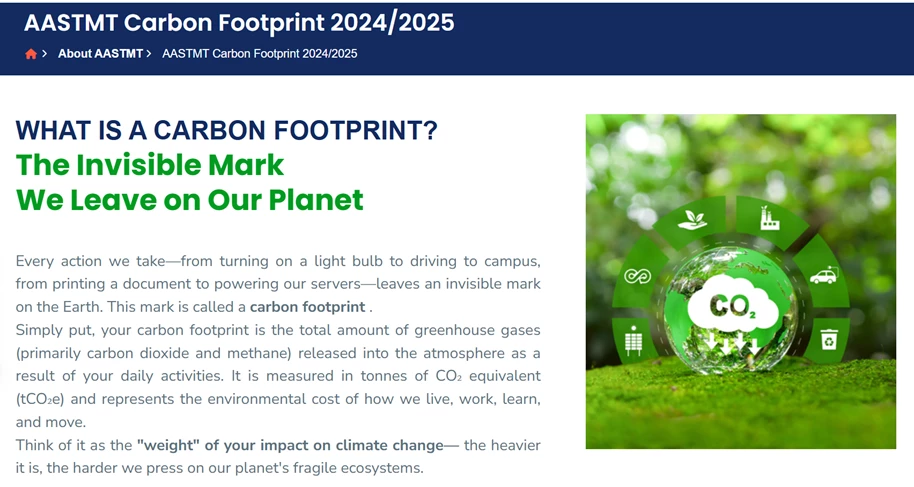
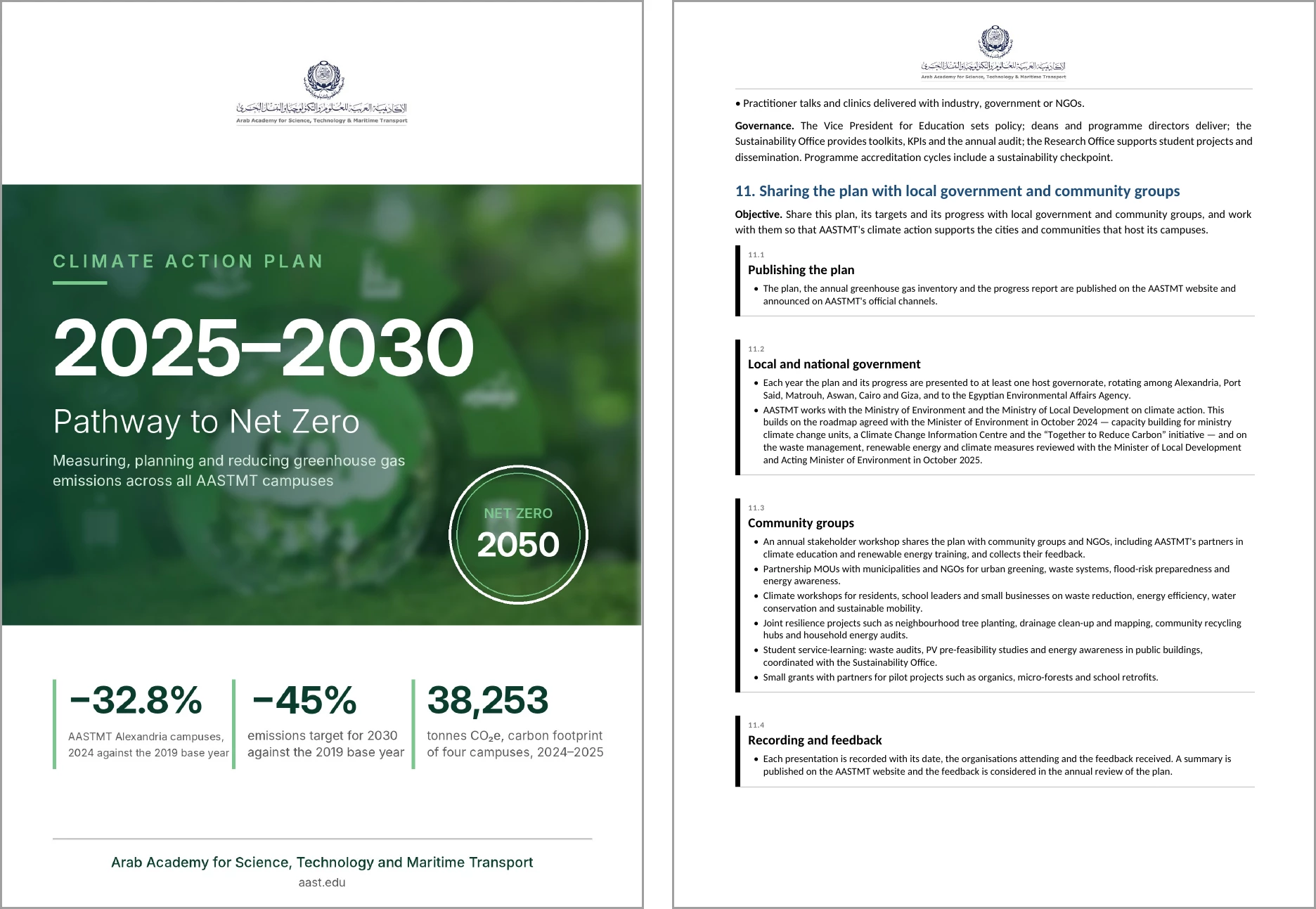
AASTMT introduced an updated institutional Climate Action Plan establishing a structured framework for greenhouse gas monitoring, emissions reduction, renewable energy expansion, resource efficiency, and stakeholder engagement. The plan reinforces the Academy's commitment to net-zero emissions by 2050. AASTMT's published historical emissions series for its Alexandria campuses recorded a 32.8% reduction in greenhouse gas emissions in 2024 compared with the 2019 baseline, achieving the 2025 interim reduction target ahead of schedule. The 2024–2025 carbon footprint assessment expanded emissions monitoring to four campuses: Abu Qir, Misr El-Gedida, Smart Village, and South Valley. It covered Scope 1, Scope 2, and Scope 3 emissions.
Enhancing AASTMT Low-Carbon Energy Contribution and Institutional Efficiency
AASTMT recorded 17,682.84 GJ of energy from low-carbon sources in 2025, compared with 17,494 GJ in 2024. On-site solar electricity generation increased by approximately 4.78%, reaching 79,632 kWh in 2025. Electricity consumption across AASTMT branches decreased from 19,055,865 kWh in 2024 to 18,585,647 kWh in 2025, reflecting continued energy conservation and efficiency improvements.
Institutional Framework for Energy Monitoring and Low-Carbon Energy Management
AASTMT’s Green Energy and Energy Management and Environmental policies provide an institutional framework for climate action (SDG 13) and low-carbon energy tracking during the 2024–2025 reporting period. Developed through the Energy Research Unit and Energy Management Committee, the policies promote energy efficiency, regular online monitoring of energy consumption, smart building technologies, and renewable energy installations, including solar PV systems. They also support greenhouse gas (GHG) emissions reduction, with institutional commitments to cut emissions by 50% by 2040 and achieve Net-Zero Carbon by 2050.
Institutional Commitment to Carbon Neutrality
AASTMT demonstrates its institutional commitment to climate action through its pledge to achieve net-zero greenhouse gas emissions by 2050 under the UNFCCC Race to Zero campaign. This commitment is supported by a structured decarbonization pathway, incorporating interim emission-reduction targets, regular greenhouse gas inventories covering Scope 1, Scope 2 and selected Scope 3 emissions, and continuous monitoring of institutional carbon performance.
Regional Leadership in Climate and Disaster Resilience
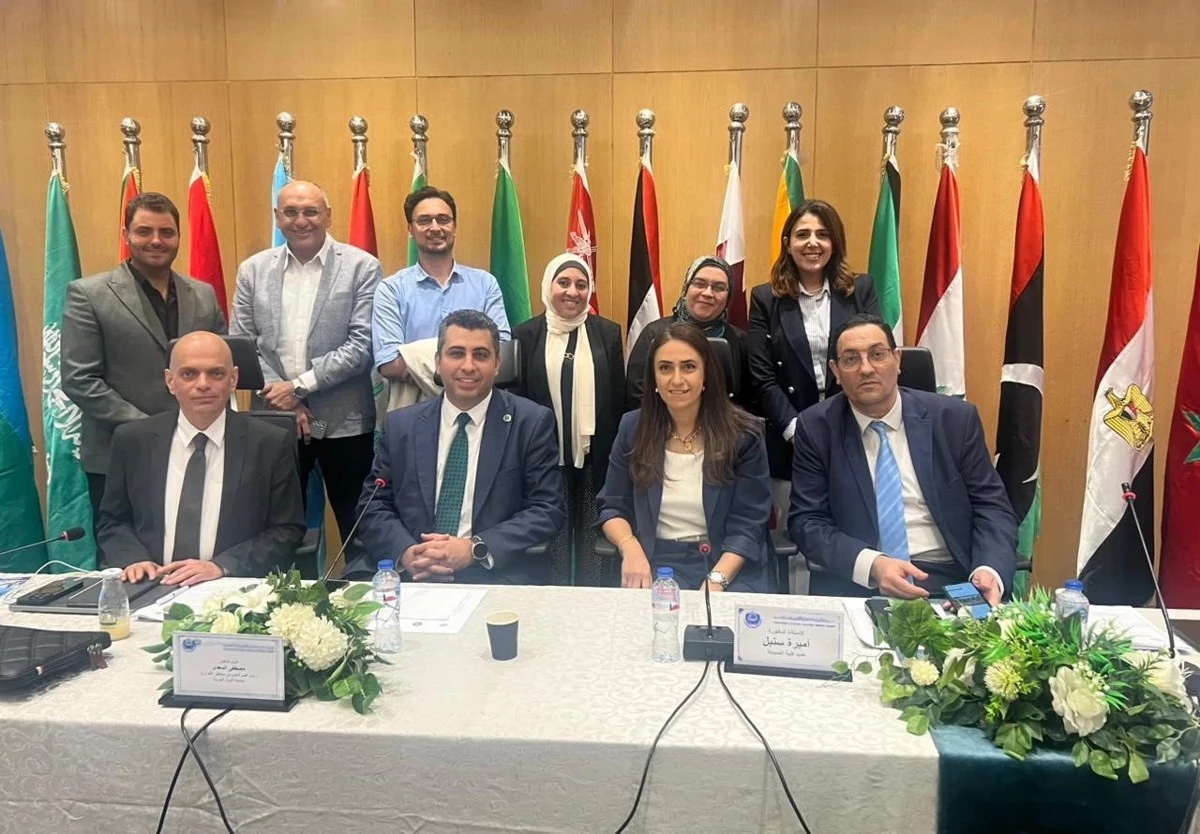
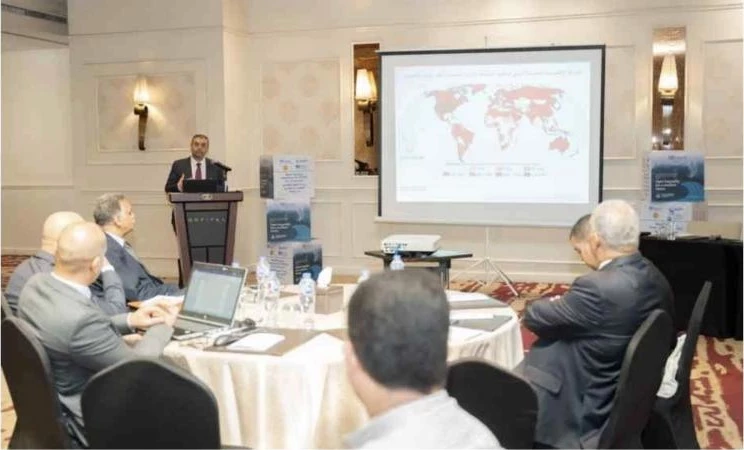
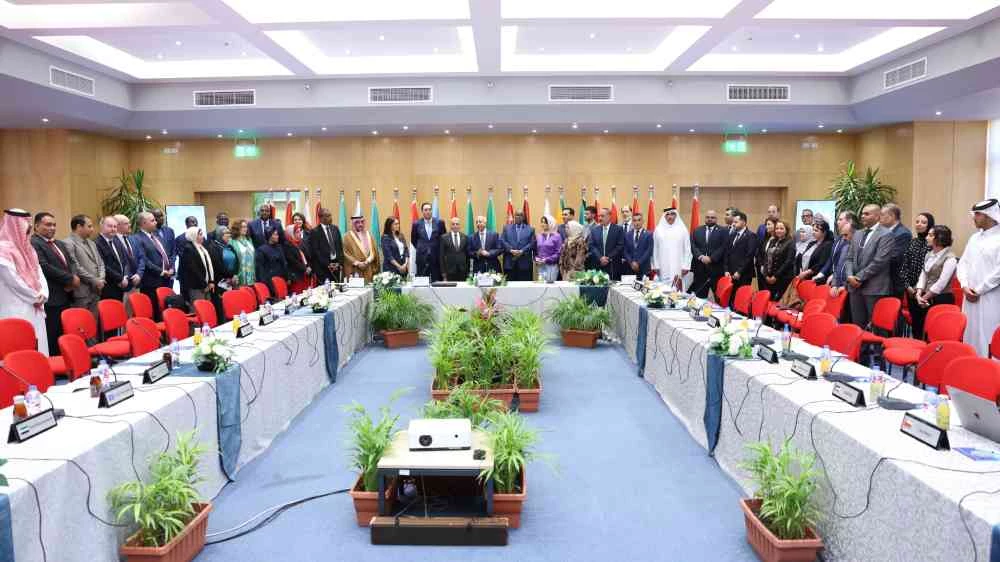
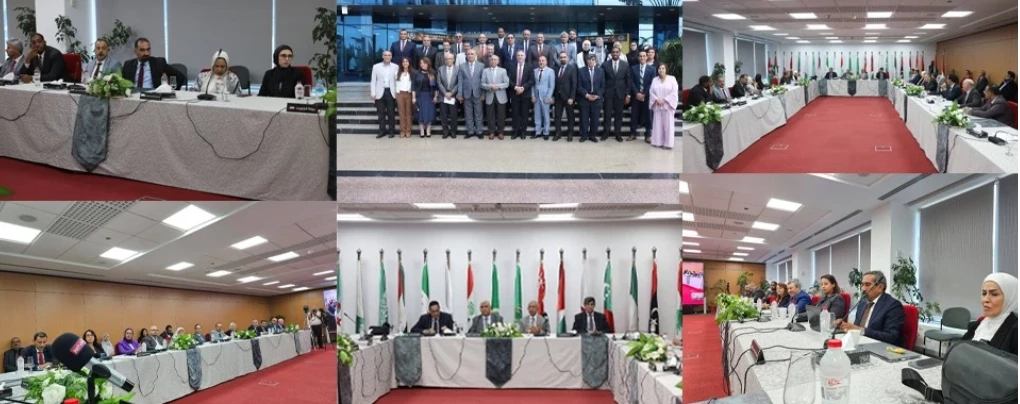
AASTMT hosted the first coordination meeting of the Arab Programme for Reducing Marine Disasters in June 2025, bringing together representatives from 15 Arab states and international organizations to develop a regional programme and its 2025–2027 Action Plan. AASTMT participated in the Multi-Hazard Resilience Forum, organized by the UNDRR Regional Office for Arab States, the Government of Egypt's National Committee for Crisis and Disaster Management under the Cabinet, and UNESCO. More than 60 delegates from government ministries, UN agencies, academic institutions, and international partners attended.
Climate Education and Public Awareness
Expanded Climate Education and Awareness
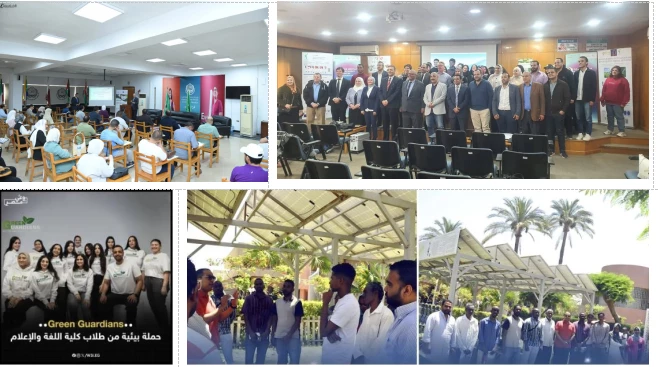
AASTMT delivered eight climate-related programmes and awareness initiatives during 2025, covering climate risks, early warning, climate impacts, agricultural adaptation, renewable energy, green hydrogen, and carbon reduction. On climate change risks, impacts, mitigation, adaptation, and early warning. Risks and early warning (Multi-Hazard Resilience Forum); impacts (Green Guardians campaign); adaptation (climate-resilient farming workshop); mitigation (solar energy, green hydrogen, photovoltaics and e-mobility, carbon border tax mechanism). For local communities. The public, school communities and teachers, trainees of Caritas Egypt, participants from different sectors in Egypt and Yemen, and students.
Building Technical Capacity for Clean Energy Transition: Green Hydrogen, Solar Photovoltaics, and E-Mobility Workshops
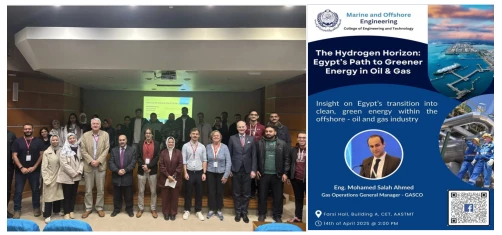
AASTMT’s College of Engineering and Technology organized two specialized workshops to build student and faculty capacity in clean energy and climate mitigation. On April 14, 2025, the Marine and Offshore Engineering Department hosted "The Hydrogen Horizon, examining green hydrogen integration in the oil and gas sector. On November 9, 2025, the College and the AASTMT Research and Innovation Center—partnering with the Organic Egypt Foundation, bbw International, and the Bavarian Ministry of Economic Affairs—held "Photovoltaics and E-Mobility in Egypt," featuring German and Egyptian experts discussing solar PV, battery storage, citizen energy communities, and AASTMT’s internal renewable energy projects.
AASTMT Educational Initiatives Supporting Climate Action
Through its participation in international educational and research projects, AASTMT strengthens its contribution to climate change education, mitigation, and adaptation. These initiatives integrate climate-related knowledge into higher education, build technical and professional competencies in low-carbon technologies, encourage climate-resilient agricultural practices, and advance sustainable maritime and industrial solutions.
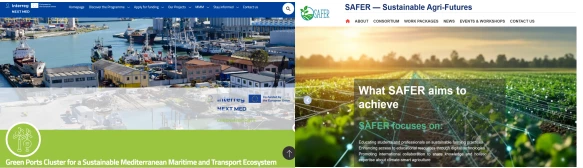
GREENMEDPORTS – Green Ports Cluster for a Sustainable Mediterranean Maritime and Transport Ecosystem
The GREENMEDPORTS project supports climate change mitigation education in the maritime sector through knowledge exchange, training, and capacity-building activities focused on sustainable port management and decarbonization strategies. Its activities include carbon-footprint monitoring, energy efficiency, and promoting low-emission port operations, strengthening maritime stakeholders' knowledge and competencies to address climate-related challenges.
SAFER – Sustainable Agri-Futures: Empowering Climate Resilience and Green Growth in Higher Education
The SAFER project promotes climate change adaptation and resilience through the integration of sustainable and climate-smart agricultural practices into higher education programmes. By developing digital educational resources, strengthening academic capacities, and providing training opportunities for students and agricultural professionals, the project supports knowledge transfer and the adoption of agricultural practices that respond to climate-related challenges.
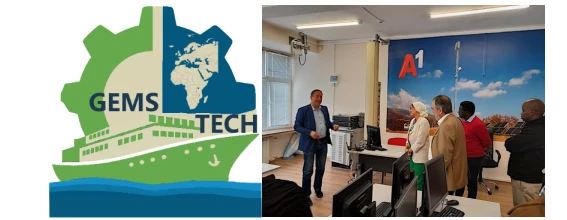
GEMS-TECH – Green Maritime Horizons: Collaborative Innovation in Ship Engineering and Sustainable Technologies
The GEMS-TECH project aims to modernize maritime education by integrating green technologies, sustainable ship engineering, and digital innovation into higher education curricula. Through specialized learning modules, simulation facilities, laboratory-based training, and open-access educational resources, the project strengthens the competencies of students and academic staff in maritime decarbonization, energy-efficient ship technologies, and sustainable port operations.
Community Engagement
During 2024–2025, AASTMT extended its climate action commitment beyond institutional operations by engaging local communities, government authorities, non-governmental organizations, educational institutions, industry, and international partners. Through public awareness campaigns, technical training, collaborative research, and regional initiatives, the Academy promotes climate literacy, strengthens adaptation capacity, and supports practical solutions to climate-related challenges.
Government and Institutional Collaboration
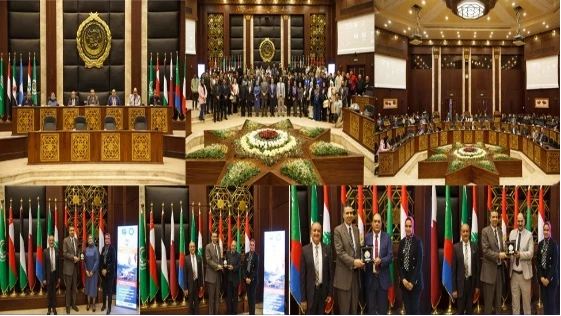
AASTMT Marks Arab Day for Disaster Risk Reduction to Drive Regional Resilience
In alignment with League of Arab States initiatives, AASTMT hosted the "Arab Day for Disaster Risk Reduction" at its Abu Kir Campus in Alexandria under the theme "A Resilient Arab Society in the Face of Disasters." Organized by the Department of Sustainable Environment, the hybrid event connected all AASTMT campuses and regional officials via live broadcast to advance emergency response planning. Ultimately, this milestone celebration reinforces AASTMT’s leading technical role in driving climate adaptation, disaster preparedness, and institutional resilience across the Arab world.
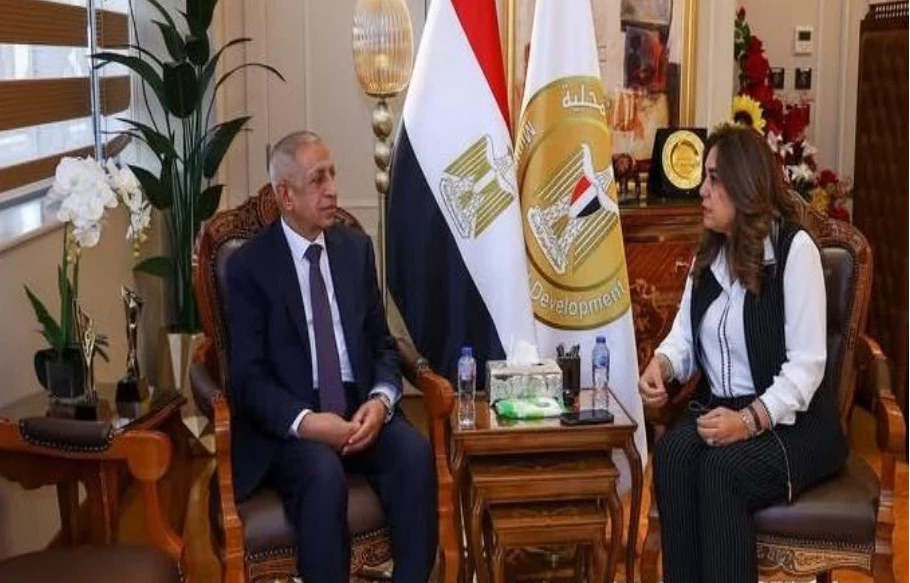
AASTMT President and H.E. the Minister of Local Development and Acting Minister of Environment
On October 8, 2025, the President of AASTM met with H.E. Dr. Manal Awad, Minister of Local Development and Acting Minister of Environment, to strengthen bilateral cooperation in alignment with Egypt’s Vision 2030. Discussions centered on advancing joint initiatives across local development, scientific research, capacity building, waste management, renewable energy, and climate change mitigation. Overall, this strategic engagement underscores AASTMT’s active institutional integration into national environmental planning and governmental sustainability frameworks.
Supporting Government Climate-Risk Monitoring: AASTMT’s Environmental Monitoring and Climate Change Laboratory (EMCCL)
EMCC at AASTMT provides critical scientific and technical infrastructure to support local and regional government authorities in climate-risk monitoring, environmental surveillance, and disaster preparedness. Integrating comprehensive meteorological tracking (temperature, humidity, wind, atmospheric pressure, precipitation, and lightning) with air- and water-quality analysis, coastal monitoring, and GIS-based climate-risk modeling, the laboratory enables the early identification of climate hazards such as extreme weather events, flooding, and coastal vulnerabilities.
Engagement with NGOs and Civil Society
AASTMT strengthens its community outreach through collaborations with non-governmental organizations and civil society partners, translating academic knowledge into practical environmental and climate initiatives.
Engagement with Arab Association for Navigation (AIN)
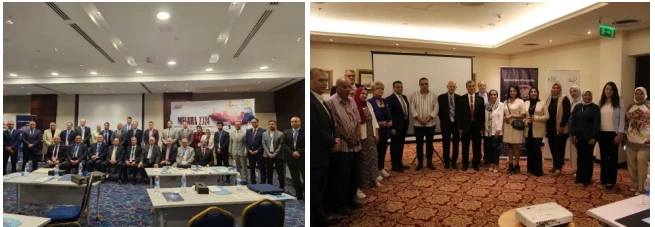
In partnership with the Arab Institute of Navigation (AIN) across two milestone events in Alexandria—the 11th International MELAHA Conference (23 September, 2024) and the Northern Egypt Fisheries Sustainability Workshop (8 September, 2025)—AASTMT reinforced NGO collaboration to advance both smart, low-carbon maritime transport and marine ecosystem protection. By pairing applied research on digital port efficiency and greenhouse gas reduction with stakeholder capacity building for sustainable fisheries, AASTMT continues to drive coastal resilience and maritime decarbonization.
Engagement with EGET Foundation
As part of the Interreg NEXT MED-funded HEEFTA project (Ref: A_Y_3.1_0232_HEEFTA; 2025–2027), AASTMT actively collaborates with leading regional partners, including the prominent Non-Governmental Organization EGET Foundation (Education, Geriatrics, Ecological Farming & Tourism Foundation, Türkiye). This strategic academic-NGO partnership leverages EGET’s civil-society expertise in ecological farming, sustainable tourism, and community engagement to bridge academic knowledge with practical climate adaptation efforts.
Engagement with Arab-German Young Academy of Sciences and Humanities (AGYA)
Joint climate-resilient agriculture workshop addressing digital technologies, environmental monitoring, and agricultural adaptation. AASTMT, in collaboration with the Arab-German Young Academy of Sciences and Humanities (AGYA) and its Center for Future Studies and Risk Management, organized an international workshop entitled "Sustainable Farming in the Digital Age: Monitoring, Analytics, and Action for Climate Resilience", bringing together researchers and experts from six countries to address the effects of climate change, global warming, and changing climatic conditions on agricultural systems and food security. The workshop explored the application of AI, IoT, and precision agriculture in climate adaptation, environmental monitoring, and energy resources, particularly under increasing drought risks and climate-related pressures.
Engagement with Caritas Egypt Solar-Energy Training
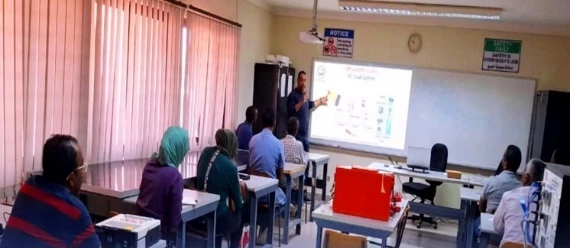
Practical solar energy training under the EU-funded Hand in Hand project, supporting renewable energy skills and technical capacity building. AASTMT organized specialized Solar Energy Course activities at the Industry Service Complex workshops in Abu Kir. Held in collaboration with the non-governmental organization Caritas Egypt, the training focused on enhancing practical skills in renewable energy and green technologies.
Engagement with NGO-Led Environmental Awareness Initiatives
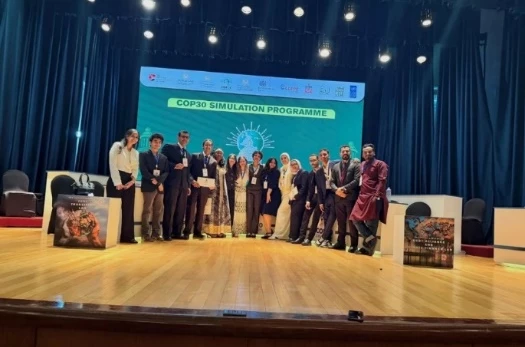
In October 2025, an AASTMT College of Medicine student represented the Academy at the COP30 Climate Simulation and Climate Conference Capacity Building Programme, organized by the British University in Egypt (BUE) in collaboration with the United Nations Development Programme (UNDP) to advance youth leadership in climate diplomacy, policy dialogues, and climate adaptation strategies. Alongside simulated negotiations, the programme featured a Sustainability Exhibition promoting community awareness through student innovations and NGO-led grassroots solutions documented by the Arab Office for Youth and Environment—including a plastic-waste management and mitigation project by Al-Rowad Foundation for Projects and Development and a sustainable local youth communities initiative by the Forum.
Events
The following events demonstrate AASTMT's practical contribution to climate action, public education, technological innovation, and regional resilience.
Volvo Session – Electrification of Commercial Vehicles
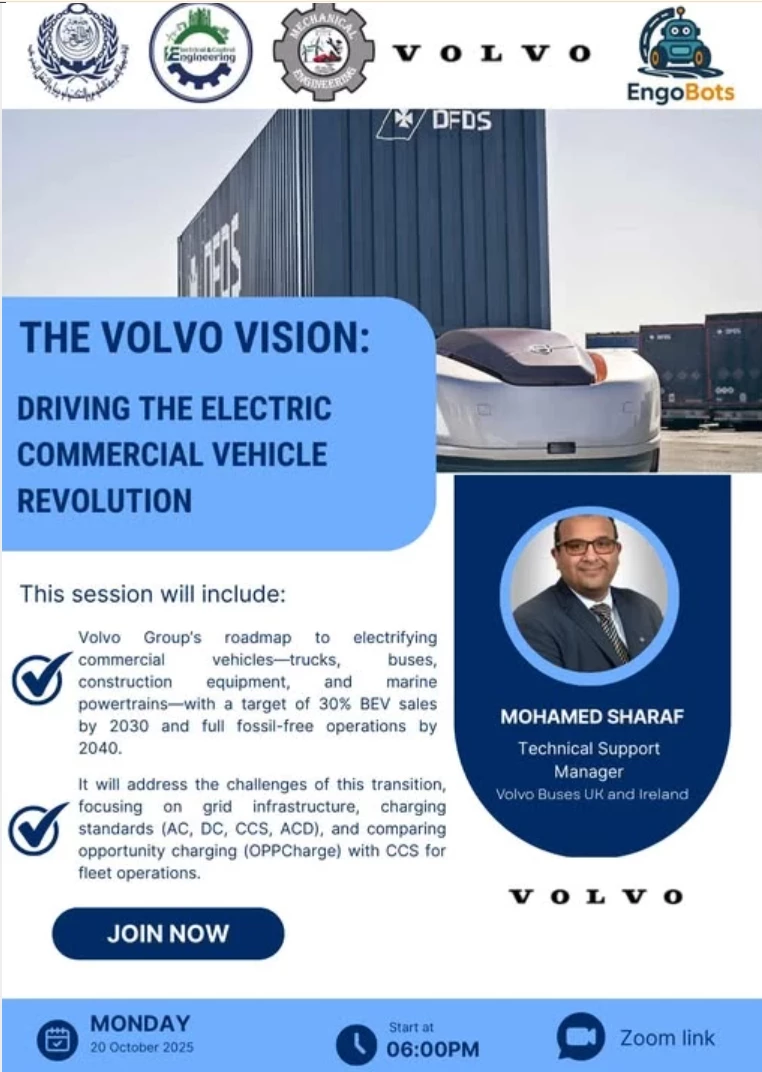
As part of its commitment to promoting sustainable technologies and raising awareness of low-carbon transportation, the Faculty of Engineering and Technology at AASTMT, in collaboration with Volvo and the Regional Informatics Center, organized a specialized online session on 20 October 2025 as part of the EngoBots competition. The session, delivered by an expert from Volvo Buses UK & Ireland, explored Volvo Group's roadmap towards the electrification of commercial vehicles, including buses, trucks, construction equipment, and marine propulsion. Discussions addressed the transition to battery-electric vehicles, charging infrastructure, and the challenges of adopting electric transportation systems. The session highlighted the role of vehicle electrification in reducing dependence on fossil fuels and supporting the transition towards more sustainable, low-carbon transport.
Hydrogen Horizon Egypt: Path to Greener Energy in Oil and Gas Workshop
AASTMT hosted the "Hydrogen Horizon Egypt on 14 April, 2025: Path to Greener Energy in Oil and Gas" workshop to connect students with industry professionals and explore the role of hydrogen technologies in the transition towards cleaner energy systems. The event provided an opportunity for knowledge exchange on hydrogen applications and emerging technologies supporting the reduction of reliance on conventional fossil fuels.

AASTMT Participation in the Hydrogen Mediterranean Summit – February 2025
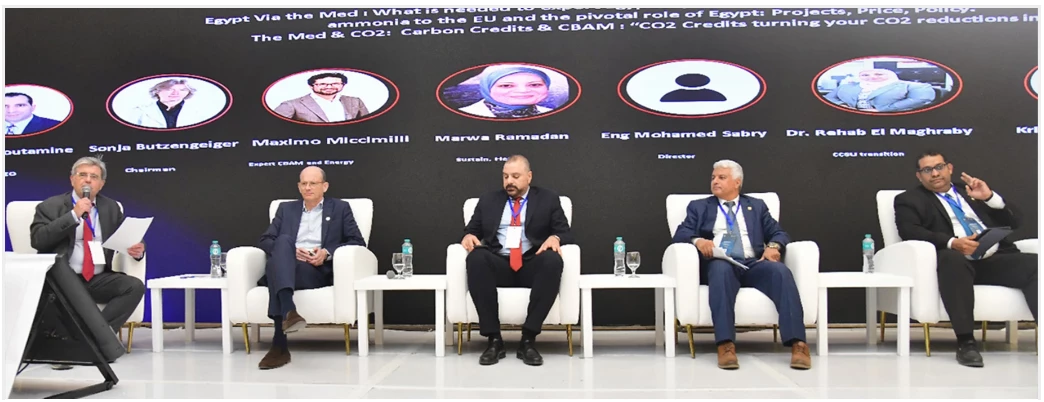
On 18–19 February 2025, AASTMT's Industry Service Complex participated in the Hydrogen Mediterranean Summit in Cairo, contributing to discussions on the role of hydrogen in the transition towards low-carbon energy systems. The participation included a panel discussion entitled "Hydrogen Village", which addressed hydrogen education, safe hydrogen transportation, and its potential contribution to carbon emissions reduction. On the second day, AASTMT delivered a presentation entitled "Education and Training & Green Hydrogen Technology", highlighting the importance of developing knowledge and technical capacity in emerging green hydrogen technologies.
MARLOG 14: Advancing Climate-Related Research and Sustainable Maritime Solutions
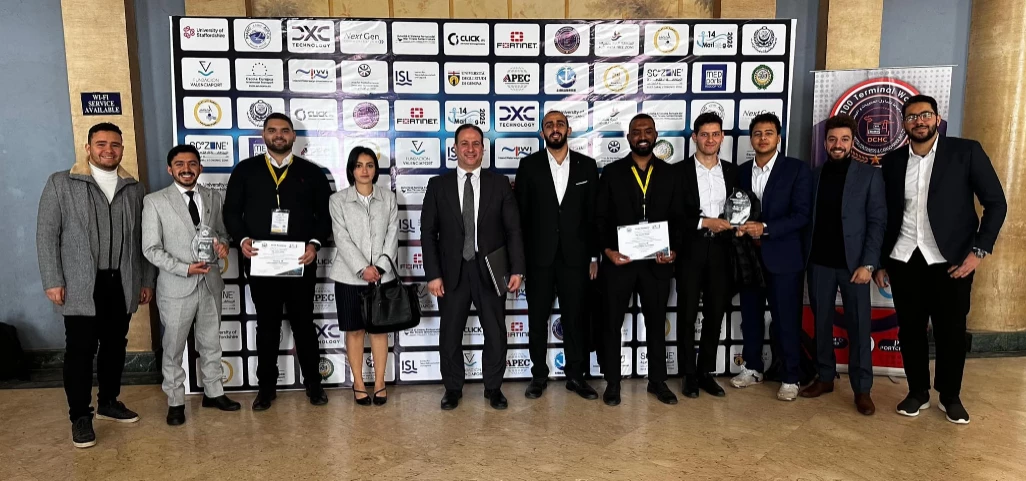
AASTMT organized the 14th International Maritime and Logistics Conference (MARLOG 14) from 23 to 25 February 2025 in Alexandria, under the theme “Artificial Intelligence Implementations – Towards Shaping the Future of the Digital World. Beyond its focus on digital transformation and maritime logistics, MARLOG 14 provided a platform for research and knowledge exchange on climate-related challenges and sustainable maritime solutions. The conference proceedings included research addressing climate change impacts on port activities, offshore wind energy, wave and solar energy applications in coastal zones, alternative marine fuels, emissions reduction in green ports, and AI-supported maritime decarbonization.
AASTMT–League of Arab States Workshop on Intelligent Systems for Sustainable Transportation
As part of its commitment to promoting sustainable transportation and supporting climate action, AASTMT, in collaboration with the League of Arab States, organized a regional workshop on Intelligent Systems for Sustainable Transportation on 5–6 October 2025 at its Smart Village Campus. The workshop explored the application of artificial intelligence and advanced communication technologies to improve transport efficiency, optimize fleet operations, reduce fuel consumption, and minimize transport-related greenhouse gas emissions.
Upcoming Goals
|
Strategic priority |
Target / planned direction |
|
Greenhouse gas reduction |
At least 45% reduction by 2030 against the 2019 baseline, as set out in the plan |
|
Renewable energy |
Increase renewable electricity contribution towards 40% by 2040 |
|
Energy efficiency |
Continue reducing electricity consumption and improving institutional energy intensity |
|
Carbon monitoring |
Strengthen annual GHG inventories and expand institutional monitoring across campuses |
|
Climate education |
Expand climate awareness programmes, professional training, and community workshops |
|
Climate resilience |
Strengthen early-warning preparedness, disaster risk reduction, and coastal resilience |
|
Government and NGO partnerships |
Expand joint initiatives, stakeholder engagement, and community-based climate projects |
|
Research and innovation |
Advance research in renewable energy, green hydrogen, digital monitoring, and climate adaptation |
|
Net-zero commitment |
Maintain the pathway towards net-zero greenhouse gas emissions by 2050 |
This report presents a concise account of the Arab Academy for Science, Technology & Maritime Transport’s (AASTMT) actions and outcomes under SDG 13: Climate Action for the 2023–2024 academic year. Across campuses and partner networks, AASTMT advanced a practical low-carbon transition by expanding CO₂/greenhouse gas (GHG) emissions tracking and disclosure, scaling renewable and energy-efficiency measures, and strengthening mitigation and adaptation capacity through education, community outreach, and technical support to public authorities.
AASTMT’s commitment is embedded in institutional practice: students and community members engaged in targeted climate-literacy programs; staff collaborated with NGOs and government bodies on early-warning, disaster risk reduction, and climate policy design; and the university reaffirmed a pathway to carbon neutrality, supported by transparent reporting on Scopes 1 & 2 and selected Scope 3 trends. The pages that follow highlight milestones in local education on climate change, a publicly shared roadmap for CO₂ reduction and low-carbon energy, co-operative planning for climate-related hazards, government support initiatives, and a culture of accountable governance that underpins a resilient, net-zero future.