



 Goal 17. Partnerships to achieve the Goal
17.3.14 SDG14 Report

Key Milestones in 2024-2025
The Arab Academy for Science, Technology, and Maritime Transport (AASTMT) demonstrates its steadfast commitment to Sustainable Development Goal 14 (SDG 14) by familiarizing its students with it and including the necessary knowledge within the related educational programs, Curricula, and specialized courses. Although SDG14 is supported widely within the AASTMT maritime educational sector, AASTMT firmly believes that SDG14 is not limited to the maritime sector and promoting it to all AASTMTs’ campuses and colleges. This dedication fosters a motivated and professional workforce, aligning with SDG 14's principles:
Aquaculture Program (Undergrad)
The College of Fisheries and Aquaculture Technology (CFAT) at AASTMT supports education and capacity building in aquatic resource management through its undergraduate Aquaculture Program. The program aims to provide education, applied scientific knowledge, practical training, and outreach relevant to the aquaculture sector and society.
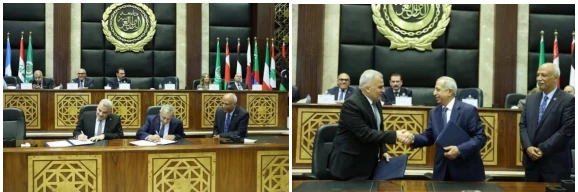
The College of Fisheries and Aquaculture Technology signed a joint cooperation protocol with the General Authority for the Protection and Development of Lakes and Fish Resources
To strengthen institutional cooperation between higher education institutions and government authorities, the Arab Academy for Science, Technology and Maritime Transport (AASTMT), through its College of Fisheries and Aquaculture Technology (CFAT), signed a cooperation protocol with the General Authority for the Protection and Development of Lakes and Fish Resources on 19 May 2025.
College of Fisheries and Aquaculture Technology-Alexandria | AASTMT
The Graduation Project for Students of the Faculty of Fisheries and Aquaculture Technology was chosen under the title “Environmental and Biological Assessment of the use of Antifouling Paints on fishing Vessels in Abu Qir Bay and an Environmentally Friendly Solution based on Water Hyacinth Extract".
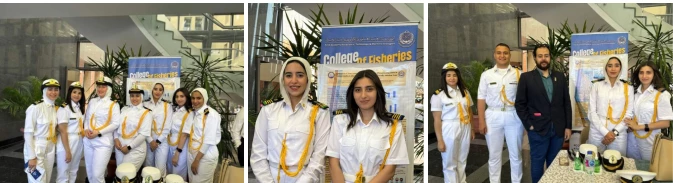
On Sunday, 21 April 2024, students of the College of Fisheries and Aquaculture Technology at the Arab Academy for Science, Technology and Maritime Transport (AASTMT) presented their graduation project entitled “Environmental and Biological Assessment of Antifouling Paints Used on Fishing Vessels in Abu Qir Bay and an Environmentally Friendly Alternative Based on Water Hyacinth Extract.” The project was selected for presentation as part of the activities celebrating the International Day of Innovation and Creativity, in cooperation with the Bibliotheca Alexandrina.
College of Fisheries and Aquaculture Technology-Alexandria | AASTMT
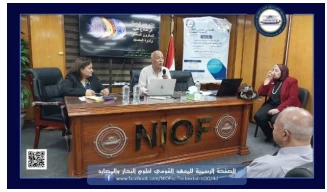
Professor Dr. Hatem Hanafy Mahmoud, Dean of the Faculty of Fisheries Technology and Aquaculture, participated in a scientific lecture entitled: “Modern Trends in Fish Stock Assessment and Fisheries Management Models”
As part of the activities of the Second Scientific Forum of the Fisheries Division at the National Institute of Oceanography and Fisheries Sciences, “Integrated Fisheries Management”, Professor Dr. Hatem Hanafy Mahmoud, Dean of the Faculty of Fisheries Technology and Aquaculture, participated in a scientific lecture entitled: “Modern Trends in Fish Stock Assessment and Fisheries Management Models” as part of the activities of the Second Scientific Forum of the Fisheries Division at the National Institute of Oceanography and Fisheries Sciences, “Integrated Fisheries Management: Challenges of Reality and Visions of the Future,” on Monday, May 18, 2026, at the headquarters of the Institute’s branch for the Mediterranean Sea and Northern Lakes in Anfoushi, Alexandria.
College of Fisheries and Aquaculture Technology-Alexandria | AASTMT
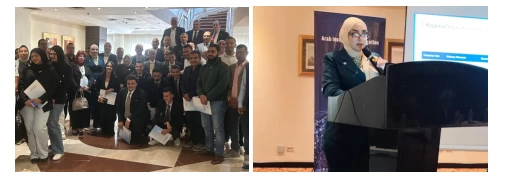
Representatives from the Faculty of Fisheries Technology and Aquaculture, including faculty members and students, participated in the distinguished workshop entitled "Marine Environment Degradation and Livelihood Challenges for Fishermen in Northern Egypt".
On 9 May 2026, Representatives from the Faculty of Fisheries Technology and Aquaculture, including faculty members and students, participated in the workshop, "Marine Environment Degradation and Livelihood Challenges for Fishermen in Northern Egypt," organized by the Arab Maritime Association in cooperation with the German Hans Seidel Foundation.
College of Fisheries and Aquaculture Technology-Alexandria | AASTMT
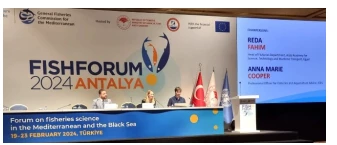
College of Fisheries and Aquaculture Technology Staff Member Participation in Fish Forum, 2024, Antalya, Turkey
On 23/02/2024, more than 400 participants gathered in Antalya, Türkiye, to scale up science for effective fisheries management at the second edition of the Forum on Fisheries Science in the Mediterranean and the Black Sea (Fish Forum 2024). The event, organized by the Food and Agriculture Organization of the United Nations (FAO) 's General Fisheries Commission for the Mediterranean (GFCM), is the region's most important scientific gathering on fisheries and related issues. Türkiye’s Ministry of Agriculture and Forestry hosted this year's edition, funded by the European Union.
Life Below Water-Alexandria | AASTMT
Fish Forum 2024 | General Fisheries Commission for the Mediterranean | FAO
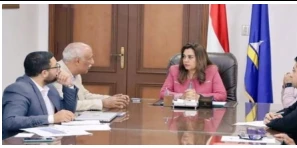
In the World Fisheries Day: AASTMT–Damietta Dialogue on Sustainable Fisheries and Aquatic Resource Conservation
On 21 November 2024, coinciding with World Fisheries Day, representatives of the College of Fisheries and Aquaculture Technology (CFAT), Arab Academy for Science, Technology and Maritime Transport (AASTMT), met with Her Excellency the Governor of Damietta to discuss opportunities for cooperation in sustainable fisheries and aquaculture development.
Life Below Water-Alexandria | AASTMT
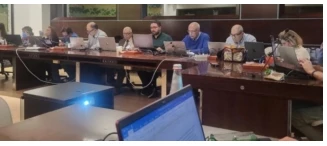
The College regularly represents Egypt in Working Groups on Stock Assessment (WGSA) for Demersal Species (WGSAD) and Small-Pelagic Species (WGSASP), organized by the General Fisheries Commission for the Mediterranean (GFCM), Food and Agriculture Organization of the United Nations.
The Arab Academy for Science, Technology and Maritime Transport (AASTMT), through its College of Fisheries and Aquaculture Technology, was represented by Prof. Hatem Hanafy Mahmoud and Dr. Reda Magdi Fahim at the General Fisheries Commission for the Mediterranean (GFCM) Working Group on Stock Assessment of Small Pelagic Species, held in the Metropolitan City of Rome Capital, Italy, from 8 to 13 December 2025.
Life Below Water-Alexandria | AASTMT
MARLOG 14 – International Maritime and Logistics Conference: Environmental Sustainability in Coastal and Port Areas
The Arab Academy for Science, Technology and Maritime Transport (AASTMT) organized the 14th International Maritime and Logistics Conference (MARLOG 14) in Alexandria from 23 to 25 February 2025.
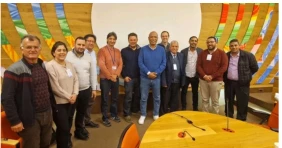
College of Fisheries and Aquaculture Technology Staff Members participation in GFCM_FAO-UN working on Stock Assessment of the Round Sardinella in the Eastern Mediterranean, 2024
Prof. Hatem Hanafy Mahmoud and Dr. Reda Magdy Fahim of the College of Fisheries and Aquaculture Technology, Arab Academy for Science, Technology and Maritime Transport (AASTMT), participated in the regional scientific work coordinated by the GFCM and FAO on the stock assessment of round sardinella (Sardinella aurita) in the Eastern Mediterranean.
Life Below Water-Alexandria | AASTMT
Life Below Water-Alexandria | AASTMT
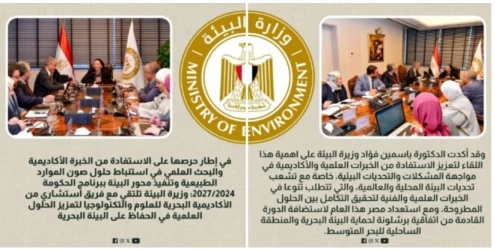
AASTMT Fisheries Expert Contributes to Egypt’s Environmental Sustainability Strategy 2024–2027
On 14 Jan 2025, the Arab Academy for Science, Technology and Maritime Transport (AASTMT) participated in high-level consultations with H.E. the Minister of Environment through a specialized advisory team, contributing scientific and technical expertise to the implementation of Egypt’s Governmental Program 2024–2027, aligned with the Sustainable Development Strategy: Egypt Vision 2030.
Life Below Water-Alexandria | AASTMT
Integrating Sustainable Development Goals in Universities to enhance Climate Change Management “INVOLVE.” (2021 - 2024)
The mentioned research project aims to:
- Embody the principles of the environmental SDGs through organizational governance and strategic management of Egyptian universities to ensure their strategies align with the SDGs.
- Establish the Sustainable Development Center (SDC) in Egyptian universities to enhance organizational and internal capacity and ownership of the environmental SDGs, providing the necessary knowledge, skills, and motivation to understand and address them.
- Foster the achievement of environmental SDGs in Egyptian universities by increasing their operational capacities to develop environmentally sustainable campuses.
Project Details | AASTMT Research
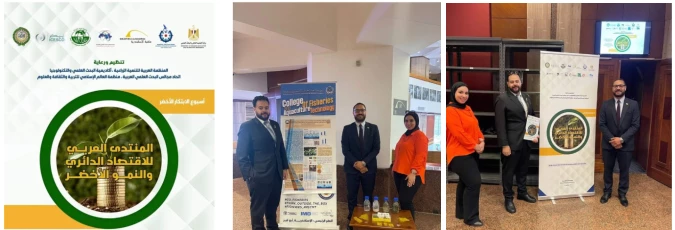
College Students participated in the “Green Innovation Week” under the Organization of the Academy of Scientific Research and Technology in cooperation with the Union of Arab Scientific Research Councils, the Arab Organization for Agricultural Development, the Islamic World Organization for Education, Culture and Science, and the Arab Forum for Circular Economy and Green Growth under the title “Green Innovation Week.”
Within the framework of the interest of the Faculty of Fisheries and Aquaculture Technology at the Arab Academy for Science, Technology and Maritime Transport in achieving the sustainable development goals (especially Goal 14: Life Below Water) and the trend towards the blue economy, two students (Ahmed El-Mallah and Habiba Nasser) of the college participated in the “Green Innovation Week” under the organization of the Academy of Scientific Research and Technology in cooperation with the Union of the Arab Scientific Research Councils, the Arab Organization for Agricultural Development, and the Islamic World Educational, Scientific and Cultural Organization.
College of Fisheries and Aquaculture Technology-Alexandria | AASTMT
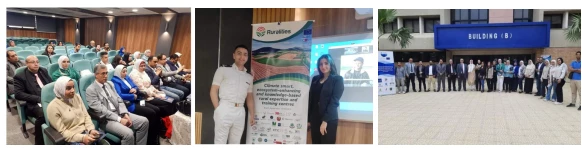
Participation of Faculty Members and Male and Female Students of the Academy’s Faculty of Fisheries and Aquaculture Technology on Tuesday, April 30, 2024, in the Workshop for the Project: Curriculum Development for the Sustainable Blue Economy Study toward the Achievement of Ocean Decade in Tunisia, Egypt, and Jordan / BLUE-ERA
Faculty members and male and female students from the Academy’s Faculty of Fisheries and Aquaculture Technology participated on Tuesday, April 30, 2024, in the workshop for the project: Curriculum Development for the Sustainable Blue Economy Study toward the Achievement of Ocean Decade in Tunisia, Egypt, and Jordan / BLUE-ERA.
College of Fisheries and Aquaculture Technology-Alexandria | AASTMT
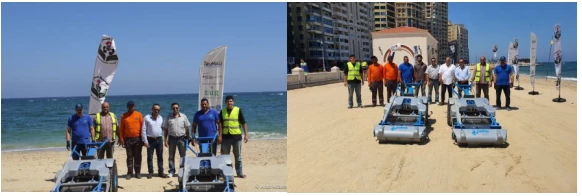
The TouMaLi Research Project is a Comprehensive, Multi-Year Initiative Scheduled to run from 2021 to 2025.
Reducing marine litter in Northern Africa—specifically in countries like Algeria, Egypt, Morocco, and Tunisia—is essential for protecting the region’s rich marine ecosystems. The strategy involves implementing sustainable waste management practices, promoting recycling, and encouraging reuse to minimize environmental impact. Key actions include coastal monitoring to track pollution levels, conducting comprehensive pollution assessments, and reviewing existing waste management systems to identify areas for improvement.
TouMaLi research project (2021-2025)
TouMaLi research project (2021-2025)
TouMaLi research project (2021-2025)
TouMaLi research project (2021-2025)
Cooperation between the Arab Academy for Science, Technology & Maritime Transport (AASTMT) and the Lakes and Fish Resources Protection and Development Agency (LFRPDA)
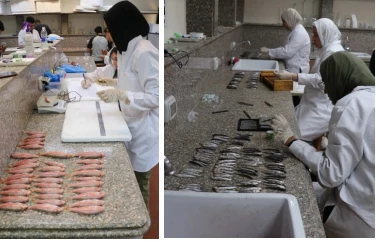
In the framework of cooperation between the Arab Academy for Science, Technology & Maritime Transport (AASTMT) and the Lakes and Fish Resources Protection and Development Agency (LFRPDA), the College of Fisheries and Aquaculture Technology (CFAT) at AASTMT is supervising three research projects supported by the General Fisheries Commission for the Mediterranean (GFCM) of the Food and Agriculture Organization of the United Nations. These research projects focus on assessing fish stocks of economically significant species, including NIS in the Egyptian Mediterranean, monitoring discards, bycatch, and vulnerable species.
College of Fisheries and Aquaculture Technology-Alexandria | AASTMT
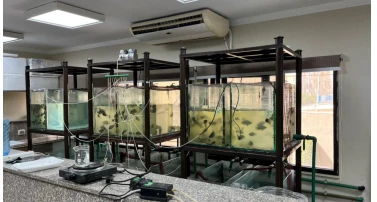
Aquarium water recirculation, reuse and discharge
This internal policy sets guidelines for responsible water management in the Aquaculture Laboratory at the College of Fisheries and Aquaculture Technology, AASTMT. It aims to promote water conservation through recirculation and reuse, ensure appropriate aquarium water quality, and manage wastewater safely to prevent pollution and protect aquatic ecosystems. The policy supports AASTMT’s commitment to Sustainable Development Goal 14 (Life Below Water) by minimizing harmful discharges into natural aquatic environments and encouraging environmentally responsible laboratory practices.
Water discharge guidelines and standards - Life Below Water
Standards and Guidelines for Discharge of Wastewater, Version 2 (reviewed 2025, AASTMT Abu Qir Campus, Alexandria)
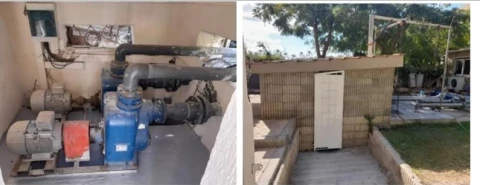
In 2025 the SDGs Workforce Committee reviewed AASTMT’s wastewater discharge guidelines. Version 2 specifies the Abu Qir wastewater and rainwater system: a 12-inch drainage line to a 12 m³ sump, two 10 hp EBARA submersible pumps discharging 60–70 m³ per hour with two 15 hp Siemens standby pumps, dual control panels to prevent overflow, and daily cleaning of the pump rooms by a contracted company. It sets a validation program (pump flow and valves checked monthly, control panels quarterly, discharge water quality tested monthly by laboratory analysis, and sump and pump room inspected twice a year), and requires compliance with Law No. 93 of 1962, Decree No. 44 of 2000 and Egyptian Code 102 (2010), so that no contaminated water reaches the sea, freshwater or groundwater.
AASTMT Standards and Guidelines for Discharge of Wastewater
“Every Drop Counts” Campaign in the Laboratories (24 October 2024, AASTMT campuses)
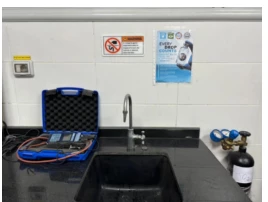
AASTMT launched the “Every Drop Counts” campaign in its teaching laboratories, with posters and awareness materials in every department. Faculty members reminded students during practical sessions to save water, report leaks and follow sustainable laboratory practice, which means nothing hazardous goes down the sink.
AASTMT Launches “Every Drop Counts” Water Conservation Campaign
AASTMT attended the 82nd MEPC Meeting on Behalf of IAMU
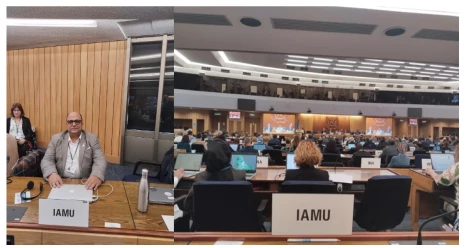
The Arab Academy for Science, Technology, and Maritime Transport (AASTMT) actively participates in the International Association of Maritime Universities (IAMU). It represented the IAMU at the Marine Environmental Protection Committee (MEPC) during its 82nd session, held from September 30 to October 4, 2024, in London, UK. Senior Lecturer Mohamed Elbawab, a member of AASTMT’s SDGs team for SDG14, was the IAMU’s representative.
If access is granted to IMO Docs MEPC82/J/1, a list of participants is available at this link
MEPC 82/WP.1/Rev.1 (15 October 2014)
CFAT–AASTMT Students Periodically Conduct Coastal Water Quality Monitoring to Support Watershed Management and Marine Ecosystem Protection
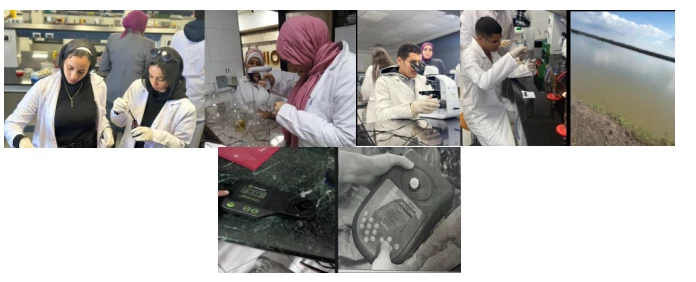
The College of Fisheries and Aquaculture Technology (CFAT) at the Arab Academy for Science, Technology and Maritime Transport (AASTMT) was strengthening its commitment to coastal environmental protection through student field activities focused on collecting coastal water samples and assessing key water quality parameters along the Alexandria coastline. As part of the College’s educational and environmental monitoring efforts, on 21 Dec. 2026, students participated in field sampling to collect water samples for laboratory analysis and evaluate key physical and chemical characteristics of the aquatic environment. These measurements included temperature, pH, salinity, dissolved oxygen, and nutrient concentrations, depending on the sampling objectives and available laboratory facilities. The collected samples allowed assessment of variations in coastal water quality, tracking environmental conditions over time, and identifying potential changes that may require further investigation.
Life Below Water-Alexandria | AASTMT
Community Engagement
In the 2024-2025 academic year, the Arab Academy for Science, Technology and Maritime Transport (AASTMT) prioritized impactful community engagement initiatives to address challenges related to SDG 14: Life Below Water. These efforts focused on raising awareness, fostering collaboration, and empowering local communities to contribute to marine conservation and sustainable development. Below are the key community-focused initiatives undertaken:
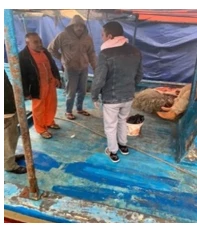
Community Awareness about Overfishing: Fishing is a Major Driver of Declines in Marine Wildlife Populations
On 26 December 2024, the College of Fisheries and Aquaculture Technology (CFAT) at AASTMT conducted a community awareness activity targeting local fishermen to promote sustainable fisheries management and raise awareness of fishing practices that threaten marine biodiversity and fish stocks.
Life Below Water-Alexandria | AASTMT
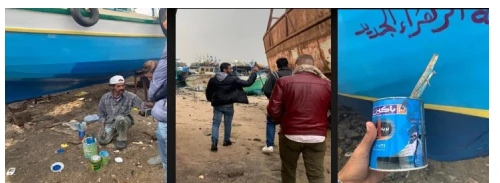
Initiative update: Outreach Workshop with Abu-Qir Bay Fishermen on Antifouling Paints, Environmental Risks, and Alternative Solutions
CFAT organized a community awareness initiative targeting local fishermen in Abu Qir, Alexandria, to promote environmentally friendly antifouling paints as sustainable alternatives to conventional antifouling products. The awareness activities were delivered by CFAT students under the supervision of college academic staff.
Life Below Water-Alexandria | AASTMT
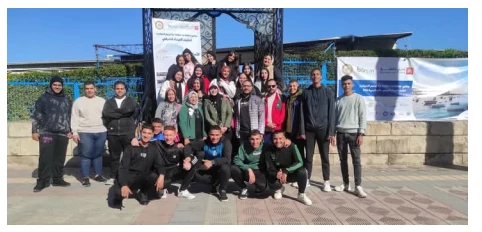
College of Fisheries and Aquaculture Technology Students actively participated in the "By Fisher to Fisher" Program (Beach cleanup initiative)
On Saturday, 21 December 2024, students and staff members of the College of Fisheries and Aquaculture Technology (CFAT), Arab Academy for Science, Technology and Maritime Transport (AASTMT), participated in the "By Fisher to Fisher" program, under the broader "Green & Clean" campaign. The initiative was implemented under the auspices of the Egyptian Ministry of Environment and Banque du Caire, with supervision from Global Stars Company, and focused on environmental protection and supporting fishing communities.
College of Fisheries and Aquaculture Technology-Alexandria | AASTMT
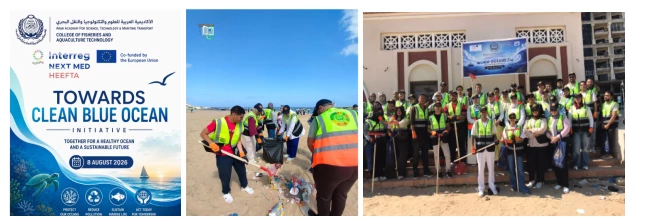
Towards Clean Blue Oceans | Hand in Hand for a Sustainable Sea
The College of Fisheries and Aquaculture Technology – Arab Academy for Science, Technology and Maritime Transport (AASTMT) launched the “Towards Clean Blue Oceans” initiative on Saturday, August 8, 2026, bringing together 50 participants from college students, school students, and volunteers — working hand in hand to promote marine environmental awareness and cleaner beaches.
Life Below Water-Alexandria | AASTMT
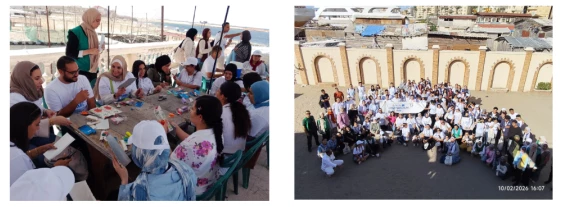
Interreg Cooperation Day 2026 | Beach Cleanup: Together for Cleaner Beaches and a More Sustainable Mediterranean
As part of Interreg Cooperation Day 2026, the College of Fisheries and Aquaculture Technology (CFAT) at the Arab Academy for Science, Technology and Maritime Transport (AASTMT) participated in the beach cleanup activities held in Alexandria on Friday, 2 October 2026. The Anna Lindh Foundation organized the event, with numerous students, young people, volunteers, and representatives from partner institutions and organizations participating. Participating Organizations and initiatives
Life Below Water-Alexandria | AASTMT
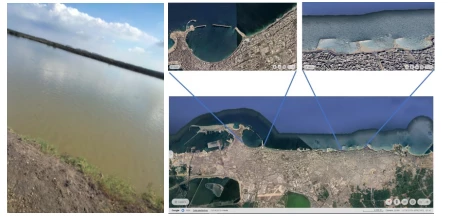
Initiative: “Existence of Harmful Algal Blooms along Alexandria Coast: A Mitigation Strategy".
Since 1998, the Alexandrian coast has undergone a series of engineering modifications. These changes have affected water quality, phytoplankton productivity and diversity, and the coast's topography. To prevent erosion and build new beaches, preventive wave breakers were constructed in 1998. As a result, shallow, somewhat large, semi-closed lagoons formed. These lagoons became an ideal habitat for algal blooms because of their shallow depth and partially stagnant waters. Around 2010, the corrective strategy was subsequently implemented to lessen the negative consequences of the earlier coastal alterations. Over these two periods, the phytoplankton standing crop and composition changed completely. Internal tourism suffered financial losses due to this bloom.
A major problem along the Alexandria shoreline is beach erosion. Accordingly, the coast underwent coastal engineering modifications to reduce erosion and establish new recreational beaches. These coastal modifications were carried out without a preliminary impact assessment and led to negative effects. Semi-closed artificial lagoons were established, and a green tide was formed for the first time along these lagoons due to their shallowness and increased nutrient concentrations. Corrective measures were needed to mitigate the negative effects. This study was carried out at the beginning of 2024.
Existence of Harmful Algal Blooms along Alexandria coast: A mitigation strategy
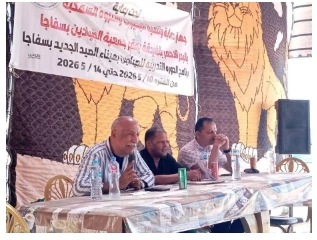
In fulfillment of its role in serving the local community and in line with its Social Responsibility, the Faculty of Fisheries Technology and Aquaculture, represented by its Dean, Professor Dr. Hatem Hanafi Mahmoud, participated in an important Training Program for Fishermen at the New Fishing Port in Safaga
On 10 – 14 May 2026, as part of its commitment to community service and environmental responsibility, the College of Fisheries Technology and Aquaculture at the Arab Academy for Science, Technology and Maritime Transport (AASTMT) contributed to a specialized training program for local fishermen at the New Safaga Fishing Port. The program was organized by the Red Sea Lakes and Fisheries Development Authority in Hurghada and hosted at the Safaga Fishermen's Association. AASTMT was represented by Professor Dr. Hatem Hanafi Mahmoud, Dean of the College, who contributed to the educational and professional engagement with the local fishing community.
College of Fisheries and Aquaculture Technology-Alexandria | AASTMT
Events
Throughout the 2023-2024 academic year, the Arab Academy for Science, Technology and Maritime Transport (AASTMT) hosted and participated in a range of impactful events aligned with SDG 14: Life Below Water. These events were designed to raise awareness, foster collaboration, and drive actionable change in marine sustainability. Below is an overview of the key events and their outcomes:
Memorandum of Understanding between AASTMT and the World Fish Center (2022 – 2027).
During the fourth AASTMT Advisory Council for Industry on June 3, 2022, Professor Ismail Abdel Ghafar, the Academy's president, signed an MoU with the WorldFish Center, represented by Regional Director Dr. Ahmed Nasrallah. The five-year agreement (2023-2024 year is included) focuses on collaboration in aquaculture, fisheries management, and capacity building. Both organizations aim to advance sustainable fisheries and aquaculture practices in the region.
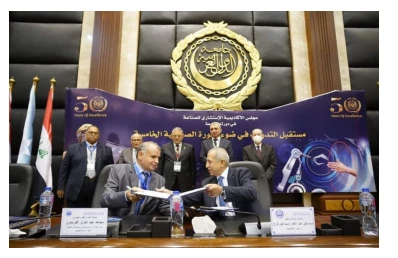
MoU between AASTMT and the World Fish Center, Jun 3,2022.
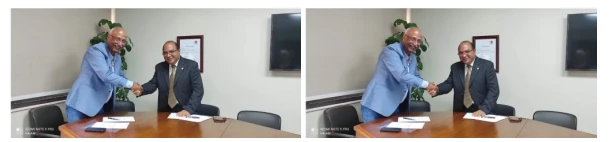
AASTMT College of Fisheries and Aquaculture Technology Signs Cooperation Agreement with MADE II to Enhance Practical Aquaculture Training (2023 – 2028)
The College of Fisheries and Aquaculture Technology (CFAT) at the Arab Academy for Science, Technology and Maritime Transport (AASTMT) signed a cooperation agreement on Sunday, June 4, 2023, with the Marine Aquaculture Development Project in Egypt (MADE II), affiliated with the Ministry of Agriculture and Land Reclamation.
Life Below Water-Alexandria | AASTMT
Upcoming Goals
In the upcoming year, the Arab Academy for Science, Technology and Maritime Transport (AASTMT) aims to build on its commitment to SDG 14: Life Below Water by advancing impactful projects, forging new partnerships, and expanding its educational and research initiatives. Our future goals include:
- Expanding Marine Research
- Launching a Marine Biodiversity Monitoring Program to assess and protect critical marine habitats along Egypt's Mediterranean and Red Sea coasts.
- Establishing an Ocean Innovation Lab to foster interdisciplinary research on sustainable aquaculture, marine pollution mitigation, and ecosystem restoration.
- Strengthening Educational Programs
- Introducing new certificate programs in Marine Conservation and Climate Resilience, designed to equip students and professionals with the skills needed to address pressing marine challenges.
- Enhancing experiential learning opportunities by expanding fieldwork and internships with local and international marine research organizations.
- Community-Centered Initiatives
- Scaling up the "Save Our Shores" coastal clean-up campaign, aiming to remove at least 5 tons of marine debris in collaboration with local communities and NGOs.
- Launching the "Blue Futures" Initiative, which will provide workshops and funding opportunities for community-led projects focused on sustainable fisheries and marine protection.
- Partnership Development
- Strengthening collaborations with global organizations such as UNESCO-IOC and WWF to align efforts with international marine sustainability standards.
- Establishing new partnerships with private sector stakeholders to develop eco-friendly technologies for aquaculture and waste reduction.
- Innovative Technology Integration
- Developing a Marine Data Platform to collect, analyze, and share real-time data on marine ecosystems, providing critical insights for policymakers and researchers.
- Exploring the use of AI and satellite imaging for monitoring marine pollution and tracking biodiversity changes.
- Policy and Advocacy Efforts
- Hosting an International Marine Sustainability Forum to bring together policymakers, scientists, and industry leaders to discuss solutions for marine resource management.
- Contributing to national and regional policies on marine conservation by providing scientific advice and research-based recommendations.
- Measurable Impact Goals
- Engage 1,000+ volunteers in marine conservation efforts.
- Remove at least 10 tons of marine waste from coastal areas.
- Publish 15+ research articles addressing marine sustainability challenges.
With these initiatives, AASTMT is poised to further its impact on marine conservation and sustainable development, ensuring that the oceans and marine resources are preserved for future generations.
During 2023–2024, AASTMT significantly enhanced its commitment to SDG 14 – Life Below Water, deeply integrating marine conservation into its education, research, and policy initiatives. The Academy incorporated SDG 14 principles into curricula across its colleges, not only in maritime transport but also more broadly, increasing awareness among students and staff about marine biodiversity, sustainable fisheries, and pollution prevention. Research projects were advanced to support ecological restoration and climate resilience. Through community engagement and outreach, AASTMT promoted best practices in waste management, reduced plastic pollution, and maintained water quality standards. Its environmental policy was strengthened with specific commitments for monitoring aquatic ecosystems, minimizing harmful discharges, and collaborating both locally and internationally on marine stewardship. These coordinated efforts reflect AASTMT’s comprehensive approach to conserving and sustainably managing marine resources while preparing a new generation of environmentally conscious maritime professionals.