



 Goal 17. Partnerships to achieve the Goal
17.3.17 SDG17 Report

Key Milestones in 2024-2025
During 2024–2025, AASTMT strengthened partnerships with regional governments, international organizations, and European institutions to advance sustainability, green technologies, and digital transformation. Cross-sector cooperation focused on marine environmental protection, climate resilience, clean energy supply chains, and artificial intelligence. Through Erasmus+ and international research initiatives, AASTMT integrated sustainability and modern competencies into engineering, architecture, and maritime curricula. Community engagement expanded through vocational training for refugees, support for vulnerable groups, and medical and development initiatives. AASTMT also reinforced its regional and global leadership by hosting international ministerial sessions, contributing to cross-border disaster risk reduction and waste management frameworks, and strengthening its role as a sustainable development hub in the Mediterranean and Arab regions.
Community Engagement
AASTMT - Egyptian Competition Authority “Agreement”
The Arab Academy for Science, Technology and Maritime Transport (AASTMT) and the Egyptian Competition Authority signed a cooperation protocol at the Smart Village campus, presided over by His Excellency Prof. Dr. Ismail Abdel Ghaffar, President of AASTMT, and His Excellency Mahmoud A. Momtaz, Chairman of the ECA. The agreement aims to advance market law awareness, research, and student training through joint workshops, expert exchanges, specialized programs, and student access to the annual simulation model.
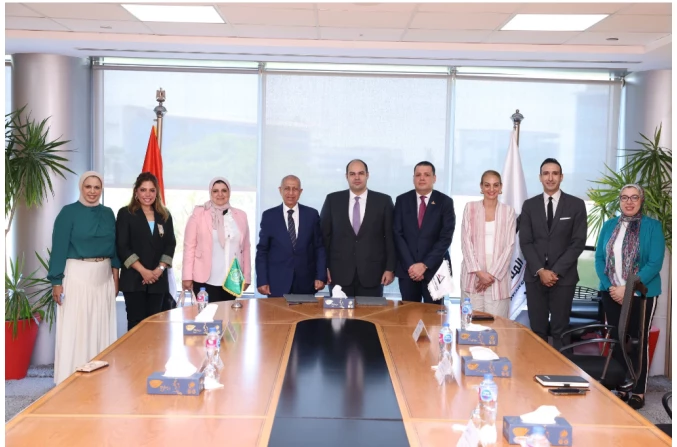
AASTMT - Egyptian Competition Authority “Agreement”
AASTMT Conducts Feasibility Study for Establishing Logistics Zones Along the Sudanese Borders
AASTMT’s College of International Transport and Logistics presented a feasibility study for establishing logistics zones along Sudan’s borders, commissioned by a Council of Arab Transport Ministers resolution. Led by Prof. Dr. Sara Hassan Kamal El Gazzar, the study aims to enhance border efficiency, strengthen supply chains, and promote economic integration.
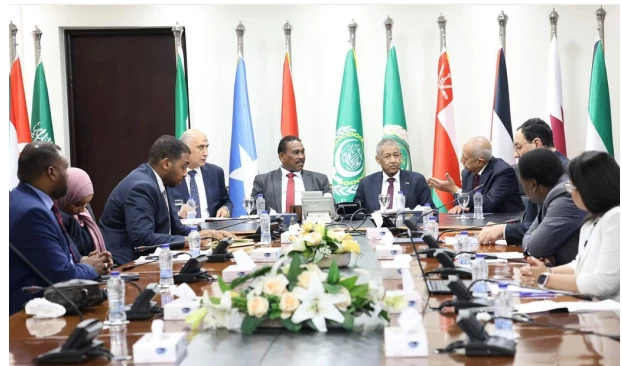
AASTMT presents feasibility study for logistics zones along the Sudanese borders
AASTMT Unveils Arab Framework Strategy for Solid Waste Management
During a Cairo meeting held from March 17 to 19, 2025, AASTMT and the Arab League presented the draft Arab Framework Strategy for Solid Waste Management. Discussed alongside chemical and hazardous waste treaties, the strategy was detailed by Dr. Alaa Abdel Bary and Dr. Mustafa Rashid as an initiative originating from the 4th Arab Economic and Social Development Summit.
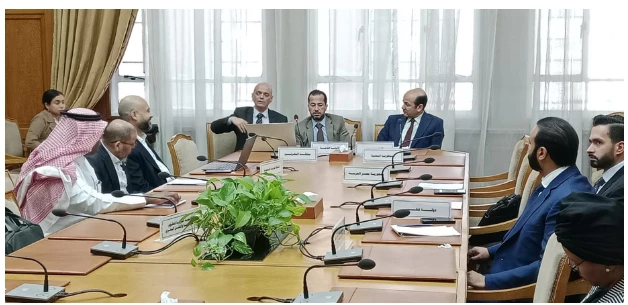
The League of Arab States Presents the First Framework Strategy for Solid Waste Management
Environment Minister probes environmental cooperation with AASTMT
Environment Minister Dr. Yasmine Fouad and AASTMT President Prof. Dr. Ismail Abdel Ghaffar discussed a climate cooperation roadmap leveraging faculty and student innovations, including capacity building, ministerial climate units, AASTMT’s Climate Change Information Center, and the “Together to Reduce Carbon” mobile app in collaboration with the Ministry of Communications.
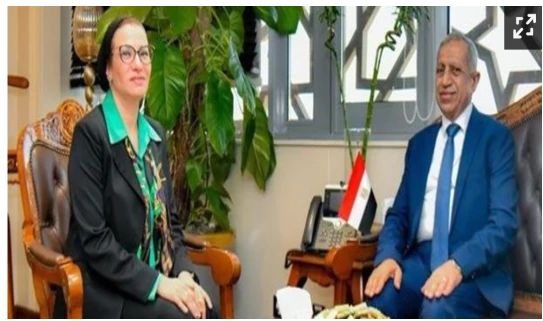
AASTMT and Ministry of Environment strengthen cooperation
Environment Minister probes environmental cooperation with AAST
Statement issued by the Ministry of Environment - Egyptian Cabinet | Facebook
First Annual Artificial Intelligence Forum hosted by AASTMT
AASTMT hosted the First Annual Arab Forum on Artificial Intelligence in New Alamein City under the patronage and presence of Dr. Ahmed Aboul Gheit, Secretary-General of the League of Arab States, to promote regional technological collaboration. The forum resulted in a five-party agreement involving the League of Arab States, AASTMT, Spain’s INCIBE, the University of Salamanca, and the Caribbean Parliamentary Union.
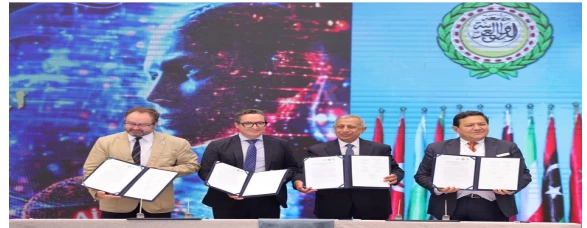
AASTMT hosts First Annual Artificial Intelligence Forum
AASTMT and Life Makers Foundation Co-organize ‘UniGreen’ Conference "Shaping a Sustainable Future 2024"
AASTMT and the Life Makers Foundation co-organized the EU-supported UniGreen Conference to foster dialogues on climate change mitigation and adaptation. The youth-focused initiative engages universities and NGOs through competitions and boot camps, with AASTMT acting as an educational partner to support sustainable development in Egypt.
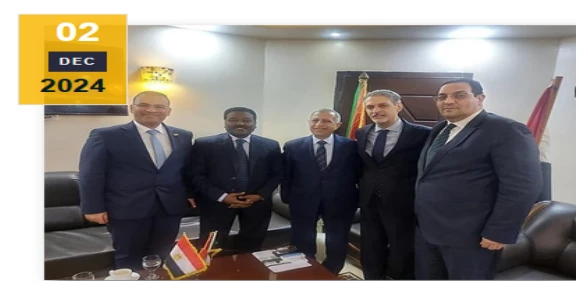
AASTMT Participation in UniGreen Conference “Shaping a Sustainable Future 2024”
AASTMT hosts 73rd Executive Office and 37th Session of the Council of Arab Transport Ministers
AASTMT hosted the 73rd session of the Executive Office of the Council of Arab Transport Ministers and its 37th ministerial session in Alexandria. Regional government representatives gathered to advance economic integration, discussing topics such as artificial intelligence in transport, maritime safety, and land transport regulations.
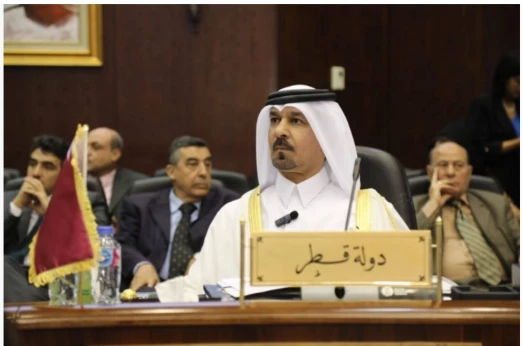
Qatar partakes in 37th session of Council of Arab Transport Ministers
AASTMT Participation in TouMaLi Project
1 May 2021 – 31 December 2026, The TouMaLi project, running from 2021 to 2026 and funded by the German Federal Ministry for the Environment, aims to reduce tourism-related marine litter across the MENA region. AASTMT coordinates local activities, conducts beach litter surveys, and assesses plastic pathways in Egypt, contributing key research publications on coastal debris and extended sector responsibility.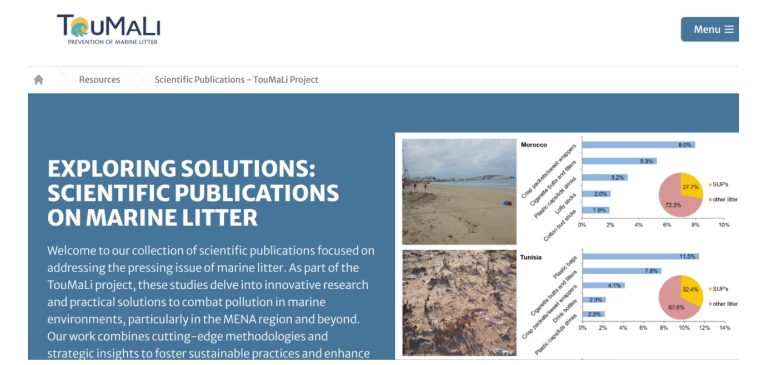
Scientific publications of TouMaLi project
Green Shipping Pathways Towards a Clean Energy Transition in the Mediterranean
The EU-funded GreenMED project drives maritime decarbonization across Greece, Spain, Cyprus, and Egypt. AASTMT executes key research on fuel supply chains and feeds regional North African operational datasets into the Mediterranean Sustainable Shipping Observatory (MSSO) decarbonization hub.
GreenMED: Green Shipping Pathways Towards a Clean Energy Transition in the Mediterranean
Project: Surveying and Mapping Technology for Smart City (SUMTS)
AASTMT released the baseline study for the EU Erasmus+ funded project with the title Surveying and Mapping Technology for Smart City (SUMTS). Tailored to modernize engineering education and strengthen academia-labor market collaboration, the project involves regional partners from Greece, Italy, Jordan, and Tunisia.
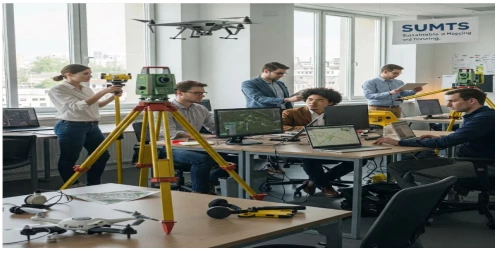
AASTMT Disseminates the Baseline Study of the SUMTS Project (Erasmus+)
Project: Green Maritime Horizons Collaborative Innovation in Ship Engineering and Sustainable Technologies (GEMS-TECH)
Secured under the EU Erasmus+ Programme, the GEMS-TECH project aims to integrate sustainable practices and water resource protection into maritime education in Egypt and Kenya. Led by AASTMT's Innovation and Training Sector and Faculty of Engineering, the initiative develops multidisciplinary modules, Massive Open Online Courses (MOOCs), and advanced sustainability labs.
GEMS-TECH Green Maritime Horizons Project
Project: Knowledge Exchange in Aquatic Animals Medicine and Ecosystem Health in the Mediterranean and sub-Saharan Regions (AquaVET)
Since December 2024, AASTMT has joined the Erasmus+ AquaVET project with Italian and Croatian partners to modernize aquatic veterinary and aquaculture education in Egypt and Nigeria, reduce fish mortality, and enhance food security.
AASTMT participation in the ongoing project Pro-GREEN-LABs
AASTMT participates in the Erasmus+-funded Pro-GREEN-LABs project (2024–2027), integrating green competencies into architecture and urban design education through hybrid living labs equipped with 3D printers and energy loggers to promote experimental learning and climate resilience across Europe and the South Mediterranean.
UNHCR-Terre des Hommes-AASTMT Summer Volunteer Programme
AASTMT collaborated with the UN refugee agency (UNHCR) and Terre des Hommes (TdH) to organize a summer volunteer program supporting refugees. Top-performing AASTMT students taught English classes to over 70 refugee children, while media students produced a documentary highlighting refugee resilience.
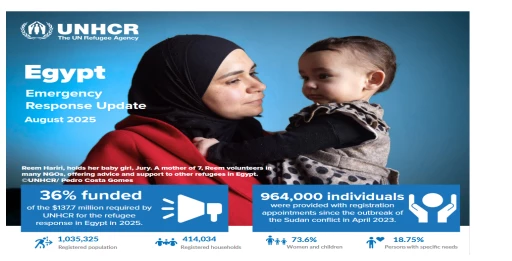
UNHCR Egypt Emergency Response Update, August 2025
AASTMT Refugee Training Programs in Collaboration with Caritas-Egypt
2 March 2025 – 18 June 2025, In cooperation with Caritas-Egypt, AASTMT designed technical and vocational training programs to equip Sudanese refugees with sustainable employment skills. The two-week courses included Small and Medium Enterprises, Automotive Diagnostics, Industrial Electrical Maintenance, and Solar Energy.
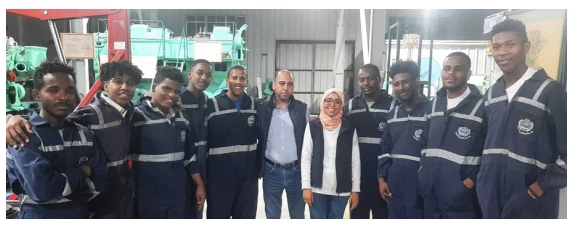
Automotive Diagnostics Training
AASTMT Cooperation with Adelphi-Research in TouMaLi Project
Under the TouMaLi project, AASTMT collaborates with the German non-profit organization Adelphi-Research to combat marine litter in Egypt, Morocco, and Tunisia. The AASTMT research team collects field data, conducts beach litter surveys, and assesses plastic pathways to help decrease coastal debris in tourism hotspots.
Training on Social Sustainability Aspects
AASTMT promotes social sustainability education through annual training for students, faculty, and staff, covering human rights, equality, inclusion, social justice, gender equity, disability rights, community resilience, and responsible governance. Student engagement is supported through academic modules, workshops, awareness campaigns, and extracurricular activities, with an estimated 20–30 hours of annual learning and engagement per student, depending on programme schedules and participation.
Training on Social Sustainability Aspects
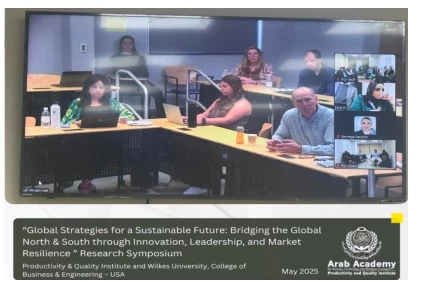
PQI and Wilkes University Organize First International Student Research Symposium on Sustainability and Innovation
On 5 May 2025, AASTMT’s Productivity and Quality Institute (PQI), in collaboration with Wilkes University (USA), organized its first International Student Research Symposium on sustainability and innovation. Students from both institutions collaborated in five interdisciplinary research groups, presenting projects on antimicrobial coatings, bio-based products, digital health, and foreign direct investment. The event promoted international academic exchange, research skills, and collaboration in addressing sustainable development challenges.
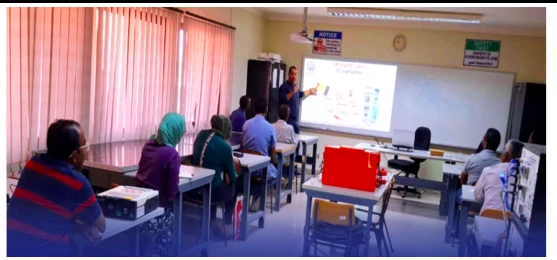
Solar Energy Course Activities at the Industry Service Complex Workshops in Collaboration with Caritas Egypt
AASTMT's Industry Service Complex, in collaboration with Caritas Egypt, organised solar energy training activities at its AbuKir workshops under the EU-supported “Hand in Hand” Project. The initiative extended renewable energy education to the wider community and promoted practical sustainability-related learning.
Activities of Electrical Maintenance Training Courses for Factories at the Industry Service Complex Laboratories, in Cooperation with Caritas Egypt, Funded by Caritas Austria
AASTMT's Industry Service Complex, in collaboration with Caritas Egypt and with funding from Caritas Austria, provided practical electrical maintenance training for refugees, asylum seekers, and migrant youth. The courses developed industrial technical skills, supported employability, and expanded access to vocational education.
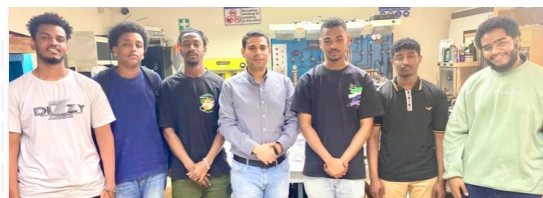
Sustainability-Focused Academic Programmes
AASTMT offers specialized postgraduate programmes that integrate sustainability into higher education, equipping students with the knowledge and practical skills to address environmental challenges, promote renewable energy, and support sustainable resource management.
M.Sc. in Sustainable Management of Fisheries and Aquaculture
AASTMT offers an M.Sc. in Sustainable Management of Fisheries and Aquaculture, developed through the EU-funded Erasmus+ FishAqu project. The programme focuses on sustainable fisheries management, aquatic resource conservation, stock assessment, and responsible aquaculture production, supporting environmental sustainability and marine resource protection.
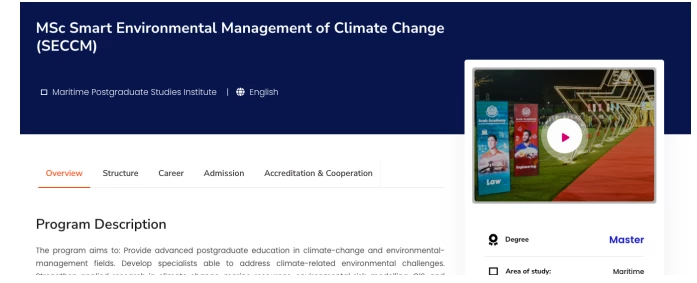
MSc Smart Environmental Management of Climate Change (SECCM)
Sustainability Integration and Literacy Assessment Framework
AASTMT integrates and assesses sustainability knowledge and competencies across academic disciplines through its Sustainability Literacy Assessment Framework (SLAF), curriculum mapping, and alignment of learning outcomes with the UN Sustainable Development Goals (SDGs).
Sustainability Literacy Assessment (SALT-Students)
AASTMT uses the Sustainability Awareness and Literacy Tool (SALT-Students) to assess students’ knowledge of environmental, social, economic, and governance aspects of sustainability. All students must complete the assessment at least once during their studies. In October–November 2025, 9,531 students participated, including 7,083 undergraduates and 2,448 postgraduates. The overall average was 57.1%, with undergraduate and postgraduate averages of 54% and 66.3%, respectively. The findings help AASTMT improve sustainability education and academic planning.
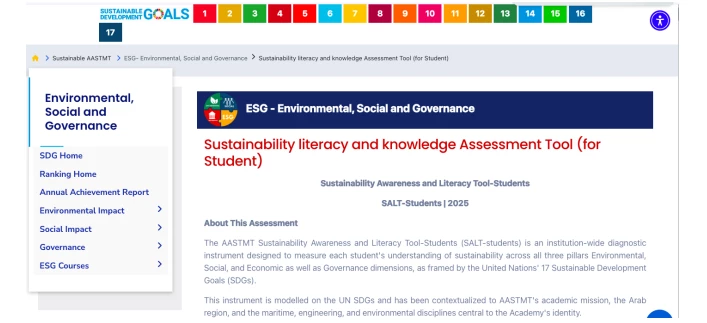
Sustainability literacy and knowledge Assessment Tool (for Student)
AASTMT_SALT_Students_Statistical_Report_2025
ABET–SDG Mapping
AASTMT aligns ABET engineering learning outcomes with the United Nations Sustainable Development Goals (SDGs), integrating sustainability principles into engineering design, ethical responsibility, communication, teamwork, and lifelong learning. This framework promotes environmental and social awareness within engineering education.
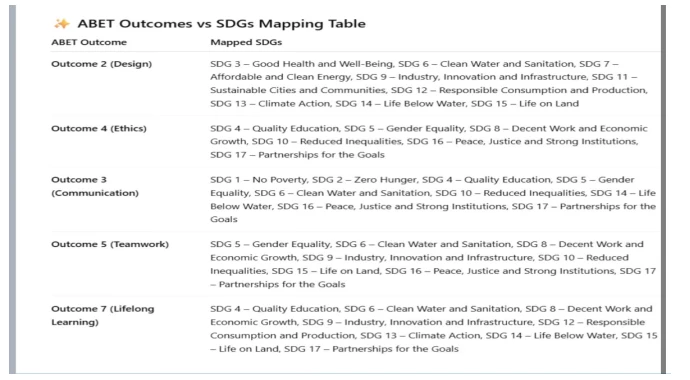
ABET–SDG Mapping of Learning Outcomes
Upcoming Goals
Building on its 2024–2025 achievements, AASTMT aims to strengthen its contribution to SDG 17 by expanding partnerships with governments, international organisations, academia, and industry. Priorities include advancing collaborative research on climate change, marine pollution, renewable energy, green shipping, and sustainable resource management; integrating sustainability into curricula, practical training, and international educational cooperation; and improving sustainability literacy assessments and curriculum mapping to strengthen learning outcomes. AASTMT will also expand vocational training, educational opportunities, and capacity building for refugees and underserved communities while promoting knowledge exchange, green and digital innovation, and sustainable development at local, regional, and international levels.
At AASTMT, partnership is a core principle of our sustainability vision. In line with SDG 17, the Academy works closely with governmental bodies, NGOs, international universities, and regional organizations to support policy development, capacity building, and community advancement.
Through cooperation agreements, joint research, professional training, and knowledge-sharing initiatives, AASTMT connects academic expertise with practical development needs. These collaborations enhance education quality, strengthen community engagement, and expand our impact across the region.
Our commitment to SDG 17 reflects AASTMT’s long-standing belief that sustainable progress depends on strong networks, shared responsibility, and coordinated action. By working together with diverse partners, we help drive meaningful and lasting development.