

2024-2025
Moving People First: AASTMT’s Inclusive and Walkable Campus Strategy
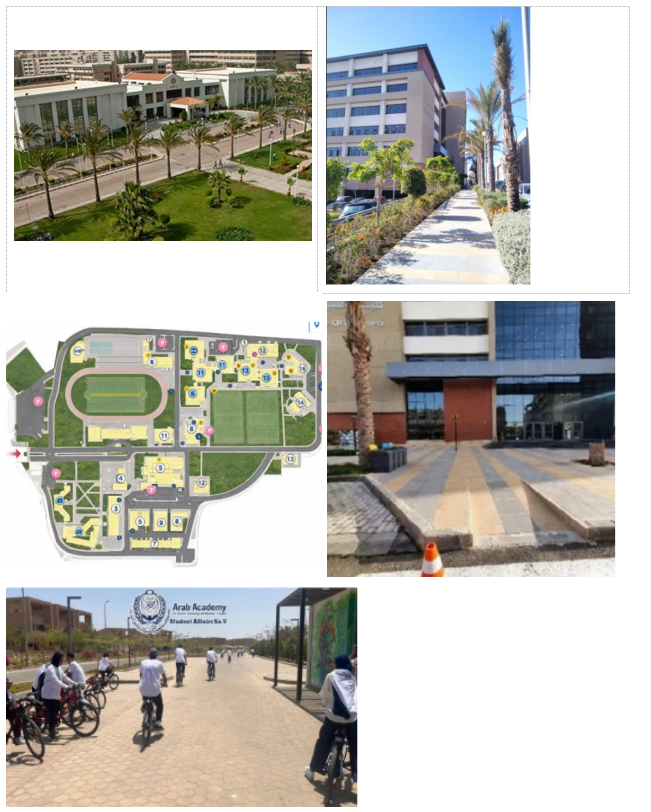
The Arab Academy for Science, Technology and Maritime Transport (AASTMT) establishes safe pedestrian access as a core responsibility of campus urban development. Its published Pedestrian Path Policy describes connected walking routes, separation between pedestrians and vehicles, accessible crossings, clear wayfinding and appropriate lighting at Abu Qir. Complementary institutional measures promote sustainable commuting and reduce the disruption of the road network to pedestrian movement. Taken together, these constitute a practical urban planning framework that prioritises people rather than short internal vehicle trips.
The framework intersects with the Academy’s disability policy and broader transport approach. Campus paths are intended to connect academic buildings, residences, services and public space; pedestrian safety is reinforced through landscape buffers, traffic calming and universal accessibility.
A Multi-Campus Commitment: Alexandria, Cairo, Port Said, El Alamein and Aswan
Alexandria (Main Campus, Abu Qir): The strongest site-specific evidence includes a pedestrian network linking facilities, peripheral car parking, a circulation approach that separates bus traffic from walking routes, and documented accessible ramps and crossing treatments.
Cairo (Sheraton/Heliopolis and Smart Village): AASTMT’s institution-wide accessibility and travel-planning standards extend to these campuses. The 2025-reviewed disability policy identifies an Accessibility Center service point at the Sheraton campus.
Port Said: As an AASTMT campus, Port Said falls within the Academy-wide commitment to inclusive pedestrian access.
El Alamein: AASTMT describes an intelligent transportation network and green public space at its Alamein Campus, aligning transport planning and on-foot access with sustainable campus design.
Aswan (South Valley): The campus forms part of AASTMT’s multi-branch network and institution-wide accessibility framework.
Link: https://aast.edu/en/campuses/
Safe Pedestrian Routes, Universal Design and Sustainable Mobility
• Connected campus circulation: AASTMT identifies continuous pathways connecting academic buildings, student accommodation, dining and other services, making walking a viable internal mode of commuting.
• Pedestrian–vehicle separation: Landscaped buffers, marked walking zones, reduced speeds and the ring-road circulation concept help organise the road network around pedestrian safety.
• Inclusive public spaces: Documented ramps, tactile paving, kerb transitions, signage and rest areas are intended to support independent access, including for people with reduced mobility.
• Comfort and security: Shaded routes and energy-efficient lighting are identified in the pedestrian policy as measures to make walking safer and more attractive.
• Reduced car dependency: AASTMT documents campus shuttle provision, managed parking and travel-planning measures that complement pedestrian priority and sustainable urban development.
Links: https://www.aast.edu/ar/sdg/goals.php?page_id=101190038&unit_item=10119
https://aast.edu/ar/sdg/goals.php?lnselect=1&lnselect=2&page_id=101190037&unit_item=10119
https://aast.edu/en/scientific-research/contenttemp.php?page_id=47300118
https://aast.edu/en/sdg/goals.php?page_id=101010014&unit_item=10101
2. AASTMT Transport, Ring-Road Segregation & Campus Walkability Master Plan
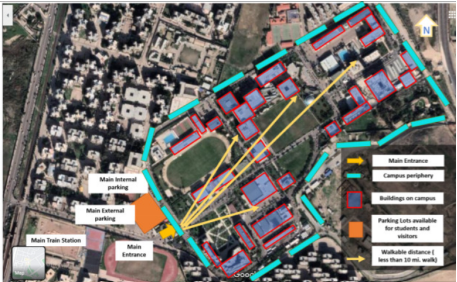
AASTMT formally enacted and operationalized its institutional Transport and Travel Planning Policy, establishing strict pedestrian priority and micro-mobility walkability across campus grounds. The master plan mandates a peripheral ring-road design for campus shuttles and service logistics, establishing complete physical segregation between motorized vehicles and central pedestrian walkways. By positioning student dormitories, dining complexes, and academic halls within a compact 500-meter pedestrian radius, the Academy promotes active living, curtails internal combustion emissions, and eliminates vehicular traffic noise in core learning zones.
Link: https://aast.edu/en/research/contenttemp.php?page_id=47300118
2. Campus Universal Accessibility Master Plan & Wheelchair Ramp Wayfinding Infrastructure
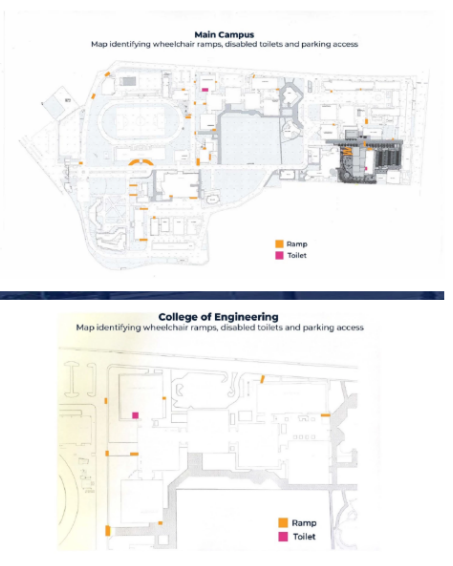
The Accessibility Center (AC), in collaboration with the Engineering Affairs Department, executed a comprehensive physical pathway upgrade to prioritize non-motorized, barrier-free pedestrian access. The project developed a continuous universal pathway system equipped with tactile paving for visually impaired students, zero-grade curb ramps at road intersections, and standardized wheelchair ramps at all college entrances. AASTMT published interactive physical accessibility maps, guaranteeing safe, autonomous, and inclusive pedestrian mobility for all individuals with disabilities without vehicular conflict.
LINK: https://aast.edu/en/centers/ac/contenttemp.php?page_id=99600022
3. Transportation & Traffic Engineering Campus Infrastructure Standards
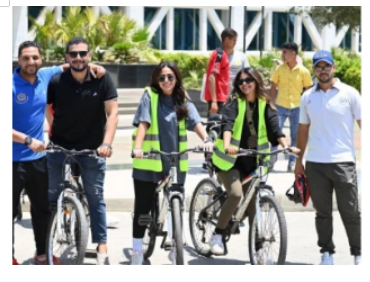
Under the supervision of the Department of Construction and Building Engineering and the Transportation & Traffic Engineering Division, AASTMT implemented strict engineering standards for internal speed calming and pedestrian safety. The guidelines require low-incline speed tables at critical intersections, raised pedestrian crosswalks aligned with sidewalk levels, and illuminated warning beacons. These measures grant absolute right-of-way to pedestrian foot traffic over motorized vehicles, mitigating road hazards and reinforcing sustainable urban development across campus streetscapes.
Link: https://aast.edu/ar/sdg/goals.php?lnselect=1&lnselect=2&page_id=101190037&unit_item=10119
4- International Transport Week: Multidisciplinary Mobility Engagement
AASTMT’s Cultural and Social Activities Department in Alexandria — Abu Qir branch held International Transport Week (1–5 December 2024), bringing together scientific, cultural and sporting activities through the College of International Transport. The event provided an academic setting for engagement with transportation and the wider city mobility agenda, complementing AASTMT’s pedestrian-first road network and sustainable commuting strategy.
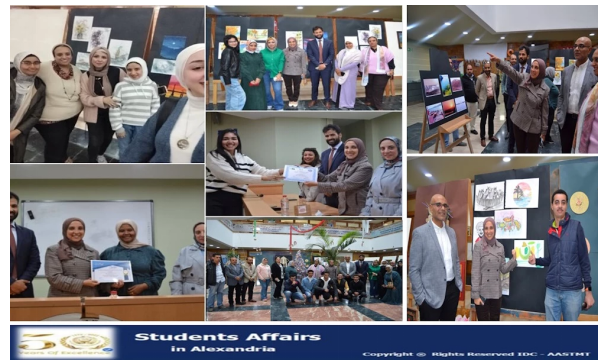
Link: https://aast.edu/en/news/news-details.php?event_type_id=7&language=1&news_id=486103907&unit_id=486
5- Student-Led Inclusion and Disability-Rights Awareness at Abu Qir
On 9 November 2024, the Department of Cultural and Social Activities organized student-participation initiatives on the rights of persons with disabilities. This date-verified engagement reinforced the social dimension of inclusive urban planning: making public space and campus mobility accessible to every learner. It complements AASTMT’s established approach to universal accessibility, including accessible routes and step-free building entrances.
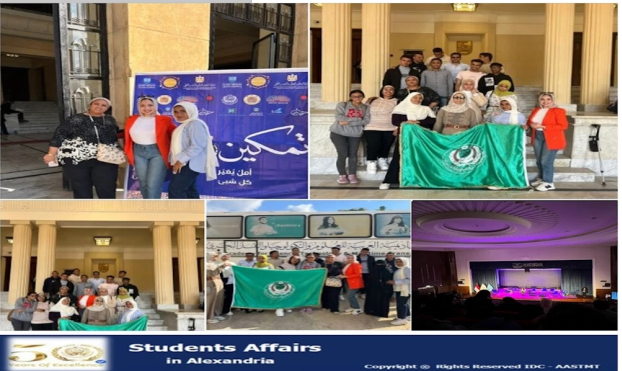
Link: https://aast.edu/en/news/news-details.php?event_type_id=7&language=1&news_id=486103714&unit_id=486
AASTMT is actively transforming its campuses into vibrant, pedestrian-centric environments. The commitment to “Prioritise pedestrian access on campus” goes beyond mere policy; it is a core principle of our urban development and urban planning strategy. By prioritizing walking and creating safe, accessible pathways, the campus experience, promoting well-being, and building a sustainable future are enhanced. These initiatives demonstrate a holistic approach to creating a modern city-like campus that values its community and its heritage.
Inauguration of the "Smart Quad" Pedestrian Plaza and The "Green Steps" Campus Mobility Week
In early 2024, AASTMT completed the redevelopment of Abu Qir campus, converting a former access road and parking area into the "Smart Quad," a sprawling pedestrian plaza. This permanent infrastructure project is a testament to our long-term vision for a walkable campus. The plaza creates a seamless and safe connection between the library, engineering facilities, and student life centers, overhauling the previous road network to favor foot traffic. The project incorporates permeable paving to mitigate flood risk during heavy rains, native land cover, and energy-efficient lighting, aligning with broader goals of disaster prevention and sustainability. The plaza's design includes sheltered waiting areas and clear signage.
AASTMT launched its annual "Green Steps" week, a campus-wide initiative encouraging students and staff to choose walking over vehicular transport. This event is a cornerstone of AASTMT strategy to improve the urban landscape and reduce the environmental footprint. This initiative directly prioritizes pedestrian access by temporarily redesigning the campus to be walker-friendly. It serves as a powerful practical experiment in sustainable urban development, showing the immense benefits of reducing vehicular traffic and reclaiming space for people.
Designated Car-Free Zones: Key areas of the campus were designated as pedestrian-only zones, transforming them into vibrant public space hubs for socializing and events. This tactical urban planning initiative drastically reduced traffic noise and improved urban air quality.
Guided Heritage Walks: Students and faculty participated in guided walking tours that showcased the campus's unique architectural and cultural heritage, linking physical activity with an appreciation for our historic buildings and sites.
Intelligent Transportation Showcase: The student projects on smart city technologies for pedestrian safety were presented, including sensor-based crosswalks and apps for mapping the most accessible walking routes, demonstrating a forward-thinking approach to our campus road network.
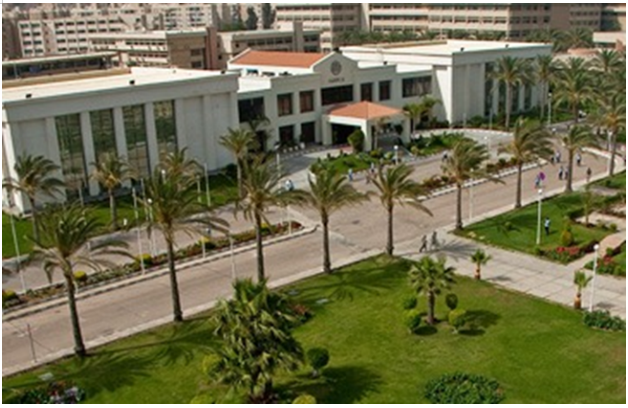
Scientific Research & Innovation-Alexandria | AASTMT
AASTMT's Vision for Inclusive, Pedestrian-Centric Smart Campuses
At AASTMT, a university campus is recognized as a microcosm of a city—a living laboratory for sustainable urban planning and urban development. Aligning with the global drive toward smart cities and resilient urbanization, AASTMT is redefining its urban landscape by prioritizing the safety, dignity, and convenience of pedestrians.
AASTMT commitment goes beyond simple aesthetics; it is a strategic implementation of town planning best practices designed to mitigate traffic congestion, reduce pollution, and enhance the quality of public space. By reimagining the road networks, a campus environment is fostered that champions inclusivity, public transport integration, and environmental stewardship. AASTMT is not just building a campus; it sets a benchmark for intelligent transport and sustainable urban land management. AASTMT paves the way for a future where public transportation, walkability, and smart city infrastructure converge to create a thriving, safe, and inclusive community.
AASTMT’s Integrated Strategy for Walkable and Safe Campuses:
To achieve a truly pedestrian-centric environment, AASTMT adheres to rigorous city planning guidelines that separate vehicular traffic from student life, ensuring a safe and accessible street hierarchy. AASTMT approach focuses on the following core pillars:
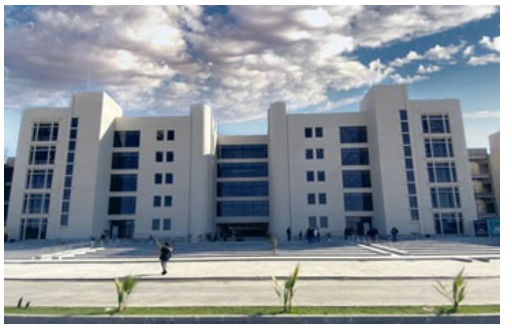
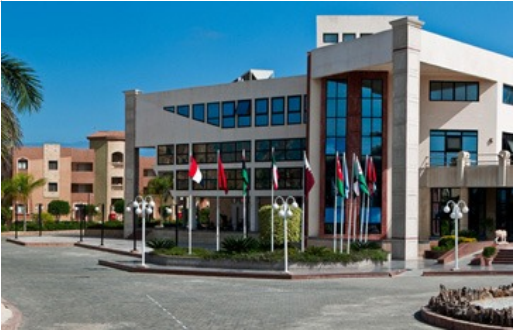
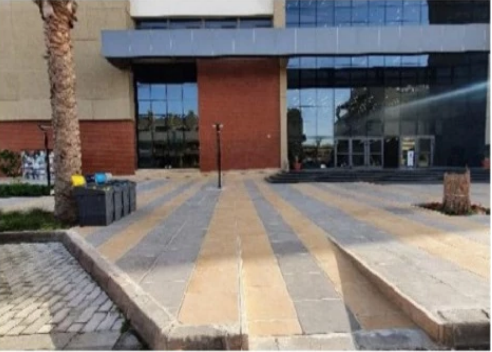
AASTMT considers the safety and convenience of pedestrians. AASTMT campuses follow the guidelines on prioritizing pedestrian access based on best practices and urban design principles. These guidelines are:
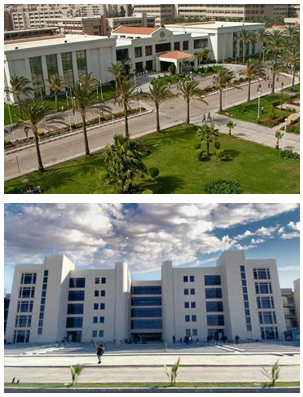

https://aast.edu/en/campuses/Elalamein/
https://aast.edu/en/campuses/portsaid/
AASTMT is making continuous efforts to enable students with disabilities to easily access the campus and there are ongoing efforts to provide an inclusive university environment that is accessible to everyone by providing support and facilities to students with disabilities to ensure their access to the campus and benefit from educational opportunities to the same extent such as other students.

AASTMT considers the safety and convenience of pedestrians. AASTMT campuses follow the guidelines on prioritizing pedestrian access based on best practices and urban design principles. These guidelines are:

The Transport Department of the Arab Academy offers a distinctive transportation service to transport our students and working on a fleet of bus with the latest technical means. All bus has free Wi-Fi service and all vehicles have GPS devices that make the service safer to locate and move all vehicles to ensure the safety of passengers during daily trips. Transport service covers all regions.
Prioritize pedestrian access on campus on AASTMT page


