2024-2025
INTRODUCTION
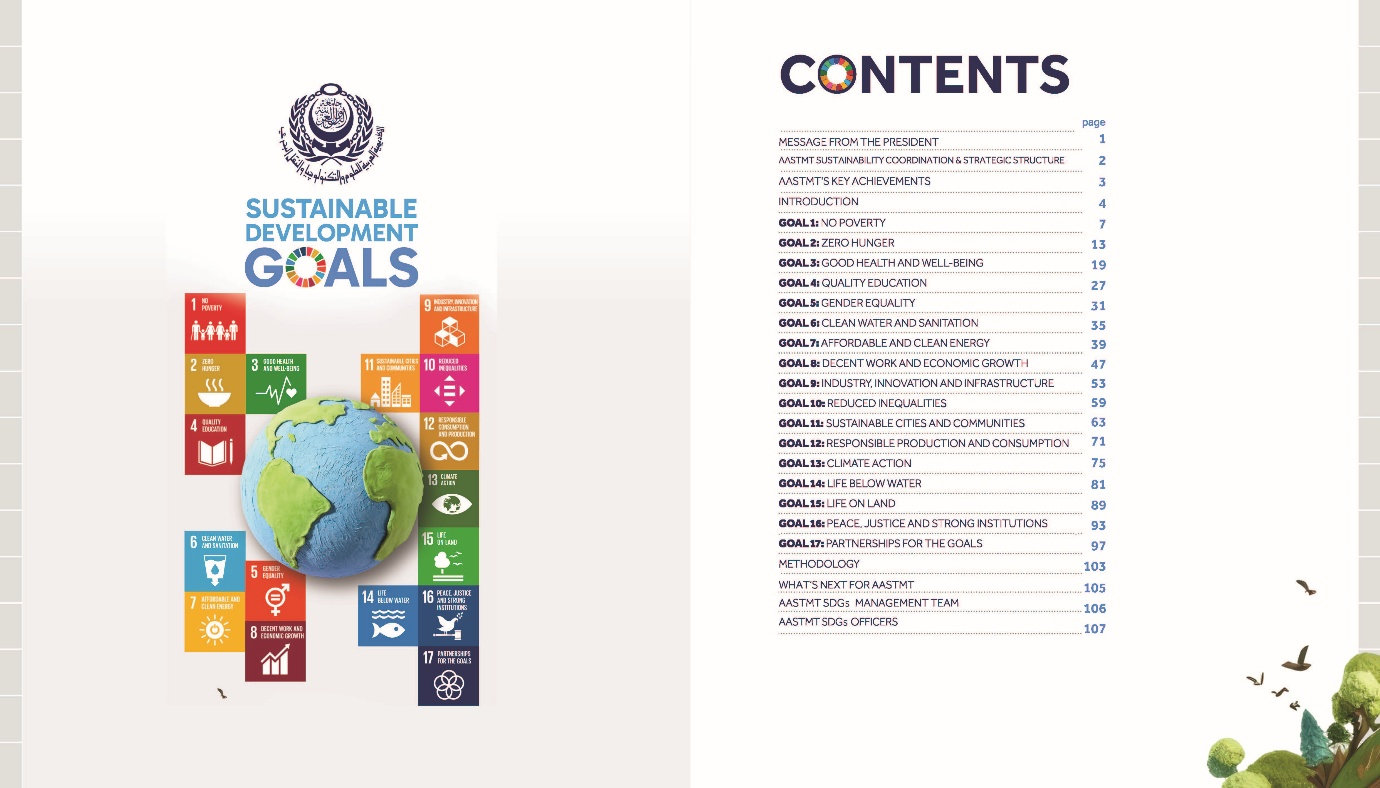
The Arab Academy for Science, Technology and Maritime Transport (AASTMT) presents its annual Sustainable Development Goals Report for the academic year 2024/2025. Published each year and made publicly available, the report sets out the Academy's progress against all 17 United Nations SDGs, with the data, policies and activities behind each result.
AASTMT is a specialised regional university of the League of Arab States. In Egypt it operates campuses in Alexandria (Abu Qir, Miami, Wabour El Maya and Gianaclis), Cairo, Smart Village, Dokki, Port Said, El Alamein, Aswan and South Valley. Its mission links quality education, maritime and logistics expertise and applied research to the economic and social needs of the Arab and African regions. That mission maps closely onto the SDGs where the Academy performs strongest: Quality Education, Affordable and Clean Energy, Decent Work and Economic Growth, and Peace, Justice and Strong Institutions.
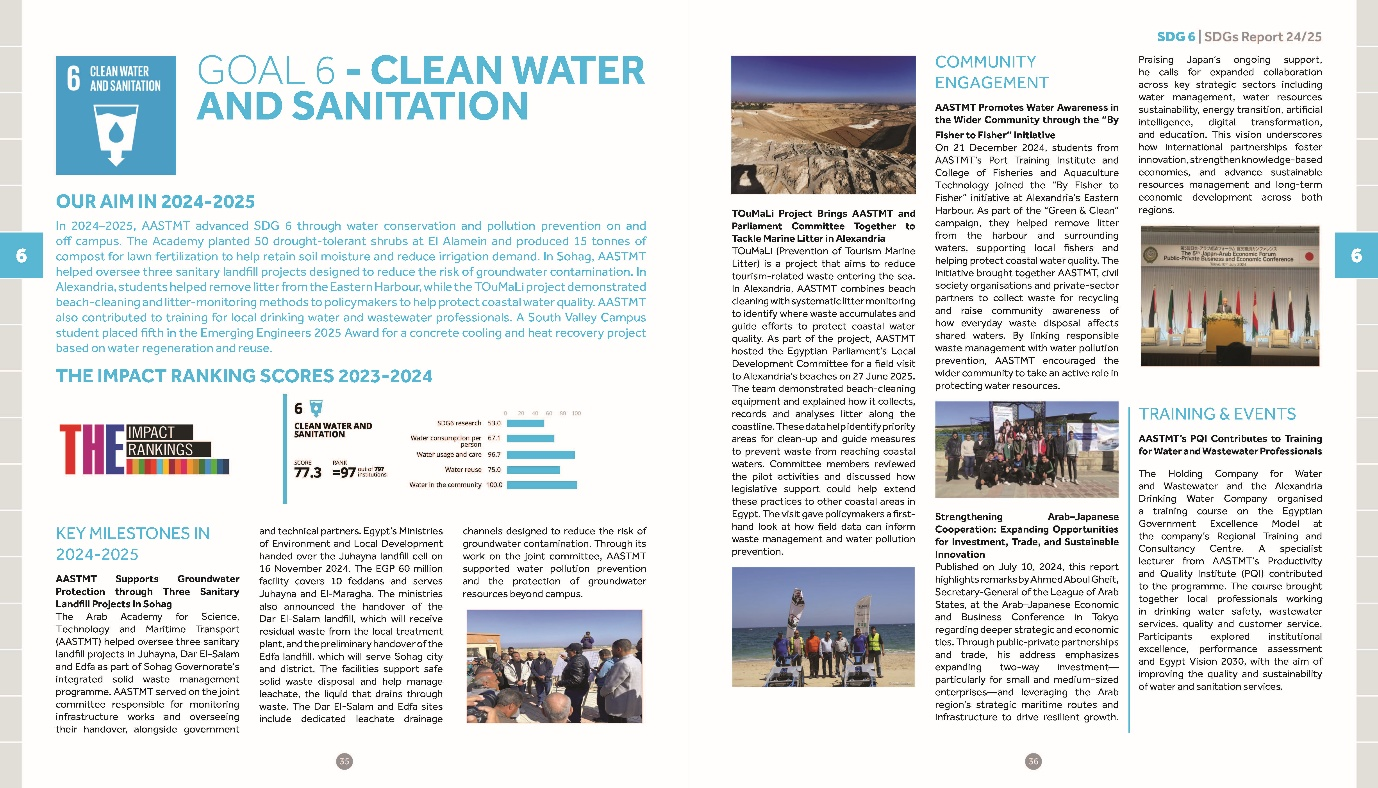
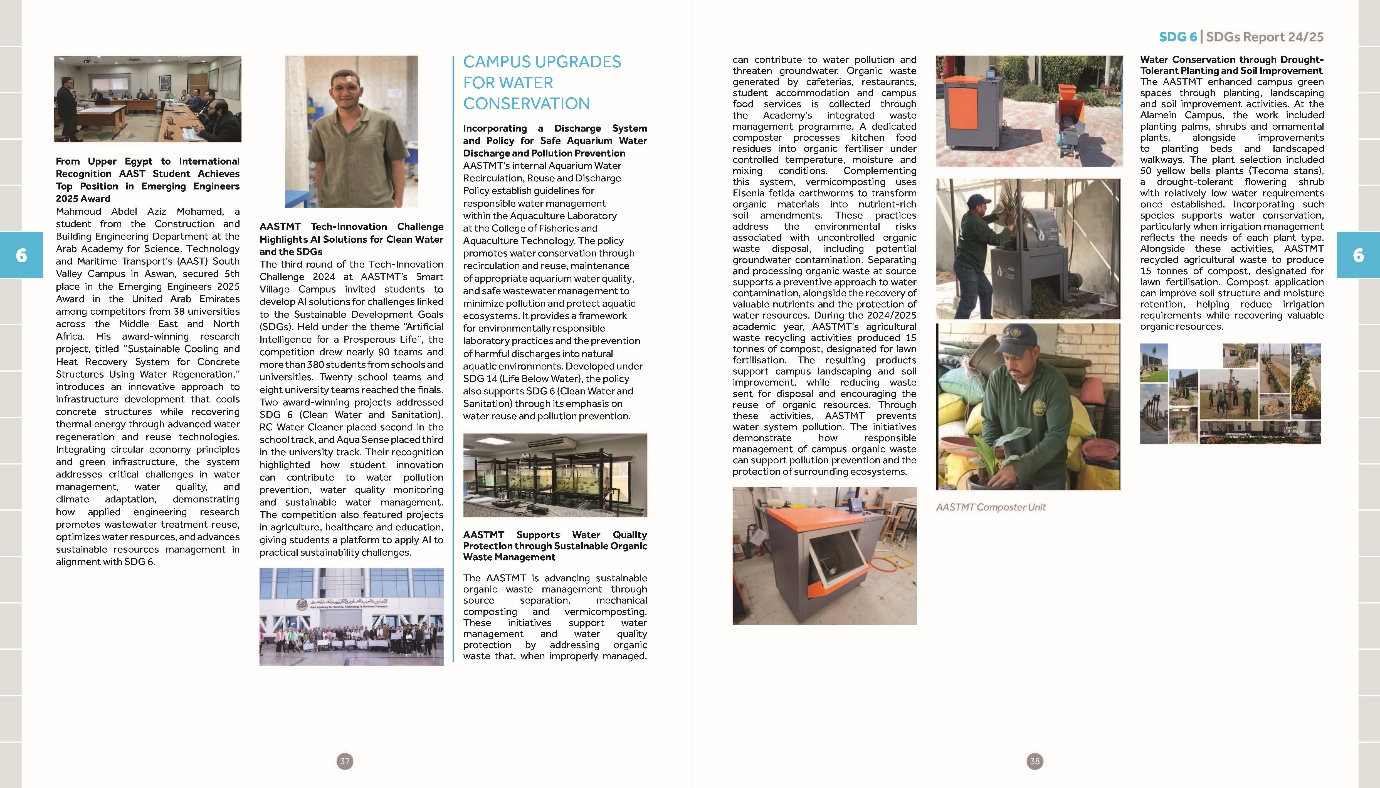
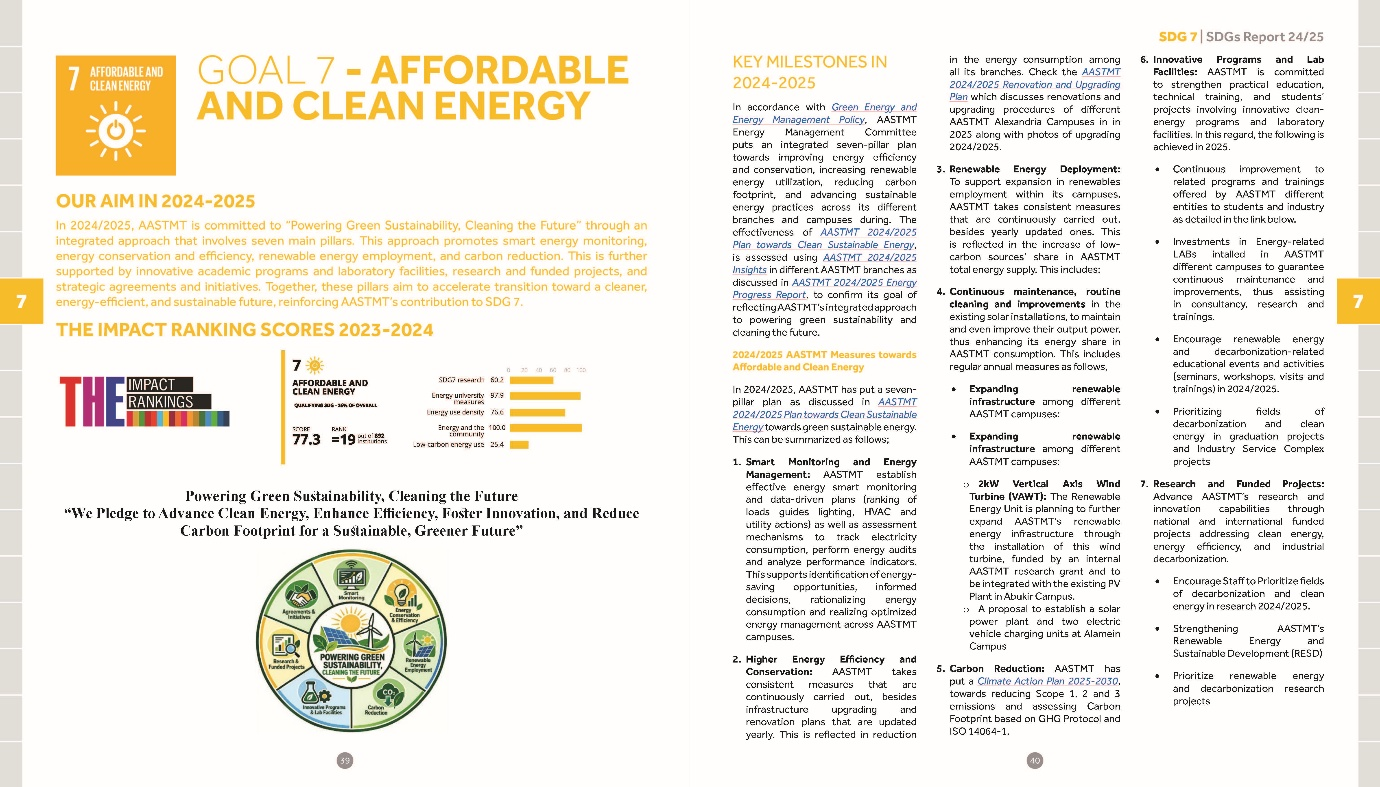
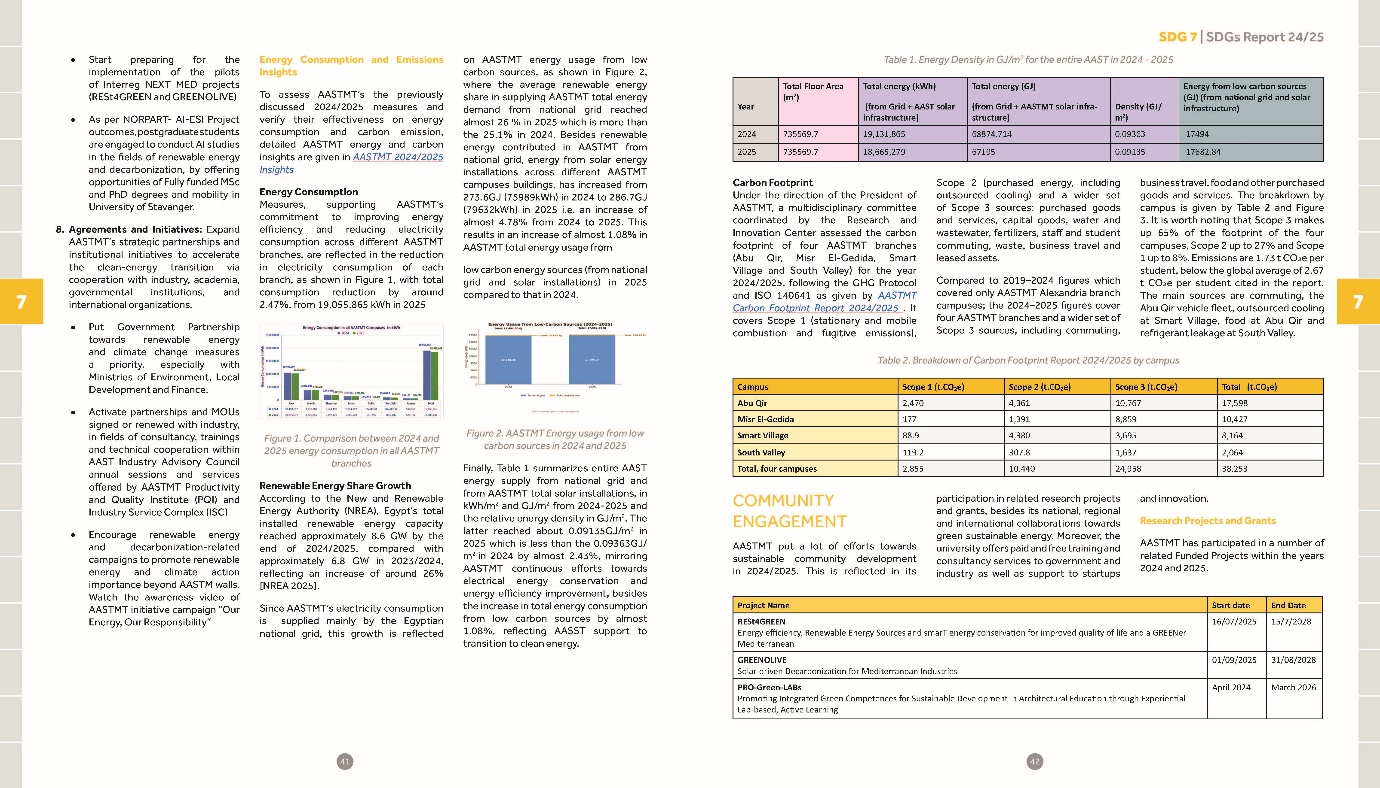
Our campuses serve as living laboratories. In 2024 AASTMT used 19.06 million kWh of electricity across its campuses in Egypt, 4.3% less than in 2023, equal to 25.9 kWh per square metre. The Alexandria campuses have cut electricity use by 17.3% since 2018, and billed use there fell a further 2.2% in 2025. Upgrades to more than 1,500 light fittings, air conditioning, irrigation pumps and motors saved an estimated 474,289 kWh in 2024 and 297,817 kWh in 2025. Emissions at the Alexandria campuses were 103,863 tonnes CO₂e in 2024, 32.8% below the 2019 base year, meeting the 2025 interim target a year early. A wider carbon footprint assessment of four campuses for 2024/2025, under the GHG Protocol and ISO 14064-1, measured 1.73 tonnes CO₂e per student. Maritime and engineering colleges continue applied work on clean propulsion, the blue economy and renewable marine energy.
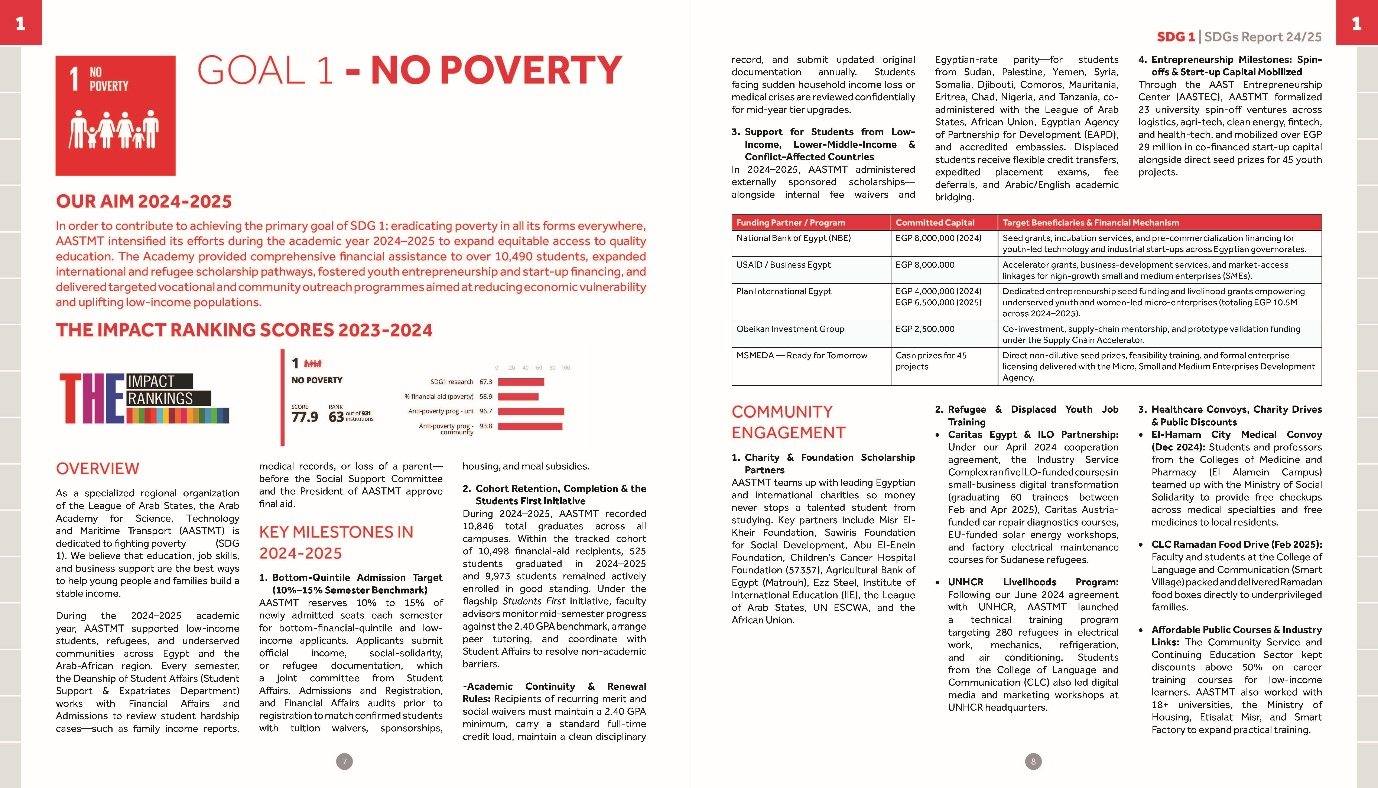
The human dimension is equally central. Through scholarships worth L.E 428 M to 8,841 students, community training programmes and partnerships with government, industry and international bodies, AASTMT widens access to education and employment for those most at risk of being left behind.
How this report is organised. Each of the 17 chapters that follow presents the Academy's aim for the year, its THE Sustainability Impact Ratings 2026 score, key milestones with supporting data, community engagement, and targets for the next cycle. Data refer to the 2024/2025 academic year; energy and emissions figures follow the calendar or financial year stated with each figure.
Since 2022 AASTMT has been committed, under the UNFCCC Race to Zero campaign, to net-zero emissions by 2050 at the latest. Its Climate Action Plan 2025-2030 sets the next milestones: emissions at least 45% below 2019 by 2030, 40% renewable electricity by 2040, and at least 70% of campus waste diverted from landfill by 2030. Over the coming cycle the Academy will also raise its performance in Good Health and Wellbeing, Gender Equality, and Industry, Innovation and Infrastructure.