




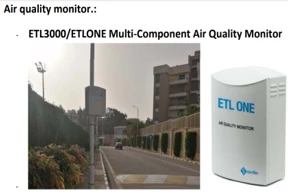
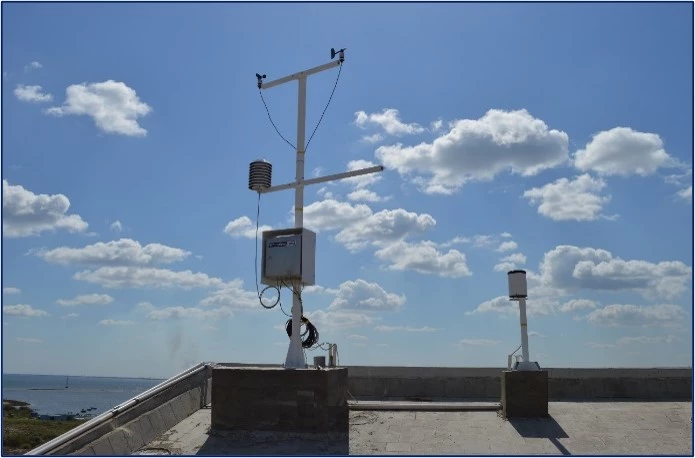
Automated Air Quality Monitoring System Automated Weather Observing System (AWOS)
AASTMT - Abou Qir Campus
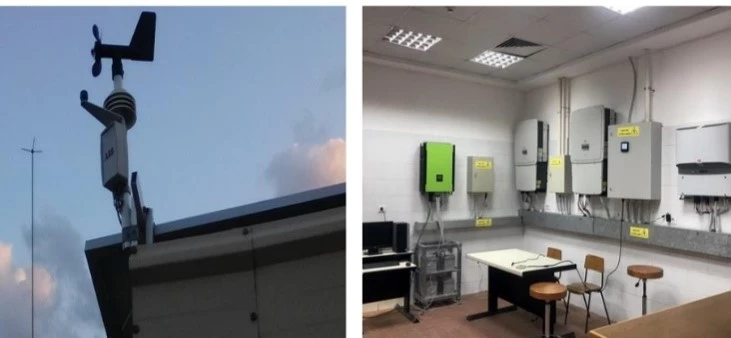
50 kW Solar Power Plant (On-Grid) with Weather Station BUILDING C. (ABB)
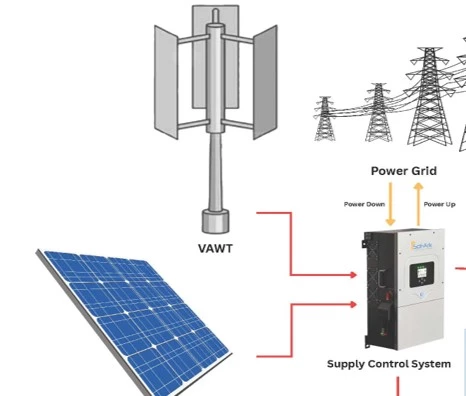
2 kW VAWT is to be installed and integrated with the available 50 kW PV provided from internal fundig project
(Innovation Research Grant (IRG) in AASTMT)
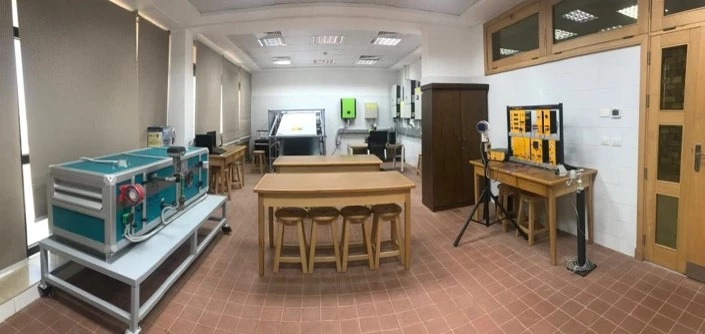
Energy Research Unit – Colleage of Engineering and Technology AASTMT - Abou Qir Campus
Description:
At the Arab Academy for Science, Technology, and Maritime Transport (AASTMT), several innovative programs and research centers are actively advancing environmental sustainability, climate change resilience, and sustainable resource management. Here is an overview of these cutting-edge initiatives:
- SDG 7. Affordable and Clean Energy
Description: AASTMT aimed at rationalizing energy consumption, reducing carbon emissions and directing research towards green energy and energy management as well as serving the community and environment towards clean and affordable energy.
Additional evidence link: https://www.aast.edu/en/sdg/goals.php?unit_item=1207&page_id=120700001
Description: AASTMT has in its Green Energy and Energy Management Policy a primary aspect which ensures that building establishments and renovations follow energy-efficient standards.
AASTMT Energy Research Unit and Energy Management Committee have integrated all AASTMT objectives for green energy, energy efficiency, and saving as well as emissions reduction in the updated version of Green Energy and Energy Management Policy statement.
Additional evidence link: https://aast.edu/getData/pdf_retreivefileNew_open.php?unit=1207&filename=/mediafiles/1207/Document/150714.pdf
- Master of Science in Smart Environmental and Climate Change Management (SECCM)
Description: The Master of Science in Smart Environmental and Climate Change Management (SECCM) program, offered by the Maritime Postgraduate Studies Institute at AASTMT, is designed to advance students' expertise in managing climate-related challenges. The program covers diverse subjects such as climate modeling, environmental impact assessment, and sustainable energy solutions, preparing graduates to address environmental and climate issues across sectors. Practical skills are enhanced through hands-on applications, enabling students to integrate innovative approaches in environmental science and climate management.
Additional evidence link: SECCM Program Brochure
- M.Sc. in Renewable Energy and Environmental Engineering (REEE)
Description: The M.Sc. in Renewable Energy and Environmental Engineering (REEE) program at AASTMT is part of the Joint Master of Mediterranean Initiatives on Renewable and Sustainable Energy (JAMILA), funded by the TEMPUS program through the European Union. This program was developed in collaboration with European and Egyptian universities to meet the growing demand for skilled engineers in renewable energy and environmental management. It offers two specializations: Renewable Energy Resources and Environmental Management Studies, which cover a range of topics such as solar, wind, and geothermal energy, pollutant reduction technologies, solid waste treatment, and air quality control.
The REEE program prepares graduates to address critical environmental challenges by combining practical and theoretical approaches. The curriculum follows the European Credit Transfer System (ECTS) and is equivalent to the Egyptian Credit Hour System, providing students with 60 ECTS for coursework and 30 ECTS for a thesis. By focusing on energy resource management and pollution reduction, this program aligns with AASTMT's commitment to sustainable development.
Additional evidence link: JAMILA Project Overview and REEE Program
- Renewable Energy and Sustainable Development (RESD) Journal
Description: Renewable Energy and Sustainable Development (RESD) journal is a biannual international peer-reviewed journal which presents a global forum for dissemination of research articles, case studies and reviews focusing on all aspects of renewable energy and its role in sustainable development.
Additional evidence link: https://apc.aast.edu/ojs/index.php/RESD
- CLIMATE ACTION PLAN: Towards Zero Emissions by 2050 AASTMT
Description: Carbon Footprint Estimation and Reduction Project in the AASTMT Campus towards developing a Model for Promoting Sustainable Development Goals (Green Campus)
This project provides a detailed analysis of energy consumption and resulting carbon emissions in AASTMT. It includes data on energy consumption from various sources, including electricity, natural gas, gasoline, and diesel fuel. The report also highlights various measures that have been implemented to reduce energy consumption and carbon emissions on campus, such as the substitution of conventional lighting fixtures with energy-efficient LED lights, the installation of air conditioning systems that prioritize energy conservation, and the establishment of a solar power station. Overall, the report serves as a valuable resource for understanding the environmental impact of energy
consumption in AASTMT and provides a foundation for future efforts to reduce carbon emissions and promote sustainable energy use on campus.
Additional evidence link: https://www.aast.edu/en/sdg/goals.php?unit_item=1207&page_id=120700056
Supportive Facilities for Monitoring Energy and Climate change
- Environmental Monitoring & Climate Change Laboratory
Description: The Environmental Monitoring and Climate Change Laboratory, located in AASTMT’s College of Maritime Transport and Technology, is dedicated to environmental and climate research. This laboratory enables in-depth analysis of air and water quality, climate variables, and energy data using advanced tools like the Automatic Weather Observing System. The lab trains students and researchers in environmental monitoring and data interpretation, supporting AASTMT’s climate resilience goals through real-time data collection, energy optimization, and climate impact analysis.
Additional evidence link: Environmental Monitoring Lab Overview
- AASTMT Energy Research Unit – Low-Carbon Energy Tracking and Campus Resilience
Description: The AASTMT Energy Research Unit plays a pivotal role in campus energy management and sustainability. Through a comprehensive energy monitoring system at the Abu Qir Campus and a Power Station Monitoring system, the unit tracks and analyzes energy use in real-time. The recent installation of a 150 kW solar PV plant at the Aswan Campus highlights AASTMT’s commitment to reducing its carbon footprint. This system enables efficient energy use and maximizes contributions from renewable sources, fostering a low-carbon campus environment.
Additional evidence link: Energy Research Unit Overview
- Aquaculture Research Center
Description: The Aquaculture Research Center, established in 2010, addresses sustainable resource management in water, energy, and food systems. Key initiatives include the production of biodiesel from waste cooking oil, a hyonic (soil-free) system that conserves water by 95% and enhances crop yields, rainwater harvesting for plant irrigation, and organic waste composting. These projects support climate adaptation, contribute to AASTMT’s sustainability goals, and provide hands-on training for students in sustainable practices and climate adaptation strategies.
Additional evidence link: Aquaculture Research Center Overview