2024-2025
1.Initiative: “Existence of Harmful Algal Blooms along Alexandria Coast: A Mitigation Strategy".
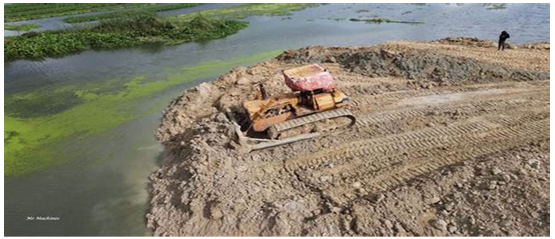
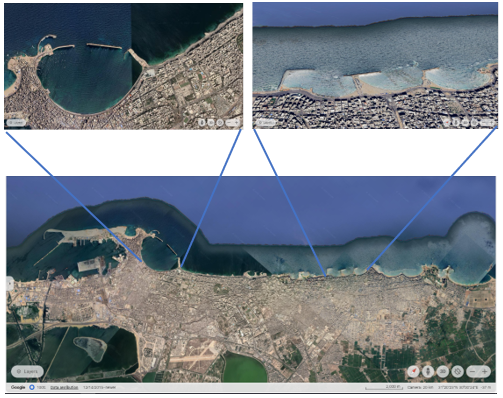
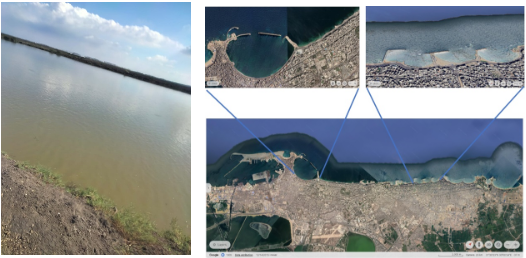
Since 1998, the Alexandrian coast has undergone a series of engineering modifications. These changes have affected water quality, phytoplankton productivity and diversity, and the coast's topography. To prevent erosion and build new beaches, preventive wave breakers were constructed in 1998. As a result, shallow, somewhat large, semi-closed lagoons formed. These lagoons became an ideal habitat for algal blooms because of their shallow depth and partially stagnant waters. Around 2010, the corrective strategy was subsequently implemented to lessen the negative consequences of the earlier coastal alterations. Over these two periods, the phytoplankton standing crop and composition changed completely. Internal tourism suffered financial losses due to this bloom.
A major problem along the Alexandria shoreline is beach erosion. Accordingly, the coast underwent coastal engineering modifications to reduce erosion and establish new recreational beaches. These coastal modifications were carried out without a preliminary impact assessment and led to negative effects. Semi-closed artificial lagoons were established, and a green tide was formed for the first time along these lagoons due to their shallowness and increased nutrient concentrations. Corrective measures were needed to mitigate the negative effects. This study was carried out at the beginning of 2024.
Existence of Harmful Algal Blooms along Alexandria coast: A mitigation strategy
2.CFAT–AASTMT Students Periodically Conduct Coastal Water Quality Monitoring to Support Watershed Management and Marine Ecosystem Protection
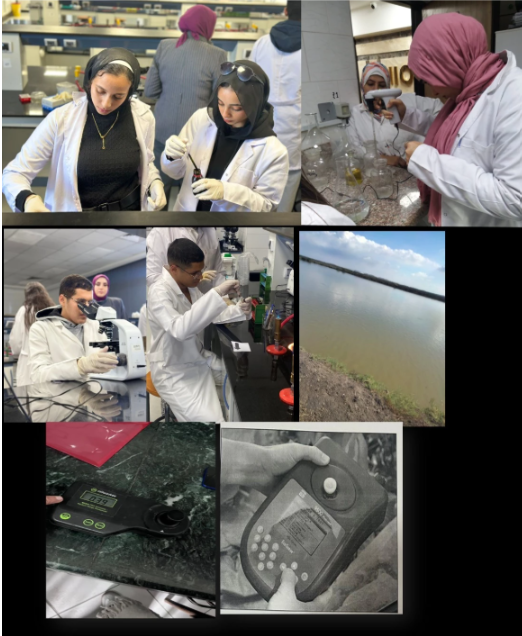
The College of Fisheries and Aquaculture Technology (CFAT) at the Arab Academy for Science, Technology and Maritime Transport (AASTMT) was strengthening its commitment to coastal environmental protection through student field activities focused on collecting coastal water samples and assessing key water quality parameters along the Alexandria coastline. As part of the College’s educational and environmental monitoring efforts, on 21 Dec. 2026, students participated in field sampling to collect water samples for laboratory analysis and evaluate key physical and chemical characteristics of the aquatic environment. These measurements included temperature, pH, salinity, dissolved oxygen, and nutrient concentrations, depending on the sampling objectives and available laboratory facilities. The collected samples allowed assessment of variations in coastal water quality, tracking environmental conditions over time, and identifying potential changes that may require further investigation. Attention is given to environmental parameters associated with nutrient enrichment and conditions that may favor harmful algal blooms (HABs), building on the College’s previous initiative, “Existence of Harmful Algal Blooms along the Alexandria Coast: A Mitigation Strategy.”
This field-based activity also provided students with practical training in environmental sampling, water quality assessment, laboratory techniques, and environmental data interpretation.
The results obtained from coastal water sampling and water quality measurements were systematically recorded, compiled, and analyzed to monitor environmental conditions and identify potential changes over time. The collected data were organized into a database to support future comparative assessments, scientific interpretation, and the preparation of reports and research publications. These efforts aim to provide a scientific basis for understanding coastal water quality trends, assessing potential environmental pressures, and supporting evidence-based coastal management and marine ecosystem protection along the Alexandria coast.
Since 1998, the Alexandrian coast has undergone a series of engineering modifications. These changes have had an impact on the water quality, phytoplankton productivity, and diversity, in addition to the topography of the coast. To prevent erosion and build new beaches, preventive wave breakers were constructed in 1998. Shallow, somewhat big, semi-closed lagoons formed as a result. These lagoons become an ideal habitat for algal blooms because of their shallow depth and partial stagnation of their waters. Around 2010, the corrective strategy was subsequently implemented to lessen the negative consequences of the earlier coastal alterations. Over the course of the two periods, the phytoplankton's standing crop and composition completely changed. Internal tourism suffered financial losses due to this bloom.
A major problem along the Alexandria shoreline is beach erosion. Accordingly, the coast was subjected to coastal engineering modifications to reduce erosion and establish new recreational beaches. The coastal modifications were done without a preliminary impact assessment and led to negative effects. Semi-closed artificial lagoons were established, and a green tide was formed for the first time along these lagoons due to their shallowness and increase in nutrient concentrations. Corrective measures had to be taken to mitigate the negative effects. This study was completed at the end of 2024 ( 3-year study 2021-2024).
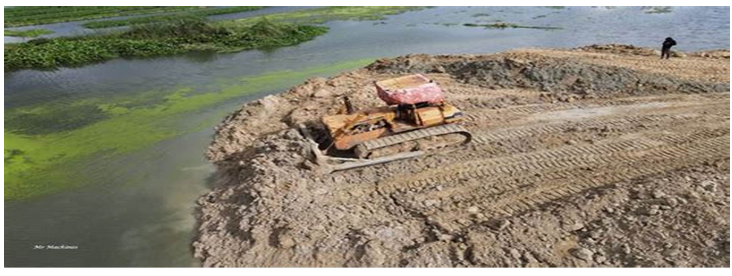
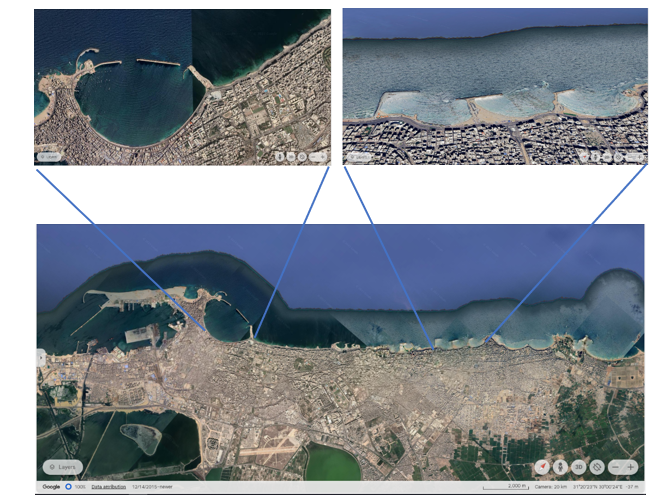
Since 1998, the Alexandrian coast has undergone a series of engineering modifications. These changes have had an impact on the water quality, phytoplankton productivity, and diversity, in addition to the topography of the coast. To prevent erosion and build new beaches, preventive wave breakers were constructed in 1998. Shallow, somewhat big, semi-closed lagoons formed as a result. These lagoons become an ideal habitat for algal blooms because of their shallow depth and partial stagnation of their waters. Around 2010, the corrective strategy was subsequently implemented to lessen the negative consequences of the earlier coastal alterations. Over the course of the two periods, the phytoplankton's standing crop and composition completely changed. Internal tourism suffered financial losses due to this bloom.
A major problem along the Alexandria shoreline is beach erosion. Accordingly, the coast was subjected to coastal engineering modifications to reduce erosion and establish new recreational beaches. The coastal modifications were done without a preliminary impact assessment and led to negative effects. Semi-closed artificial lagoons were established, and a green tide was formed for the first time along these lagoons due to their shallowness and increase in nutrient concentrations. Corrective measures had to be taken to mitigate the negative effects.