The College of Fisheries and Aquaculture Technology (CFAT) at AASTMT supports education and capacity building in aquatic resource management through its undergraduate Aquaculture Program. The program aims to provide education, applied scientific knowledge, practical training, and outreach relevant to the aquaculture sector and society.
Aligned with the program's academic framework and the National Academic Reference Standards (NARS) developed under the Egyptian Supreme Council of Universities (SCU), the program develops students' knowledge and practical competencies in aquaculture production systems, aquatic environments, water quality management, and responsible aquaculture practices.
The program supports SDG 14.2.1 by building a foundation in freshwater and brackish-water ecosystems and their sustainable management. Relevant educational topics include freshwater ecosystem characteristics, water quality assessment, responsible aquaculture practices, pollution prevention, water conservation, and the relationship between aquaculture activities and the health of surrounding aquatic environments.
The AASTMT Aquaculture Program webpage identifies the Supreme Council of Egyptian Universities (SCU) as its accrediting or recognizing authority and states that the program's curriculum is designed with reference to the National Academic Reference Standards (NARS) for graduates of faculties of fish resources.
https://aast.edu/en/programs-courses/program.php?language_id=1&lnselect=1&program_id=487&unit_id=491
The Fisheries Technology Program at the College of Fisheries and Aquaculture Technology (CFAT), Arab Academy for Science, Technology and Maritime Transport (AASTMT), specializes in fishing vessel navigation, fishing gear design and technology, fisheries science, and sustainable fisheries management.
The program prepares graduates for professional roles as officers responsible for navigational watch on fishing vessels (subject to applicable ministerial requirements), fisheries observers, and fisheries managers in fishing ports and related institutions. It is aligned with the requirements of the International Convention on Standards of Training, Certification and Watchkeeping for Fishing Vessel Personnel (STCW-F), 1995, and relevant International Maritime Organization (IMO) standards.
In support of SDG 14.2.1, the program also addresses the sustainable management and conservation of aquatic ecosystems, including freshwater, brackish-water, and marine environments. Relevant academic components include ichthyology, aquatic ecology, fisheries science, ecosystem conservation, marine pollution, and fisheries management. These subjects provide a scientific foundation for understanding aquatic biodiversity, water quality, fish population dynamics, pollution prevention, and the sustainable use of inland and coastal fisheries resources.
The program's freshwater relevance is further reflected in fisheries management and conservation, including assessing and responsibly exploiting inland fish stocks and examining the relationship between fisheries, aquaculture, and aquatic ecosystem health. These areas can support educational outreach and knowledge transfer to fishers, fish farmers, fisheries authorities, and other community stakeholders when accompanied by documented outreach activities.
Students receive marine uniforms and undertake practical and navigational training, including marine exercises in regional and international waters. The program combines scientific education, technical competencies, and practical experience to support sustainable fisheries, aquatic resource conservation, and responsible management of aquatic ecosystems.
Accreditation and recognition: The Fisheries Technology Program is recognized by the Supreme Council of Egyptian Universities (SCU), with additional accreditation and maritime approval as specified in the official AASTMT program documentation.
College of Fisheries Technology & Aquaculture Technology (aast.edu)
Master of Science in Sustainable Management of Fisheries and Aquaculture (SMFA), funded by the EU (Erasmus+). M.Sc. students participated in the student mobility and exchange program as part of the EU-funded FishAqu project under Erasmus+. They visited the University of Aveiro and the University of Palermo from May 8 to 17, 2022.
During the first admission year, 2023–2024, many candidates enrolled in the program and began their postgraduate studies, including the initial thesis stage (Thesis I). Since then, the students have progressed through their research and dissertation requirements. To date, six candidates have successfully completed their final thesis defenses and obtained the M.Sc. degree, demonstrating progress in postgraduate research and academic capacity building within the program.
Several other candidates remain enrolled and continue their Thesis II research, working towards completing and defending their dissertations. The program continues to support these candidates through academic supervision, research activities, and the development of expertise in sustainable fisheries and aquaculture management.
These achievements reflect the program's contribution to advanced education, research capacity development, international academic cooperation, and the preparation of qualified graduates capable of addressing sustainability challenges in fisheries and aquaculture.
1. https://aast.edu/en/colleges/cfat/alex/news-details.php?language=1&view=1&unit_id=491&news_id=486104971&event_type_id=11
2. College of Fisheries and Aquaculture Technology-Alexandria | AASTMT
3. College of Fisheries & Aquaculture Technology (aast.edu)
4. https://www.facebook.com/story.php?story_fbid=pfbid05W3bY6AH2Kme6e2jH4kS8h2MDftrr9z2eMHHsvRHnPGkVjpdURVok7opmtNgtwiJl&id=994247483960425&sfnsn=scwspwa&mibextid=2JQ9oc&_rdr
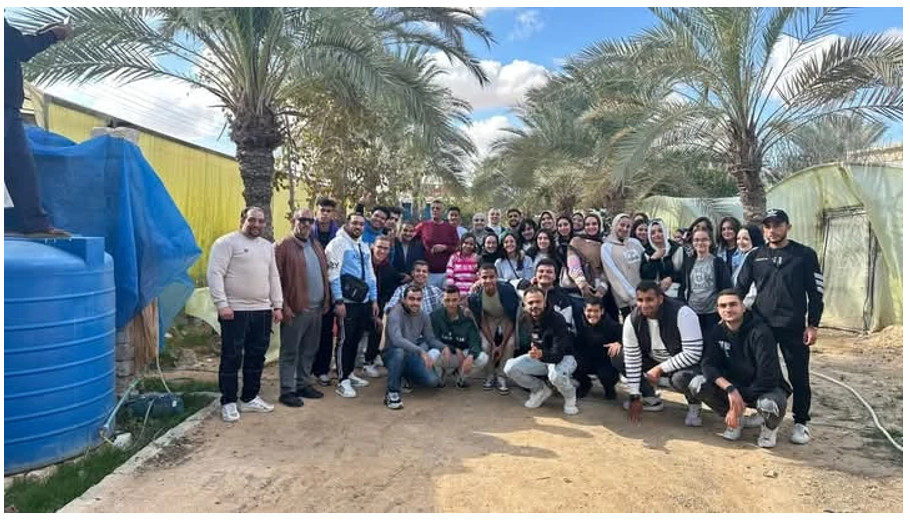
College of Fisheries and Aquaculture Technology, in coordination with Dr. Khaled Kamoun, an expert in aquaculture and fish wealth, organized a scientific visit to the unique Basa fish farm and hatchery in the 21st-kilometer area, managed by Engineer Hesham Mohamed, a pioneer in Basa fish farming in Egypt. This was followed by a visit to the intensive fish farm in Borg El Arab. This took place on Thursday, 28/11/2024
College of Fisheries and Aquaculture Technology-Alexandria | AASTMT
The MSc SBEM equips graduates and professionals with scientific knowledge, analytical skills and practical capabilities required to address current and emerging challenges affecting oceans and coastal areas. The program covers oceanography and climate change, fisheries and aquaculture, marine ecology and biotechnology, GIS and remote sensing, marine resources, ocean governance, coastal tourism, innovation and sustainable blue-economy development. The program is delivered over 2 years / 4 semesters, comprising 40 Credit Hours / 120 ECTS, including compulsory and elective coursework and a research-based Master's thesis. Developed within the BLUE-ERA Erasmus+ project, the program benefits from international academic cooperation and contemporary approaches to sustainable marine and coastal development.
Upon successful completion of the MSc SBEM, graduates will be able to:
Analyze sustainable blue-economy principles and complex marine and coastal systems.
Assess living and non-living marine resources from environmental, economic and governance perspectives.
Apply GIS, remote sensing, environmental monitoring, data analysis and scientific research methods.
Develop sustainable solutions for coastal management, climate-change adaptation, marine pollution, biodiversity, fisheries, aquaculture and other blue-economy sectors.
Evaluate marine and coastal projects considering sustainability, feasibility and stakeholder needs.
Conduct independent scientific research and communicate effectively to academic, professional, governmental and community stakeholders. These outcomes reflect the program's intended development of scientific, analytical, practical, research, communication, and transferable competencies.
1. https://aast.edu/en/institutes/mpi/programtemp.php?program_id=557&unit_id=481
2. https://aast.edu/en/institutes/mpi/
The department specializes in marine navigation education for fishing vessels and the design of fishing equipment. It prepares graduates to work as watchkeeping officers responsible for navigation surveillance (after fulfilling the ministerial requirements for practicing the profession), fisheries observers on fishing vessels, or fishery managers in fishing ports. The program is aligned with the requirements of the STCW-F International Convention of 1978, its 1995 amendments, and the standards set by the International Maritime Organization (IMO). Students are provided with marine uniforms, and marine exercises can be conducted in regional and international waters.
College of Fisheries Technology & Aquaculture Technology (aast.edu)
Master of Science in Sustainable Management of Fisheries and Aquaculture (SMFA), funded by the EU (Erasmus+). The M.Sc. students participated in the student mobility and exchange program as part of the EU-funded FishAqu project under the Erasmus+ program. They visited the University of Aveiro and the University of Palermo from May 8 to 17, 2022.
Many candidates enrolled during the first admission year, 2023-2024 (Thesis one).
College of Fisheries & Aquaculture Technology (aast.edu)
EU-funded project FishAqu of Erasmus+ student mobility
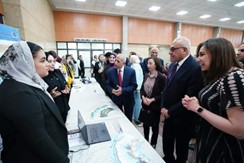
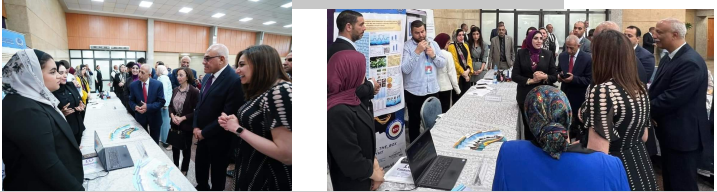
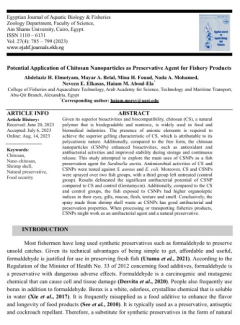
The College of Fisheries and Aquaculture Technology at the Arab Academy for Science, Technology, and Maritime Transport participated in the Academy’s Industry Advisory Council activities at the main headquarters in Abu Qir under the theme: "Artificial Intelligence and the Future of the National Industry," held on Tuesday, May 16, 2023. Students from the college presented their graduation project titled: “Potential Application of Chitosan Nanoparticles Extracted from Marine Shrimp Shells as Preservatives for Fishery Products." It is worth noting that they also published a paper based on their graduation project titled: “Potential Application of Chitosan Nanoparticles as a Preservative Agent for Fishery Products.”
College of Fisheries and Aquaculture Technology-Alexandria | AASTMT
article_312602_ec61a5e93ab6215d15bccd25ce942310.pdf
The Maritime Postgraduate Studies Institute (MPI) is the leading institution offering top maritime postgraduate programs that support researchers across various sectors of the maritime industry at local, regional, and international levels. MPI maintains a competitive edge and cultivates a rigorous scientific environment that helps develop students' skills and abilities in research. Furthermore, it cultivates a new generation of specialists and researchers capable of addressing the industry's current and future needs, guiding research topics toward contemporary industry concerns, such as marine environmental research and the sustainability of aquatic ecosystems, and aligning with the UN SDGs.
Maritime Postgraduate Studies Institute-Alexandria | AASTMT
The department is a pioneer in the education of fishing vessels navigation and designing of fishing equipment that qualifies graduates to work on fishing vessels as alternate officers, to be responsible for navigational surveillance (after completion of ministerial requirements for practicing the profession) or fisheries observers on fishing vessels, also as fishery managers in fishing ports. The program is designed in accordance with the requirements of the STCW-F international conventions of 1978, amendments to STCW-F for 1995, and the requirements of the International Maritime Organization (IMO). Students receive marine uniforms, and marine exercises can be conducted in regional and international waters.
Note: At AASTMT, we understand the importance of support in a student's academic journey. That's why we offer full or partial support, depending on the case study, along with moral assistance from the deans of colleges, heads of departments, the college support team, the Deanery of Admission and Registration, and the Deanery of Student Affairs.
College of Fisheries Technology & Aquaculture Technology Alexandria on AASTMT webpage
Tuition fees Unit-Alexandria | AASTMT
Master of Science Degree in Sustainable Management of Fisheries and Aquaculture (SMFA), Funded by the EU (Erasmus+). The M.Sc. students have accomplished the program of student mobility and exchange within the framework of the EU-funded project FishAqu of Erasmus+. The students visited the University of Aveiro and the University of Palermo throughout the period from 8 to 17 May 2022.
College of Fisheries Technology & Aquaculture Technology Alexandria on AASTMT webpage
Master of Science Degree In Sustainable Management Of Fisheries And Aquaculture (SMFA), Funded By The EU (Erasmus+ Project) (Postgrad) on College of Fisheries-AAST facebook page
https://aast.edu/en/sdg/goals.php?unit_item=1214&page_id=121400009 on AASTMT webpage
The College of Fisheries and Aquaculture Technology at the Arab Academy for Science, Technology, and Maritime Transport participated in the activities of the Academy’s Industry Advisory Council at the main headquarters in Abu Qir under the theme: "Artificial Intelligence and the Future of National Industry", held on Tuesday, May 16, 2023. Students from the college took part in presenting their graduation project entitled: “Potential application of chitosan nanoparticles extracted from marine shrimp shells as preservatives for fishery products”. It is worth mentioning that they also published a paper from their graduation project entitled: “Potential Application of Chitosan Nanoparticles as Preservative Agent for Fishery Products”
College of Fisheries and Aquaculture Technology-Alexandria | AASTMT