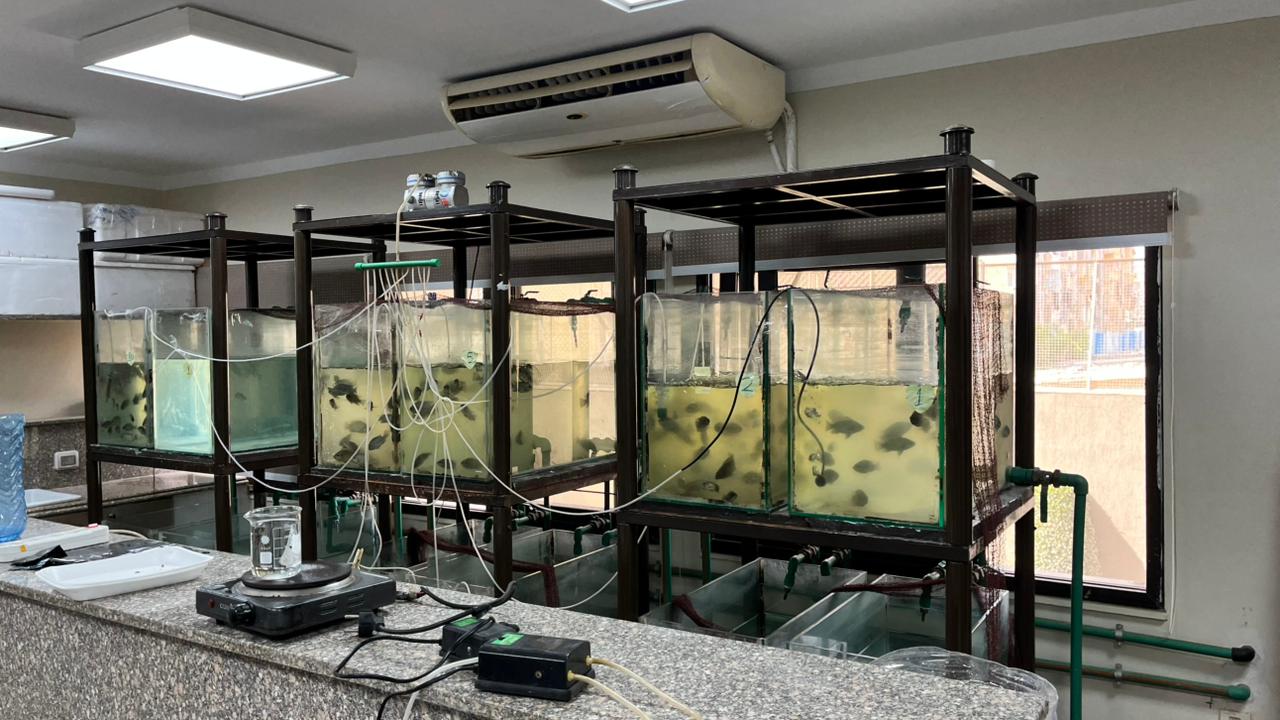
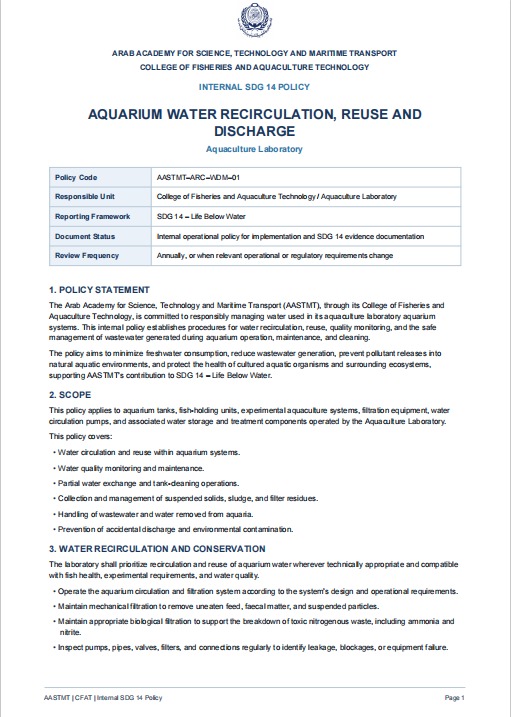
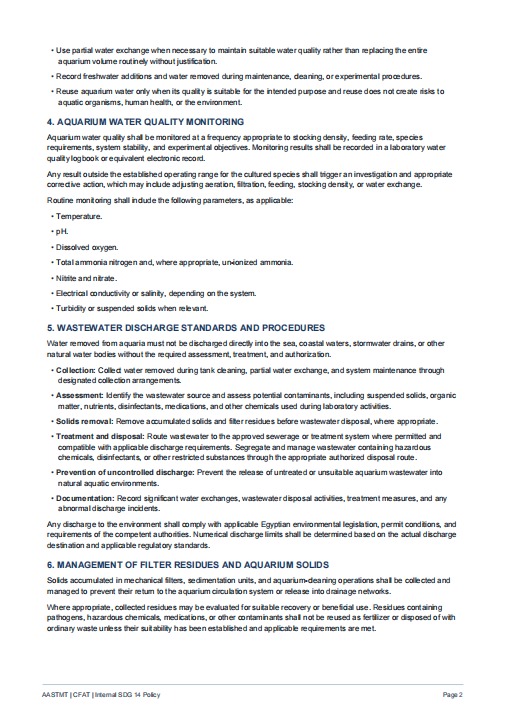
Aquarium water recirculation, reuse and discharge
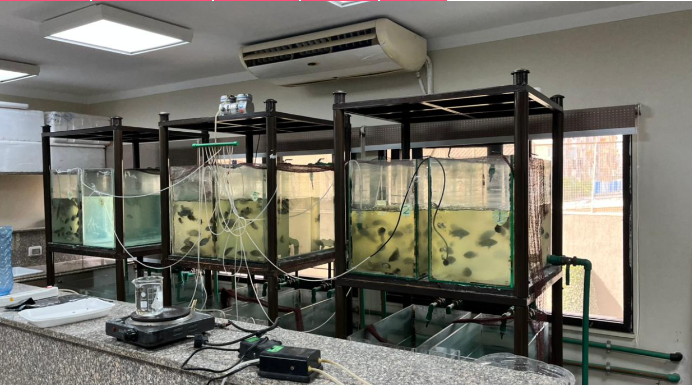
This internal policy sets guidelines for responsible water management in the Aquaculture Laboratory at the College of Fisheries and Aquaculture Technology, AASTMT. It aims to promote water conservation through recirculation and reuse, ensure appropriate aquarium water quality, and manage wastewater safely to prevent pollution and protect aquatic ecosystems. The policy supports AASTMT’s commitment to Sustainable Development Goal 14 (Life Below Water) by minimizing harmful discharges into natural aquatic environments and encouraging environmentally responsible laboratory practices.
Water discharge guidelines and standards - Life Below Water
Standards and Guidelines for Discharge of Wastewater, Version 2 (reviewed 2025, AASTMT Abu Qir Campus, Alexandria)
AASTMT has water quality standards and guidelines for every discharge from its campuses, to uphold water quality and protect ecosystems, wildlife, and human health and welfare. The “AASTMT Standards and Guidelines for Discharge of Wastewater” were created in August 2023 and reviewed in 2025 (Version 2). They set discharge limits under Egyptian law, specify the Abu Qir wastewater and rainwater system, keep potable water and wastewater apart, keep laboratory waste out of drains, and set how each campus tests and reports its discharge. The cases below show the standards applied in the academic year 2024-2025 (September 2024 to August 2025).
In 2025 the SDGs Workforce Committee reviewed AASTMT’s wastewater discharge guidelines. Version 2 specifies the Abu Qir wastewater and rainwater system: a 12-inch drainage line to a 12 m³ sump, two 10 hp EBARA submersible pumps discharging 60–70 m³ per hour with two 15 hp Siemens standby pumps, dual control panels to prevent overflow, and daily cleaning of the pump rooms by a contracted company. It sets a validation program (pump flow and valves checked monthly, control panels quarterly, discharge water quality tested monthly by laboratory analysis, and sump and pump room inspected twice a year), and requires compliance with Law No. 93 of 1962, Decree No. 44 of 2000 and Egyptian Code 102 (2010), so that no contaminated water reaches the sea, freshwater or groundwater.
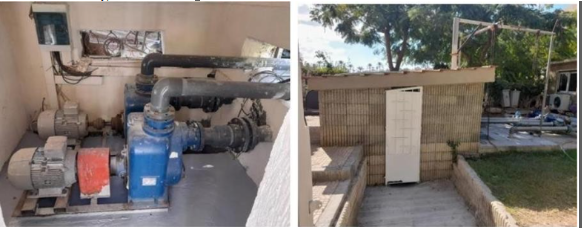
AASTMT Standards and Guidelines for Discharge of Wastewater
Monitoring the Discharge and the Groundwater of the Abu Qir Campus (2024-2025, Abu Qir, Alexandria)
All wastewater from the Abu Qir campus passes through the campus pump station, where flowmeters record the discharge every month, before it enters the public sewer and the municipal treatment plant. Groundwater pumped from 13 borehole wells to irrigate about 25 acres of gardens is analyzed monthly to ensure it meets irrigation specifications, and rainwater from roofs and walkways is channeled into planting beds and soaked into the ground. Separate sewage, stormwater and greywater networks, sealed UPVC pipes and slopes of 0.5–1% stop wastewater from leaking into soil and groundwater. In all, 27.8% of campus water comes from groundwater and harvested rain.
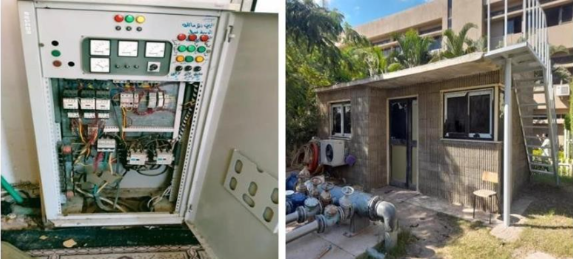
UI GreenMetric 4.5: Consumption of treated water
Chemical and biological waste from AASTMT laboratories is separated, neutralized where needed, and stored in controlled campus facilities, and is collected twice a week by Nahdet Misr, a certified company, which takes it to the Alexandria Governorate hazardous waste management facility at Nasreya. Laboratories have separate pipes for potable water (green) and drainage (grey), and every pipe and sanitary fitting is checked against a checklist and an inspection-point plan. This keeps harmful chemicals and biological agents out of the sewer and the environment.
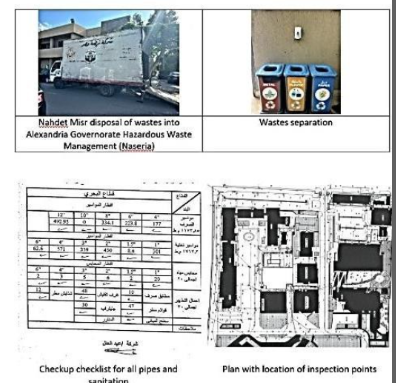
UI GreenMetric 4.6: Water pollution control in campus area
AASTMT launched the “Every Drop Counts” campaign in its teaching laboratories, with posters and awareness materials in every department. Faculty members reminded students during practical sessions to save water, report leaks and follow sustainable laboratory practice, which means nothing hazardous goes down the sink.
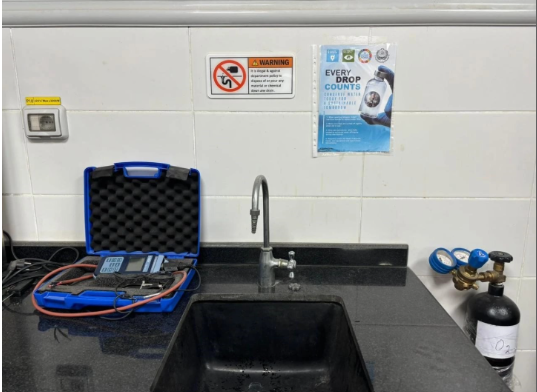
INTERNAL SDG 14 POLICY
This internal policy sets guidelines for responsible water management in the Aquaculture Laboratory at the College of Fisheries and Aquaculture Technology, AASTMT. It aims to promote water conservation through recirculation and reuse, ensure appropriate aquarium water quality, and manage wastewater safely to prevent pollution and protect aquatic ecosystems. The policy supports AASTMT’s commitment to Sustainable Development Goal 14 (Life Below Water) by minimizing harmful discharges into natural aquatic environments and encouraging environmentally responsible laboratory practices.