

2024-2025
1.Memorandum of Understanding between AASTMT and the World Fish Center (2022 – 2027).
During the 2024–2025 reporting period, AASTMT supported efforts to minimize changes to aquatic ecosystems through institutional cooperation in sustainable fisheries and aquaculture. Activities under this framework aimed to promote improved fisheries management, environmentally responsible aquaculture practices, scientific research, and capacity building to reduce potential impacts on aquatic habitats and biodiversity.
These efforts were supported by the Memorandum of Understanding between AASTMT and the WorldFish Center, signed in June 2022 for the period 2022–2027. The MoU established a cooperation framework in aquaculture, fisheries management, and capacity building, providing a basis for continued collaboration during 2024–2025.
Supporting institutional framework: During the fourth AASTMT Advisory Council for Industry on 3 June 2022, H.E. Professor Ismail Abdel Ghafar, President of AASTMT, signed the five-year MoU with the WorldFish Center, represented by Regional Director Dr. Ahmed Nasrallah.
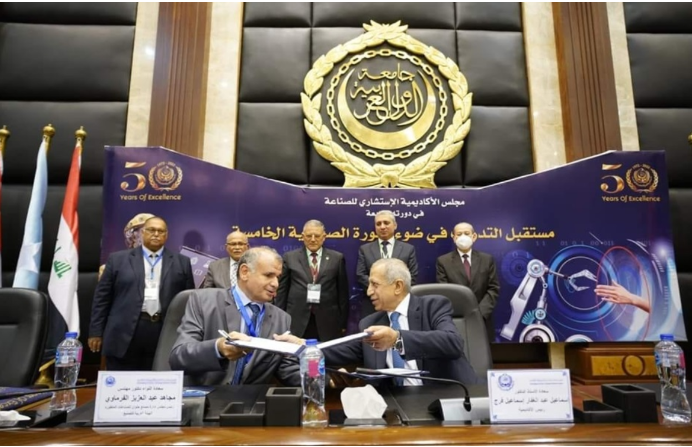
MoU between AASTMT and the World Fish Center, Jun 3,2022.
2.AASTMT–WorldFish Collaboration Empowers Students and Fresh Graduates Through Specialized Training in Fisheries and Aquaculture
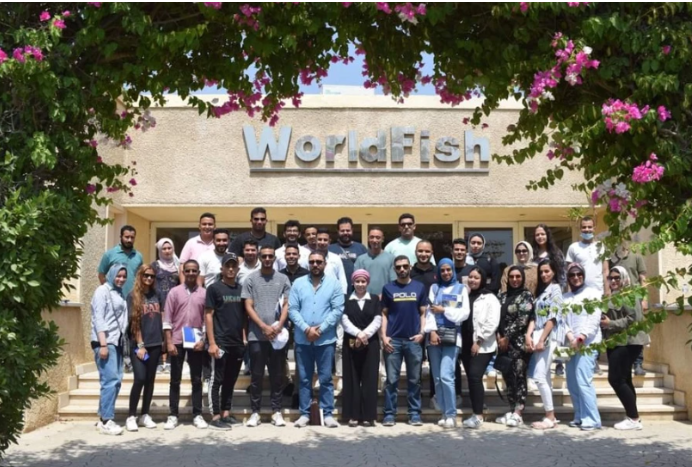
On 10 September 2025, the College of Fisheries and Aquaculture Technology (CFAT) at the Arab Academy for Science, Technology and Maritime Transport (AASTMT) continues to strengthen its commitment to practical education, professional development, and sustainable fisheries and aquaculture through its collaboration with WorldFish, within the framework of the Memorandum of Understanding (MoU) between the two institutions. This collaboration provides a valuable framework to support capacity building for students and recent graduates through specialized training designed to bridge the gap between academic knowledge and professional practice. The training aims to strengthen participants’ technical competencies, introduce modern approaches to fisheries management and sustainable aquaculture, and improve their readiness for the evolving needs of the blue economy and the fisheries sector.
Through this partnership, students and recent graduates can develop practical skills, gain exposure to applied research and industry-relevant practices, and deepen their understanding of sustainable aquatic food systems, responsible resource management, and innovation in aquaculture production.
The initiative reflects AASTMT CFAT and WorldFish's shared commitment to investing in young talent, strengthening the link between education and research, and preparing a new generation of qualified professionals to contribute to sustainable fisheries and aquaculture development in Egypt and the wider region.
Life Below Water-Alexandria | AASTMT
3.AASTMT College of Fisheries and Aquaculture Technology Signs Cooperation Agreement with MADE II to Enhance Practical Aquaculture Training (2023 – 2028)
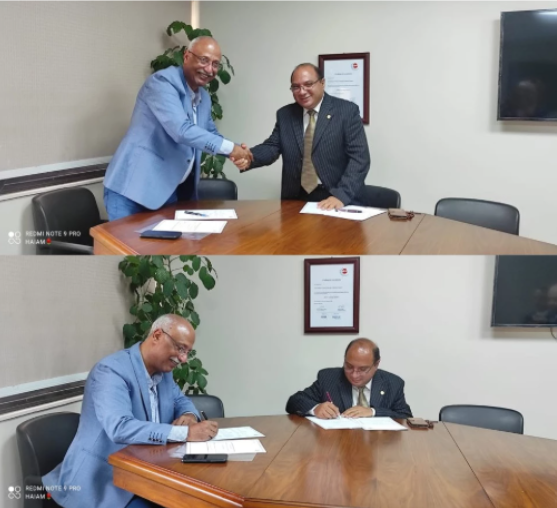
The College of Fisheries and Aquaculture Technology (CFAT) at the Arab Academy for Science, Technology and Maritime Transport (AASTMT) signed a cooperation agreement on Sunday, June 4, 2023, with the Marine Aquaculture Development Project in Egypt (MADE II), affiliated with the Ministry of Agriculture and Land Reclamation.
The agreement aims to strengthen cooperation and exchange expertise between the two institutions, while providing CFAT students enrolled in the Aquaculture Technology program with access to the project's technical facilities for hands-on training in marine fish hatchery operations and aquaculture practices.
The agreement was signed by the Dean of CFAT and Dr. Mohamed El-Araby, Director of MADE II. This collaboration represents an important step toward bridging the gap between academic education and practical industry experience, enabling students to develop the technical skills required for careers in marine aquaculture.
Through this partnership, AASTMT and MADE II seek to support the development of qualified professionals in the aquaculture sector and promote sustainable marine fish production. The initiative also advances practical education, strengthens institutional collaboration, and supports the sustainable use of aquatic resources, in line with Sustainable Development Goal 14: Life Below Water.
Life Below Water-Alexandria | AASTMT
4.Students at the College of Fisheries and Aquaculture Technology completed the training program
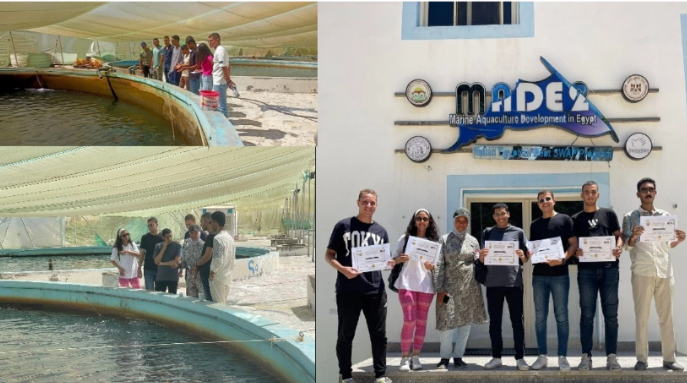
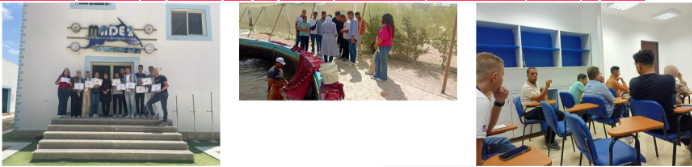
Within the framework of the cooperation agreement between the WorldFish Center and the College of Fisheries and Aquaculture Technology (CFAT), Arab Academy for Science, Technology and Maritime Transport (AASTMT), a specialized training course was conducted on 3- 4 Aug. 2024 for students and fresh graduates to enhance their practical knowledge and technical skills in aquaculture systems and water quality management.
The course included a series of theoretical lectures and hands-on practical training sessions covering key topics, including:
The practical component included a field visit to fish farms within the marine hatchery facilities at Kilometer 21 in Alexandria, providing participants with direct exposure to aquaculture operations, water quality monitoring practices, and the management of different aquaculture systems.
This training activity reflects the ongoing collaboration between the marine hatchery facilities at Kilometer 21 in Alexandria (MADE II) and CFAT–AASTMT to strengthen capacity building, support practical education, and equip students and fresh graduates with the skills needed to promote sustainable aquaculture practices and improve aquatic resource management.
Life Below Water-Alexandria | AASTMT
5.Students at the College of Fisheries and Aquaculture Technology completed the training program "Common Fish Diseases, Good Fish Farm Management and Water Quality Analysis"
Students of the Faculty of Fisheries and Aquaculture Technology completed the training program "Common Fish Diseases, Good Fish Farm Management and Water Quality Analysis", which was held over two days, August 5–6, 2024, at the Marine Aquaculture Development Project in Egypt MADE II (Kilo 21 Hatchery). This training falls under the cooperation agreement between the college and the Marine Aquaculture Development Project in Egypt.
During the fourth AASTMT Advisory Council for Industry on June 3, 2022, Professor Ismail Abdel Ghafar, the Academy's president, signed an MoU with the WorldFish Center, represented by Regional Director Dr. Ahmed Nasrallah. The five-year agreement (2023-2024 year is included) focuses on collaboration in aquaculture, fisheries management, and capacity building. Both organizations aim to advance sustainable fisheries and aquaculture practices in the region.
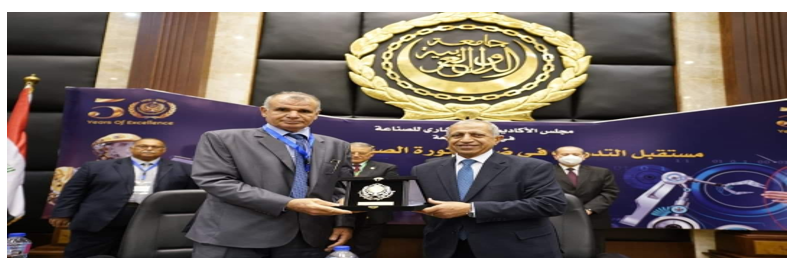
On the sidelines of the fourth AASTMT’s Advisory Council for Industry, On Jun 3, 2022, his excellency Professor Ismail Abdel Ghafar, president of the Academy, has signed an MoU with the WorldFish Center, represented by Dr. Ahmed Nasrallah, the Center's Regional Director. The agreement, set to last for five years, aims to foster collaboration in the areas of aquaculture, fisheries management, and capacity building. Both institutions will work together to promote sustainable fisheries and aquaculture practices in the region."
Mou between AASTMT and The World Fish Center on Al fallah Al youm newspaper page
Mou between AASTMT and The World Fish Center on AASTMT webpage


