Download the full policy (PDF)
Brief Description
The Arab Academy for Science, Technology and Maritime Transport (AASTMT) is committed to identifying, monitoring and protecting every species on the IUCN Red List of Threatened Species and every species on Egypt’s national conservation lists whose habitats lie in areas affected by the operation of the Academy. This policy covers our campuses, our training ships and sea-training voyages, and the coasts, lakes, fishing ports and field sites where our students train and our researchers work.
1. Purpose
To make sure that no AASTMT activity harms threatened species, that every species of conservation concern in the areas we affect is identified, and that its status is monitored and its habitat is protected, in line with Egypt’s National Biodiversity Strategy and Action Plan and the Academy’s commitment to SDG 15, Life on Land, and SDG 14, Life Below Water.
2. Scope: areas affected by the operation of AASTMT
- Campuses. AASTMT’s 8 campuses in 6 Egyptian governorates: Alexandria (the main campus at Abu Qir on the Mediterranean shore of Abu Qir Bay, and Miami), Cairo (Heliopolis), Giza (Dokki, Smart Village), Matrouh (El Alamein, on the north coast), Port Said (near the Lake Manzala wetland) and Aswan (the South Valley campus in the Nile Valley).
- Sea and coast. Training ships and sea-training voyages, maritime simulation and safety training at sea, and beach and port activities.
- Fisheries and aquaculture training. Fishing ports, lakes, fish farms, hatcheries and research stations used for student field training.
- Research and field work. Sampling sites, surveys and community projects led by AASTMT staff and students.
- Construction and events. New buildings, landscaping, lighting and large events on or near our campuses.
3. Definitions
- IUCN Red List species: species assessed by the International Union for Conservation of Nature as Critically Endangered (CR), Endangered (EN) or Vulnerable (VU), the three threatened categories. Near Threatened (NT) and Data Deficient (DD) species are also tracked.
- National conservation list species: wild animals, birds and plants protected under Egyptian law, including the Environment Law No. 4 of 1994 and its executive regulations, which forbid hunting, killing, catching or trading protected wild birds and animals, and Law No. 102 of 1983 on Natural Protectorates; and species listed by the international agreements Egypt has joined, such as CITES, the Convention on Migratory Species and the Ramsar Convention on wetlands.
4. Our commitments
Identify
- Keep a species register for every campus and every operation area, screened against the IUCN Red List and Egypt’s national lists, and updated at least once a year.
- Survey before we build: no new building, landscaping or lighting project starts until it has been checked for threatened species and their habitats.
- Have each record verified by AASTMT scientists and, where needed, by national experts.
Monitor
- Run seasonal bird counts on the coastal campuses during the spring and autumn migrations, and yearly plant, pollinator and wildlife surveys on every campus, with students as citizen scientists.
- Record every sighting or accidental catch of sea turtles, dolphins, sharks, rays and seabirds during sea training, fisheries training and research.
- From 2026, share monitoring data with national bodies, including the Egyptian Environmental Affairs Agency, the National Institute of Oceanography and Fisheries and the General Authority for the Protection and Development of Lakes and Fish Resources, and with regional programmes such as those of the General Fisheries Commission for the Mediterranean.
Protect
- Leave the habitat of any threatened species undisturbed, with buffer zones and protected mature trees on campus.
- Keep training ships compliant with MARPOL and the Ballast Water Management Convention, so that ship operations do not pollute the sea or introduce alien species.
- Teach and use selective fishing gear, and release protected species alive and unharmed.
- Buy no wild-caught threatened species for catering, teaching or aquaculture, such as the Critically Endangered European eel, unless the source is legal and traceable.
- Allow no wildlife trade or display of protected animals on campus, and plant native species instead of invasive ones (see the AASTMT alien species policy, 15.3.4).
Respond, educate and report
- Report injured, stranded or caught protected animals to the Sustainability Office within 24 hours and pass them to the competent national authority.
- Teach conservation of threatened species in our courses and engage students and local communities in clean-ups and surveys.
- From 2027, publish a yearly summary of species monitoring on the AASTMT website.
Targets
- A species register for each of the 8 campuses by 2027.
- Two seasonal bird counts a year, in spring and autumn, at Abu Qir and El Alamein.
- The first public species monitoring summary by 2027.
5. Priority species to screen and monitor
The table lists threatened species that may use habitats in areas affected by AASTMT operations. It guides the first surveys; species are added or removed as records are verified.
| Area affected by AASTMT operations |
Species |
IUCN global status |
Why we monitor it |
| North-coast desert near the El Alamein campus |
Egyptian tortoise (Testudo kleinmanni) |
Critically Endangered |
Native to Egypt’s coastal desert; habitat lost to coastal development |
| Migration flyway over Alexandria, Port Said and the Red Sea |
Steppe eagle (Aquila nipalensis); Saker falcon (Falco cherrug) |
Endangered |
Pass over Egypt on migration every spring and autumn |
| Aswan and the Nile Valley (South Valley campus) |
Egyptian vulture (Neophron percnopterus) |
Endangered |
Breeds and migrates in southern Egypt |
| Red Sea coast (field research) |
Grey mangrove (Avicennia marina) |
Least Concern; protected in Egypt’s protectorates |
Mangrove forests are a nationally protected habitat studied by AASTMT |
| Mediterranean coast and Abu Qir Bay; training voyages |
Loggerhead turtle (Caretta caretta) |
Vulnerable (global assessment) |
Feeds and migrates along Egypt’s coast; at risk from bycatch and marine litter |
| Mediterranean fishing grounds used in fisheries training |
Angel shark (Squatina squatina) |
Critically Endangered |
Caught as bycatch by bottom trawls |
| Rocky coasts and fisheries |
Dusky grouper (Epinephelus marginatus) |
Vulnerable |
Targeted by fisheries and spearfishing |
| Aquaculture training and fish farms |
European eel (Anguilla anguilla) |
Critically Endangered |
Farms depend on wild-caught young eels |
6. Roles
- SDGs Workforce Committee: approves the policy and its reviews; the Dean of Scientific Research and Innovation signs it.
- SDG 15 officer and Sustainability Office: keep the species register, coordinate surveys, receive reports and publish the yearly summary.
- College of Fisheries and Aquaculture Technology: scientific lead for aquatic species, bycatch records and fisheries training.
- College of Maritime Transport and Technology: environmental compliance of training ships and sea training.
- Facilities and landscape departments: campus habitats, tree protection and pre-construction checks.
- Deans and campus managers: apply the policy in their colleges and campuses.
7. Review programme
| Item |
Detail |
| Owner |
SDGs Workforce Committee (approving body), through the SDG 15 officer and the Sustainability Office |
| Scientific lead |
College of Fisheries and Aquaculture Technology, with the College of Maritime Transport and Technology and the College of Engineering and Technology |
| In place |
Approved in academic year 2024-2025 |
| Reviewed |
October 2026 |
| Next review |
2028, and earlier if a new threatened species is recorded or the law changes |
| Applies to |
All AASTMT campuses and operations in Egypt |
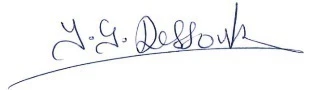
| Approval signature |
Dean of Scientific Research and Innovation
 |



