
Download the full report (PDF)
Arab Academy for Science, Technology and Maritime Transport
Guardians of Rare Life
Threatened Species at AASTMT, 2024–2025
How the Arab Academy identifies, studies and protects IUCN Red List and nationally protected species on Egypt’s coasts, wetlands, deserts and seas.
Abu Qir Campus · El Alamein Campus · Port Said Campus · Smart Village Campus · Heliopolis Campus · South Valley Campus, Aswan
Welcome
Egypt’s seas, lakes and deserts are home to sea turtles, sharks and rays, dolphins, migrating eagles and falcons, and desert tortoises, many of them on the IUCN Red List of Threatened Species. Our campuses and training ships share their coasts, wetlands and skies.
In 2024 and 2025 the Arab Academy for Science, Technology and Maritime Transport (AASTMT) turned more of its research, training and community work towards these species: measuring the risks they face, monitoring the fish stocks and habitats they depend on, training students, and cleaning the shores they use. In August 2024 the Academy set these efforts in a formal policy, the AASTMT Monitoring IUCN & Conservation Species Policy, updated in 2025, to identify, monitor and protect every IUCN Red List and nationally protected species in the areas its operations affect. This publication covers January 2024 to December 2025, with the date of every piece of work and the AASTMT campus that led it.
At a glance
|
8 campuses in 6 Egyptian governorates |
5 groups of marine megafauna assessed for fishing-gear risk (2024) |
9,527 European pilchards measured to assess their stock (2025) |
5,032 pieces of litter per 100 m on Mediterranean beaches (2025) |
|---|---|---|---|
|
6 groups of sea animals identified by AASTMT’s AI tool (2025) |
2 beach-sieving machines piloted with Nahdet Misr from the Abu Qir Campus (2024) |
10 threatened species on the AASTMT watch list |
Aug 2024 AASTMT’s IUCN species policy created (updated 2025) |
01 · Species on our doorstep
An academy of the sea has a special duty to the life of the sea and the coast. Our ships cross the Mediterranean and the Red Sea, our fisheries students train in ports and on lakes, and our Abu Qir, El Alamein, Port Said and South Valley campuses sit on Abu Qir Bay, the North Coast, Lake Manzala and the Nile.
The IUCN Red List classifies species as Critically Endangered, Endangered or Vulnerable when they face a high risk of extinction. Egypt protects further species under its Environment Law No. 4 of 1994 and Law No. 102 of 1983 on Natural Protectorates, and through the international agreements it has joined, such as CITES, the Convention on Migratory Species and the Ramsar Convention on wetlands. The species below may use habitats in the areas our campuses and operations affect, and are the first we watch for.
| Species | IUCN global status | Where AASTMT meets it |
|---|---|---|
| Loggerhead turtle (Caretta caretta) | Vulnerable | Abu Qir Bay off the Abu Qir Campus; training voyages |
| Angel shark (Squatina squatina) | Critically Endangered | Mediterranean fishing grounds used in fisheries training |
| Dusky grouper (Epinephelus marginatus) | Vulnerable | Rocky coasts and fisheries |
| European eel (Anguilla anguilla) | Critically Endangered | Aquaculture training and fish farms |
| Harbour porpoise, Black Sea (Phocoena phocoena relicta) | Endangered | Studied in AASTMT’s 2024 bycatch assessment |
| Egyptian tortoise (Testudo kleinmanni) | Critically Endangered | Coastal desert near the El Alamein Campus |
| Steppe eagle (Aquila nipalensis) | Endangered | Migration flyway over the Abu Qir and Port Said campuses and the Red Sea |
| Saker falcon (Falco cherrug) | Endangered | Migration flyway over Egypt |
| Egyptian vulture (Neophron percnopterus) | Endangered | Nile Valley near the South Valley Campus, Aswan |
| Grey mangrove (Avicennia marina) | Least Concern; protected in Egypt’s protectorates | Red Sea coast, studied by AASTMT (results published 2024) |
02 · Timeline
From mangrove forests on the Red Sea to the sardine stocks studied at the Abu Qir Campus, these are the dated milestones of 2024 and 2025.
03 · Where we watch and protect
Each AASTMT campus sits in a different landscape, with its own species to watch.
 |
 |
 |
|---|---|---|
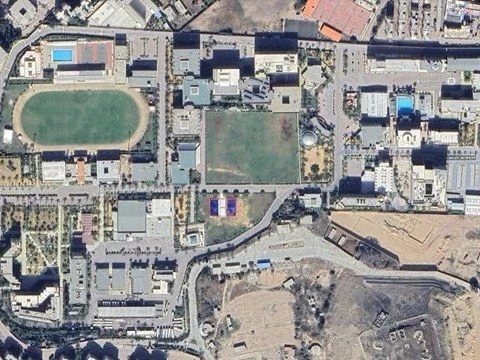
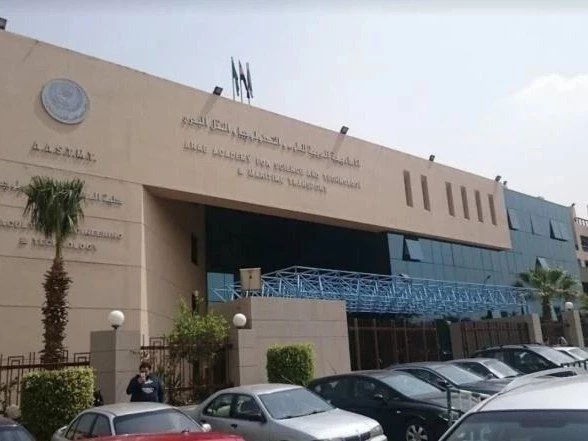
| Abu Qir Campus Mediterranean shore of Abu Qir Bay |
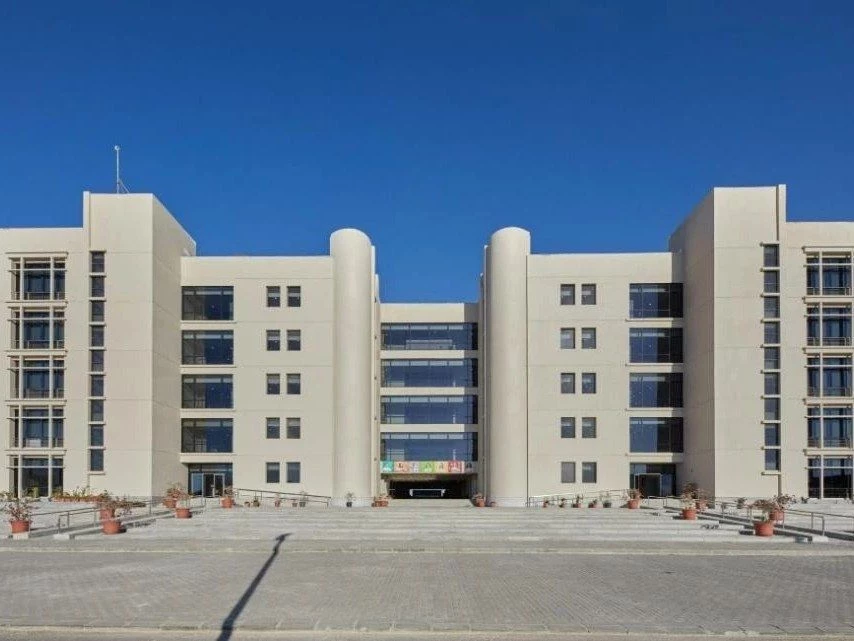
El Alamein Campus North Coast and coastal desert |
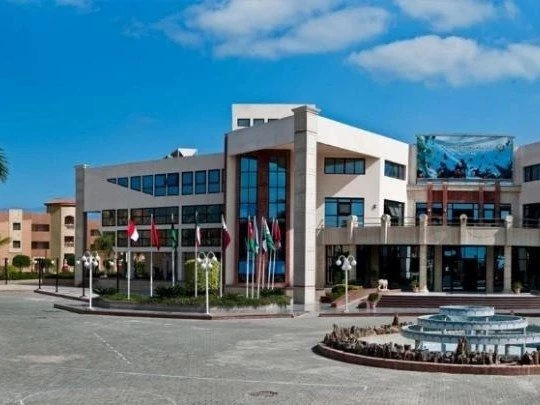
Port Said Campus Suez Canal and Lake Manzala |
 |
 |
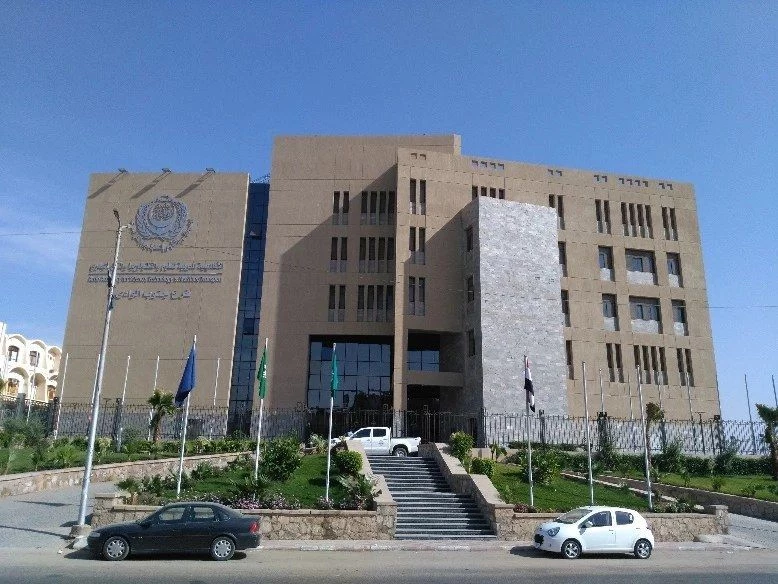 |
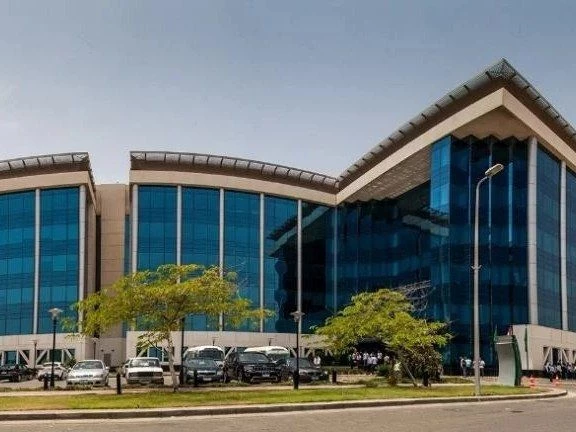
| Smart Village Campus Desert edge west of Cairo |
Heliopolis Campus Urban campus in the capital |
South Valley Campus, Aswan Nile Valley and Lake Nasser |
|
Main campus · Abu Qir Campus The sea at our gate The 213,646 m² campus faces Abu Qir Bay, where sea turtles feed and fishing boats work. It is home to the College of Fisheries and Aquaculture Technology, the College of Maritime Transport and Technology and the training ships, so most of our species work starts here: fisheries research, bycatch studies, and the beach and port clean-ups of 2024. Key figures 213,646 m² campus; 62,000 m² of planted habitat on the shore of Abu Qir Bay. |
|---|
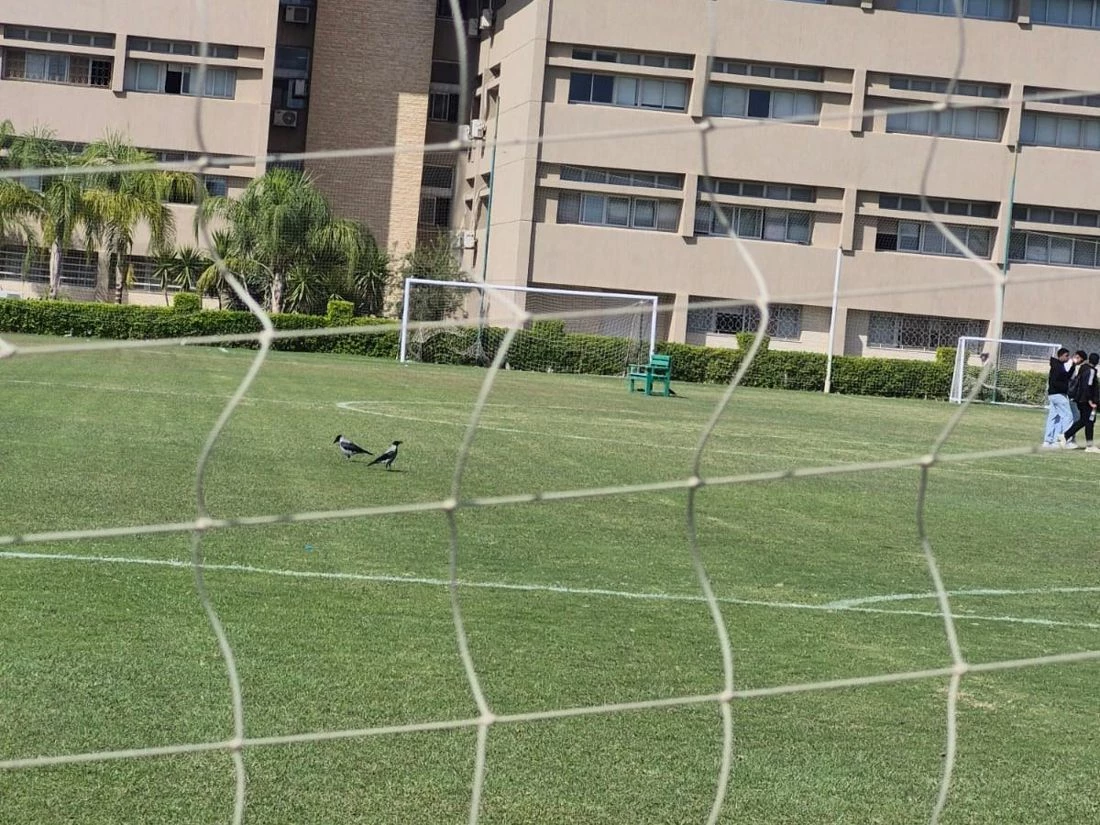
Birds foraging on the open lawns of the Abu Qir Campus.
|
North Coast · El Alamein Campus Coastal desert and clean beaches The El Alamein Campus stands where the Mediterranean meets the Western Desert, the natural range of the Critically Endangered Egyptian tortoise. In November 2024, at the 12th World Urban Forum (WUF12) in Cairo, the Ministry of Housing signed a protocol with AASTMT for technical consultancy on managing the marine and coastal resources of New Alamein City, protecting coastal land and marine ecosystems. Read more: AASTMT news: Ministry of Housing protocols |
|---|
|
Suez Canal and Lake Manzala · Port Said Campus A wetland on the flyway Lake Manzala, beside the Port Said Campus, is one of Egypt’s largest wetlands and a stopover for waterbirds on the migration route between Europe and Africa, one of the habitats the AASTMT species policy asks each campus to watch. |
|---|
|
Upper Egypt · South Valley Campus, Aswan Vultures, the Nile and Lake Nasser The South Valley Campus lies close to the Nile islands of the Saluga and Ghazal Protected Area and to Lake Nasser, in the range of the Endangered Egyptian vulture. AASTMT works with Aswan University and local authorities on the region’s landscape and agriculture. |
|---|
|
At sea · Red Sea and Mediterranean Mangroves, reefs and fishing grounds Beyond the campuses, AASTMT scientists from the Abu Qir Campus work on the Red Sea coast, home to Egypt’s rare mangrove forests, and in the fishing grounds of the Mediterranean, where they assess fish stocks and the accidental catch of protected species. |
|---|
04 · Science for threatened species
AASTMT researchers, often with national and international partners, measure the pressures on Egypt’s marine and coastal species and the habitats that support them.
|
24 Sep 2024 · Mediterranean and Black Sea Which animals are most at risk from fishing gear? An AASTMT co-authored productivity–susceptibility analysis of five groups of marine megafauna (marine mammals, seabirds, bottom-dwelling and open-sea sharks and rays, and sea turtles) found that sea turtles, sharks and rays face the highest risk of accidental capture from bottom trawls, set nets, bottom longlines and drifting longlines, that the Endangered Black Sea harbour porpoise is at severe risk from set nets, and that seabirds face lower risk. Key figures Five species groups; four gear types; priority basins and gears named for management and monitoring. Published in: Frontiers in Marine Science |
|---|
|
27 Nov 2025 · South-eastern Mediterranean European pilchard: overexploited Mohab Badreldin, Reda Magdy Fahim and Hatem Hanafy Mahmoud of AASTMT made the first full assessment of the European pilchard in Egyptian waters and found the stock overexploited. Key figures 9,527 fish measured (7.2–18.6 cm); spawning potential ratio 0.204; fishing to natural mortality ratio 2.22; maturity at only 10.1 cm. Published in: Journal of Fish Biology |
|---|
|
30 Jul 2024 · Red Sea coast of Egypt Mangrove forests that store carbon Building on the AASTMT-funded research project “Carbon Stock Assessment of Mangrove Forests along the Red Sea Coast of Egypt”, Kareem Tonbol and colleagues measured the carbon held in the sediments and vegetation of grey mangrove stands along Egypt’s Red Sea coast, a nationally protected habitat that shelters fish, crabs and birds. Read more: AASTMT research project page (Oct 2021 – Sep 2022) |
|---|
|
10 May 2025 · AASTMT Artificial intelligence that recognises endangered sea animals AASTMT researchers trained ResNet and EfficientNet deep-learning models to identify six groups of sea animals (lobsters, crabs, eels, jellyfish, dolphins and corals) in underwater images, a scalable way to monitor marine biodiversity and endangered species. Published in: IEEE ICMISI 2025 |
|---|
| 2 Jan 2025 |
Litter on the shore. 37 macro-litter and 41 meso-litter surveys on Mediterranean beaches: 5,032 pieces per 100 m on average; 55% from shoreline activities. Published in Environmental Monitoring and Assessment |
|---|---|
| 14 May 2025 |
Bacteria that eat plastic. 17 bacterial strains isolated from plastic-polluted sites in Abu Qir Bay; two Gordonia alkanivorans strains degrade polyethylene. Published in Scientific Reports |
05 · Working together
Protecting threatened species depends on the people who fish, farm and live along the coast. AASTMT works with them and with the national authorities that manage Egypt’s seas and lakes.
|
30 Apr 2024 · Abu Qir Campus BLUE-ERA: a curriculum for the sustainable blue economy The College of Fisheries and Aquaculture Technology hosted a BLUE-ERA project workshop for staff and students to shape a new master’s curriculum in the sustainable blue economy, with partners from France, Greece, Italy, Jordan and Tunisia. AASTMT lists it among its SDG 15 actions linking the blue economy with biodiversity and habitat protection. Read more: AASTMT news |
|---|
|
10 Oct 2024 · Abu Qir Campus Machines that clean the beaches AASTMT, Nahdet Misr for Modern Environmental Services, Alexandria Governorate and the German Ministry of the Environment launched a trial on the beaches of Alexandria of a sand-sieving and purification system that removes litter from public and hotel beaches, so that marine debris is disposed of safely and single-use plastic is reduced on shores used by turtles and shorebirds. Key figures Two new beach-sieving machines. Read more: AASTMT news |
|---|
|
18 Feb 2025 · Abu Qir Campus MEDSEA4FISH: data on priority species Students and staff of the College of Fisheries and Aquaculture Technology at the Abu Qir Campus collected data on priority species in Egypt’s Mediterranean waters under MEDSEA4FISH, funded by the General Fisheries Commission for the Mediterranean of the Food and Agriculture Organization of the United Nations. Read more: AASTMT news |
|---|
|
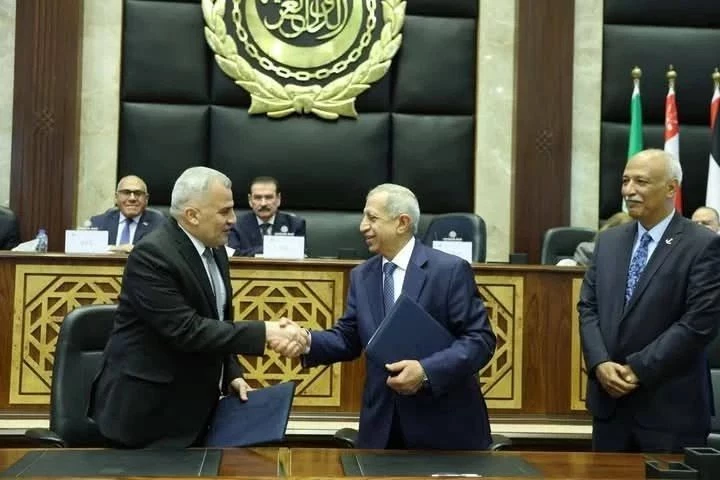
19 May 2025 · Abu Qir Campus A partnership with the guardians of Egypt’s lakes Prof. Dr. Ismail Abdel Ghaffar, President of AASTMT, and Maj. Gen. Hussein Farhat, Executive Director of the General Authority for the Protection and Development of Lakes and Fish Resources, signed the College of Fisheries and Aquaculture Technology’s a protocol to share expertise and resources in fisheries, aquaculture and student training. Read more: AASTMT news |
|---|
 |
 |
|---|---|
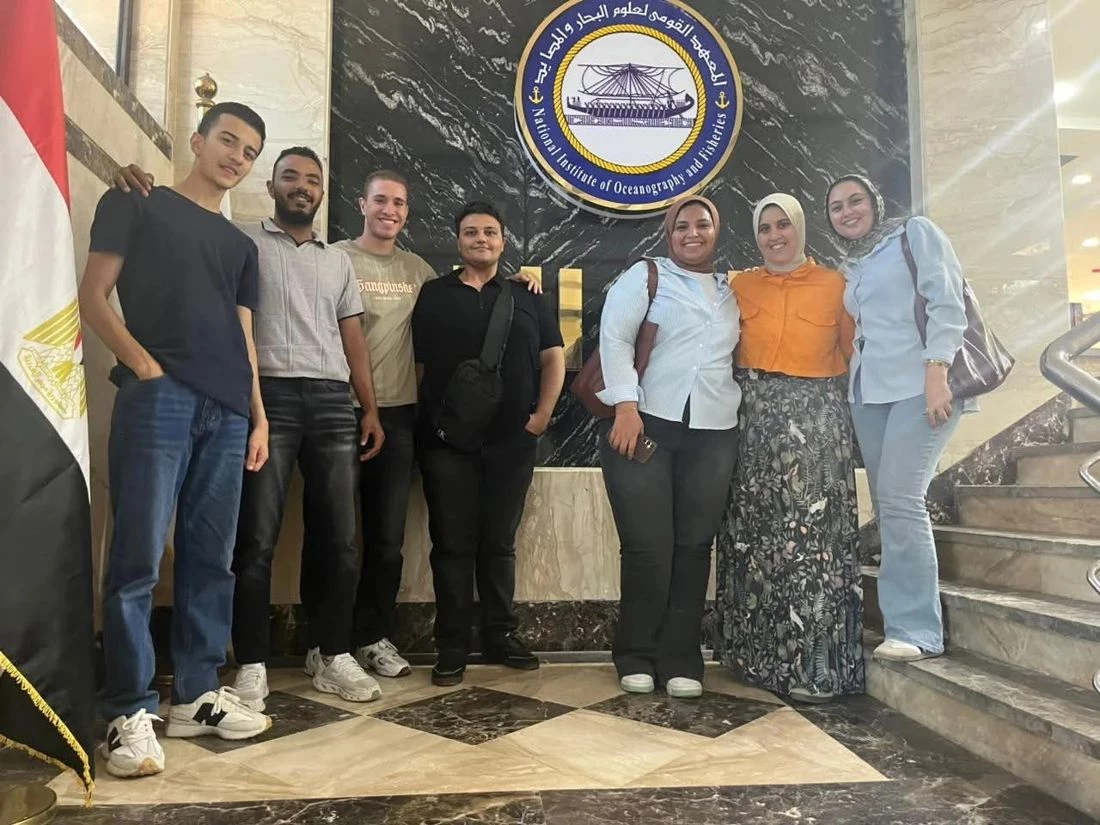
| Protocol signing, May 2025 | Training at the National Institute of Oceanography and Fisheries, August 2025 |
|
21 Dec 2024 · Abu Qir Campus “By Fisher to Fisher”: cleaning the fishing port Students of the College of Fisheries and Aquaculture Technology at the Abu Qir Campus joined the first clean-up of the Eastern Harbour fishing ports in Alexandria on Saturday 21 December 2024, under the Green & Clean campaign supervised by Global Stars Company with the Ministry of Environment and Banque du Caire, removing litter and lost fishing gear that can entangle turtles and other wildlife. Read more: AASTMT news |
|---|
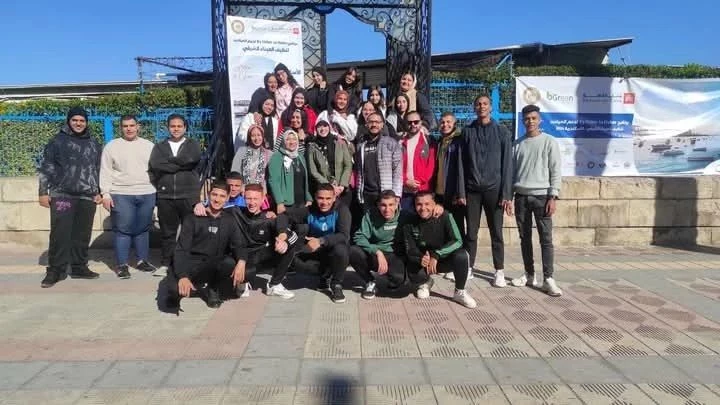
Fisheries students at the “By Fisher to Fisher” clean-up of the Eastern Harbour fishing port, December 2024.
06 · Policy and the years ahead
In August 2024 AASTMT created its Monitoring IUCN & Conservation Species Policy, which applies to every campus branch, and updated it in 2025. It commits the Academy to identify, monitor and protect every IUCN Red List and nationally protected species with habitats in areas affected by its operations (Sustainable AASTMT website, SDG 15.3).
|
Identify A species register for every campus and operation area, screened against the IUCN Red List and Egypt’s national lists every year, and a check for threatened species before any new building. |
Monitor Seasonal bird counts on the coastal campuses, yearly wildlife surveys, and records of every sighting or accidental catch of turtles, dolphins, sharks, rays and seabirds. |
|---|---|
|
Protect Undisturbed habitats, protected mature trees, selective fishing gear, live release of protected species, and no wild-caught threatened species in catering, teaching or aquaculture. |
Share Data shared with national authorities and Mediterranean programmes, and a yearly public summary of our species monitoring. |
01 A species register for every campus by 2027
Starting with the Abu Qir Campus, every campus will record its plants and animals and check them against the Red List.
02 Students as citizen scientists
Bird and pollinator surveys, beach-nesting watches and sightings apps will involve students in monitoring.
03 Bycatch records at sea
Every sighting or accidental catch of a protected species during training voyages and fisheries training will be recorded and reported.
04 Protected habitats near our campuses
We will work with the protected areas and authorities around Lake Manzala (Port Said Campus), the North Coast (El Alamein Campus), the Red Sea and Aswan (South Valley Campus).
05 Open reporting
We will publish a yearly conservation report on threatened species on the AASTMT website, as the revised policy requires from 2027.
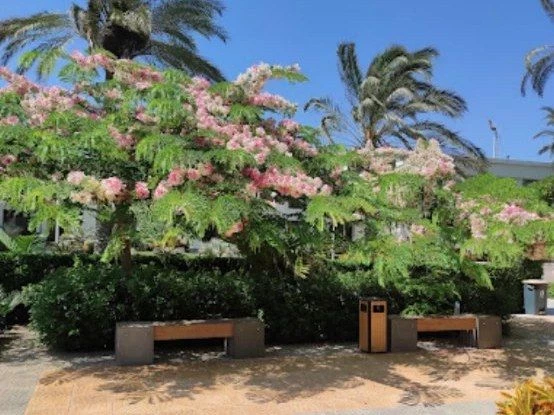
Green spaces at the Abu Qir Campus shelter birds and insects.
Reporting period: January 2024 – December 2025. Published by the Arab Academy for Science, Technology and Maritime Transport (AASTMT). Photographs: AASTMT.


