
Download the full policy (PDF)
AASTMT’s Hazardous Waste Disposal Policy ensures the safe management of chemical, biological, medical, electronic and other hazardous waste across all AASTMT campuses in Egypt, from the point where it is produced to its final, licensed disposal. It requires hazardous waste to be prevented and reduced where possible, segregated at source, labelled, stored securely, treated on site where appropriate (such as autoclaving biological waste and neutralising liquid chemicals), and handed over only to licensed contractors under staff supervision and with full documentation. Version 2 builds on the AASTMT Medical and Biohazardous Waste Disposal Program (2023–2024) and the hazardous materials section of the Consumption and Recycling Policy (created May 2019, reviewed 2024). It adds the Egyptian legal framework, a procedure for every waste stream, how each campus applies the policy, measured hazardous waste data and targets.
1. Policy Statement
AASTMT is committed to the safe and responsible management of hazardous waste to safeguard human health and the environment. No hazardous waste generated by AASTMT may be poured into drains, mixed with general waste, burned in the open or dumped on land. Every hazardous waste is identified, segregated, handled and disposed of by procedures that minimise risk and prevent contamination of soil, water and air, in line with Egyptian law and international standards.
2. Scope: Hazardous Waste Covered
3. Legal Framework
4. Waste Hierarchy
Following the “waste order” of the Consumption and Recycling Policy, AASTMT first prevents hazardous waste (buying only the chemicals needed, sharing stock between laboratories, microscale experiments), then reuses and recycles it where safe (e-waste and batteries to certified recyclers), then treats it to remove its hazard (autoclaving, neutralisation), and only then sends residual waste for licensed disposal. End-of-life impacts are considered when equipment and chemicals are purchased.
5. Procedure: From Generation to Final Disposal
| Waste stream | Container and storage | On-site treatment | Final route |
|---|---|---|---|
| Liquid chemical waste | Labelled bottles in each lab, then larger sealed containers | Neutralisation where possible | Licensed contractor to licensed treatment facility |
| Solid and expired chemicals | Original or labelled containers in secure cabinets | None | Licensed contractor |
| Biological waste | Biohazard bags and containers | Autoclaving | Licensed contractor, incineration; residual ash to certified landfill |
| Medical waste and sharps | Red bags and puncture-proof sharps boxes | Sterilisation as needed | Licensed contractor, incineration; residual ash to certified landfill |
| Broken glass | Separate rigid containers | None | Licensed contractor |
| E-waste, batteries, lamps, toners | Separate collection points | None | Certified recyclers |
| Used oils, paints, solvents | Closed drums in bunded areas | None | Licensed recycler or contractor |
| Asbestos | Left in place, sealed and labelled; never broken or swept | None | Licensed specialist contractor to licensed disposal |
| Ship-generated waste | Ship’s designated tanks and bins | None | Port reception facilities (MARPOL) |
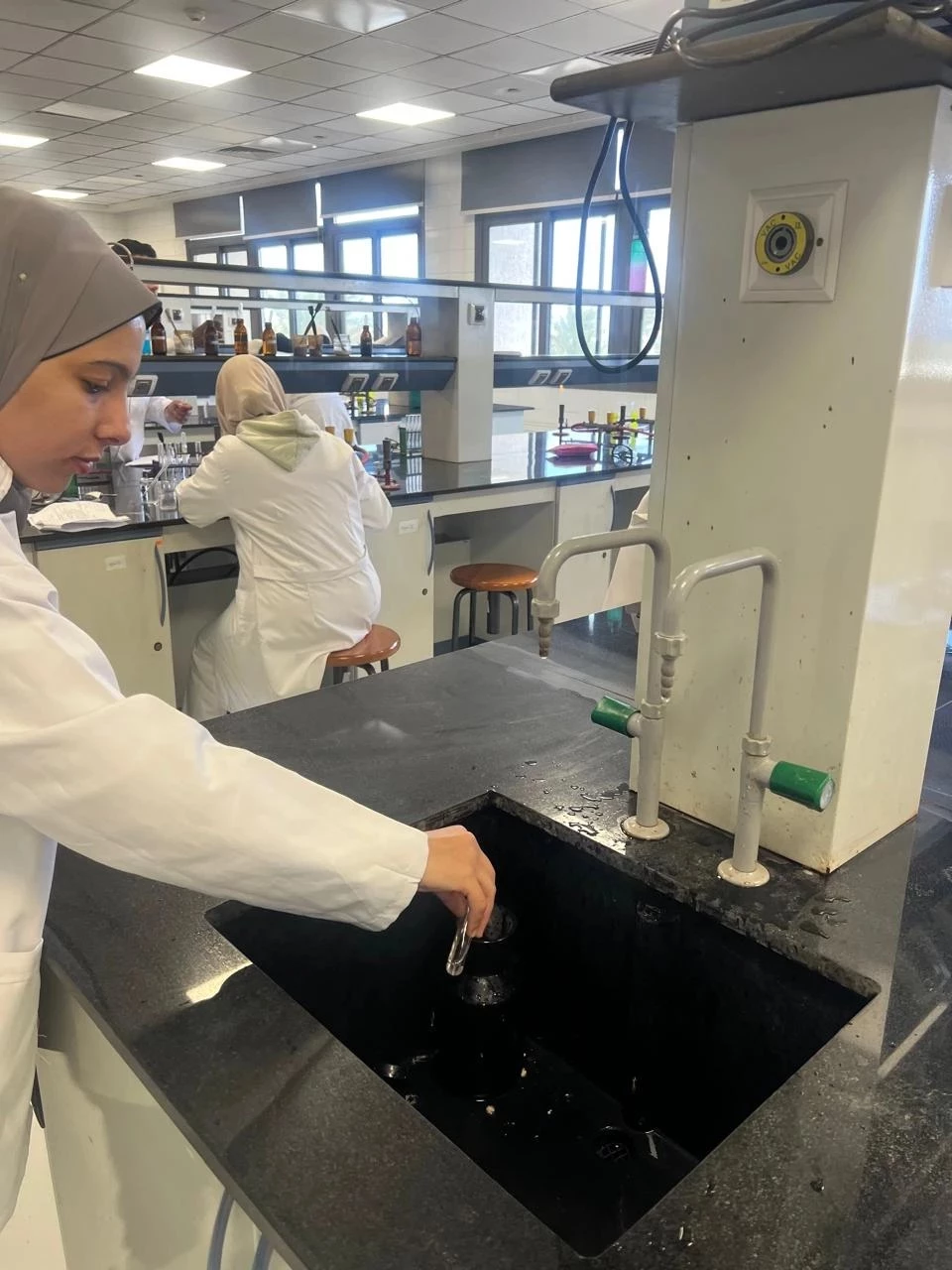
College of Pharmacy: liquid chemical waste collected in designated bottles in each laboratory
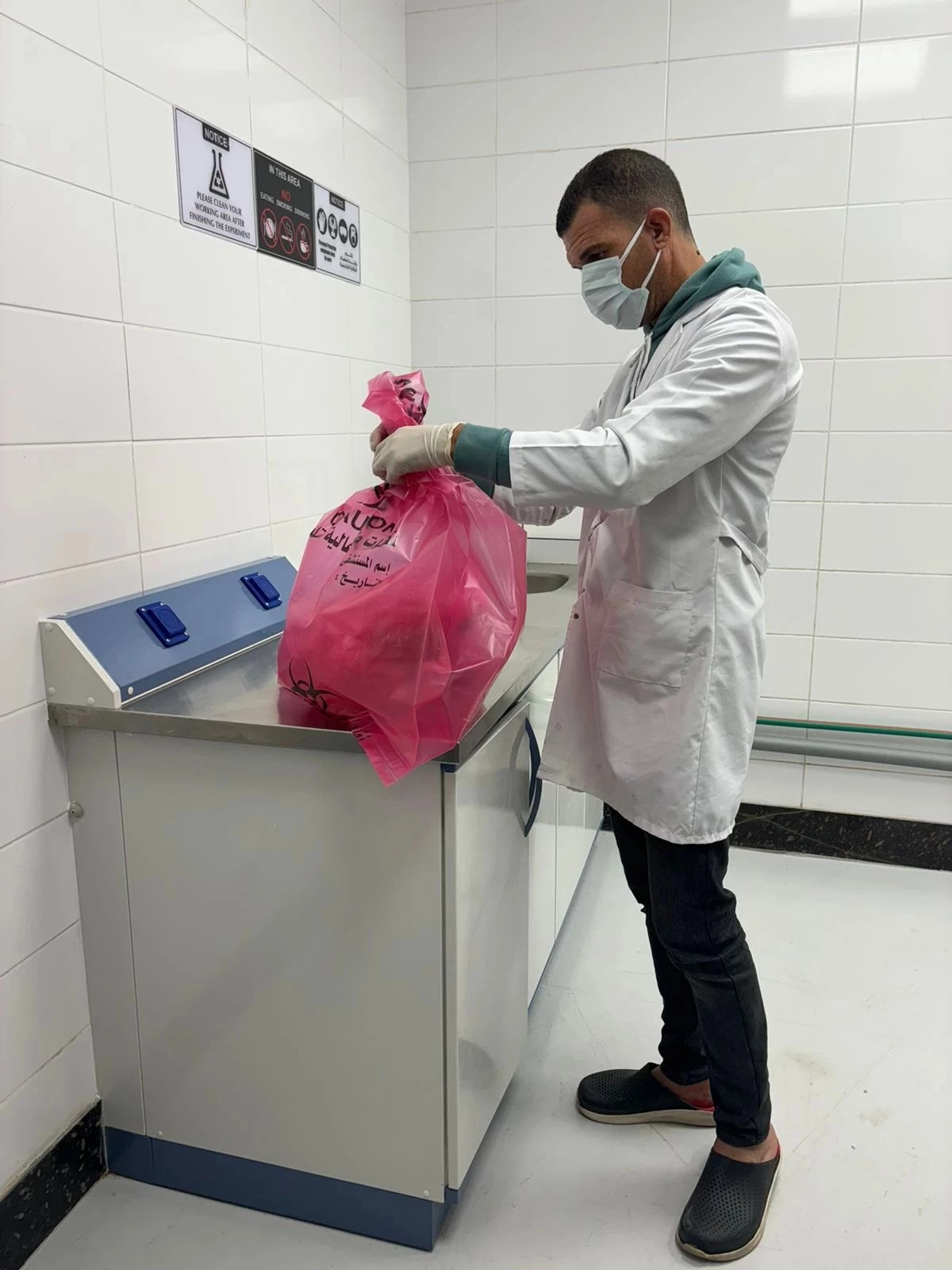
Biohazard waste bagged for collection
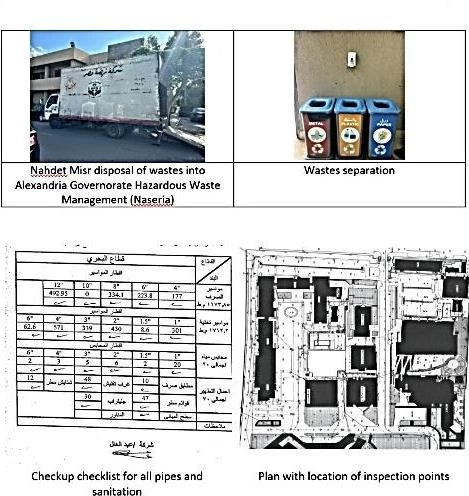
Nahdet Misr disposal to the Alexandria Governorate hazardous waste site (Nasreya), waste separation, pipe and sanitation checklist and inspection plan
| Campus | Main hazardous waste sources | How it is managed |
|---|---|---|
| Alexandria – Abu Qir (main campus) | College of Pharmacy, Engineering and Maritime laboratories; Aquaculture Research Center; campus clinic; Industry Service Complex workshops | Segregation in every laboratory; autoclaving of biological waste; liquid chemical waste in designated bottles and broken glass in separate containers; supervised twice-weekly collection by Nahdet Misr to Nasreya; clinic waste under Nahdet Misr Contract No. 383/2025–2026; dedicated waste washing room |
| Matrouh – El Alamein (campus and AASTMT Alamein Hospital) | College of Pharmacy (El Alamein) laboratories; hospital wards, clinics and medical laboratories | Campus-wide segregation in stainless-steel, colour-coded bins (since August 2024); medical waste collected separately; medical and laboratory wastewater treated on site before reuse |
| Giza – Smart Village | Computing laboratories and offices (mainly e-waste, batteries, toners) | E-waste collected separately for certified recycling |
| Cairo – Heliopolis | Engineering laboratories, offices | Segregation in place; licensed hazardous waste contract to be signed by 2027 |
| Giza – Dokki | Engineering laboratories, offices | Segregation in place; licensed hazardous waste contract to be signed by 2027 |
| Alexandria – Miami | Offices, maritime training | E-waste and battery collection |
| Port Said | Maritime and technical laboratories | Segregation in place; licensed hazardous waste contract to be signed by 2027 |
| Aswan – South Valley | Engineering and computing laboratories | Segregation in place; licensed hazardous waste contract to be signed by 2027 |
| Training ships | Engine rooms and maintenance | Oily residues and hazardous garbage to port reception facilities under MARPOL |
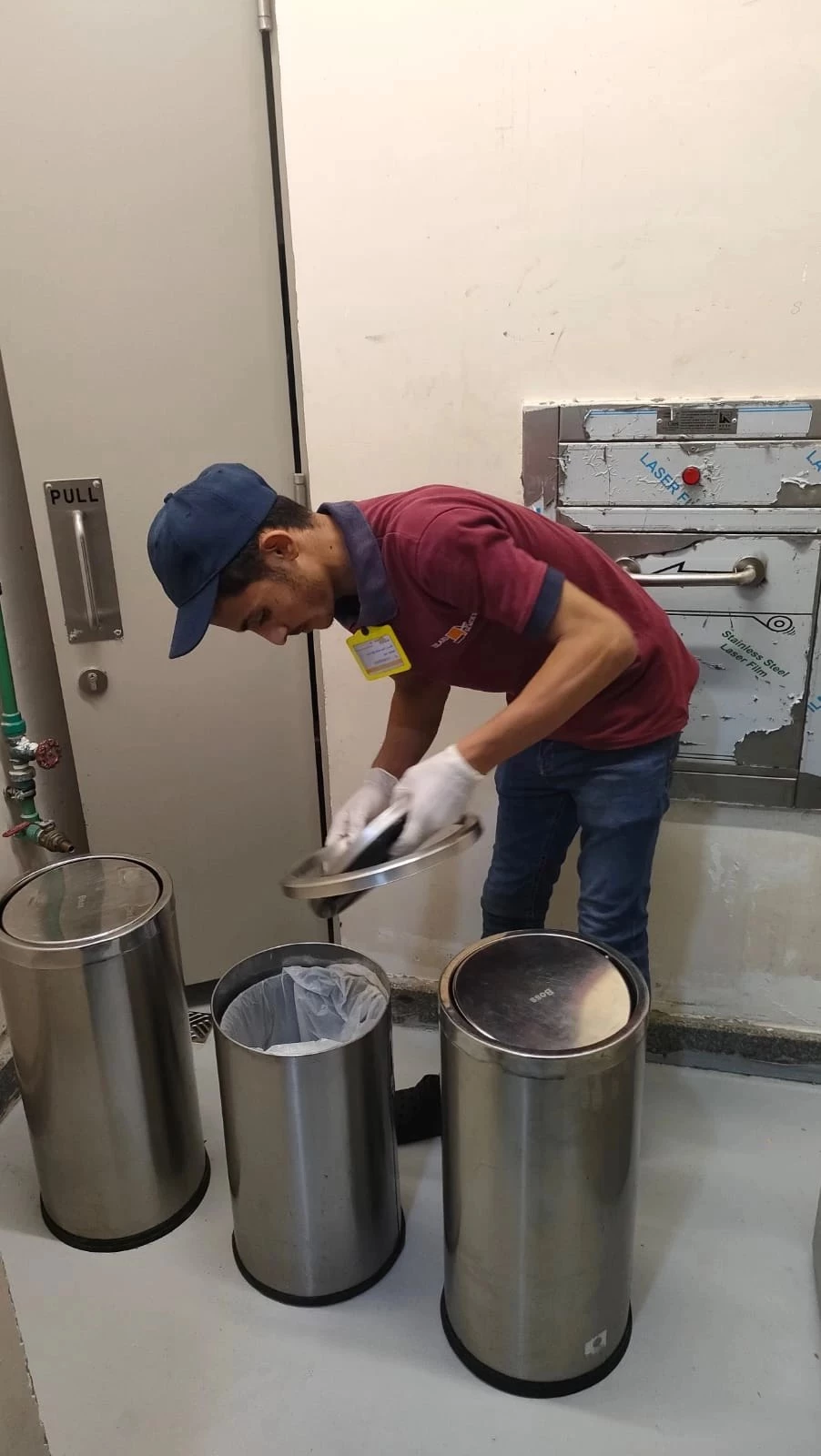
El Alamein campus: segregated waste collection in stainless-steel, colour-coded bins
Hazardous Waste Data
Scope of the figures: laboratory chemical waste and electronic waste from AASTMT disposal records; hazardous medical waste is shown as an estimated annual range.
| Waste stream | Previous year (tons) | Latest year (tons) | Treatment |
|---|---|---|---|
| Laboratory chemical waste | 1.89 | 1.70 | Neutralisation and licensed treatment (100%) |
| Electronic waste | 0.51 | 0.50 | Certified recycling (100%) |
| Total (laboratory chemical waste and e-waste) | 2.40 | 2.20 | 100% treated by appropriate methods |
| Hazardous medical waste | 0.5–1.0 per year (estimate) | Incineration by licensed contractor; residual ash to certified landfill |
Targets
Training and Awareness
Spills and Emergencies
Roles and Responsibilities
| Role | Responsibility |
|---|---|
| SDGs Workforce Committee | Approves the policy and its reviews |
| Dean of Scientific Research and Innovation | Signs the policy approved by the SDGs Workforce Committee |
| SDG 15 and SDG 12 officers, Sustainability Office | Coordinate implementation, keep records and publish yearly data |
| Deans and heads of laboratories | Apply segregation, storage and on-site treatment in their laboratories |
| Clinic and hospital managers | Manage medical waste and sharps |
| Facilities teams on each campus | Manage contracts and supervise every handover |
| Licensed contractors (Nahdet Misr) | Collect, transport, treat and dispose of hazardous waste lawfully |
| Students and staff | Follow the procedures and report incidents |
Review Program
| Item | Detail |
|---|---|
| Document title | AASTMT Policy on Hazardous Waste Disposal |
| Date created | 2023–2024 (Medical and Biohazardous Waste Disposal Program) |
| Approving body | SDGs Workforce Committee |
| Version | 2 |
| Last review date | October 2026 |
| Next review date | 2027 |
| Approval signature | Prof. Dr. Yasser Gaber Eldesouky, Dean of Scientific Research and Innovation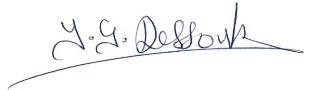 |
| Version | Date | Changes |
|---|---|---|
| 1 | 2023–2024 | Medical and Biohazardous Waste Disposal Program: segregation, autoclaving, fume hoods, Nahdet Misr, supervised handover, training |
| 2 | October 2026 | Full scope of hazardous waste streams; legal framework; waste hierarchy; seven-step procedure and waste stream table; campus-by-campus implementation (Abu Qir, Miami, Heliopolis, Dokki, Smart Village, El Alamein, Port Said, Aswan, training ships); hazardous waste data and targets; spill response; roles |


